RSD and ADHD: Rejection Sensitive Dysphoria Explained for Adults

If you're an adult with ADHD, you might recognise this pattern: a colleague's neutral comment sends you spiralling into self‑doubt, tears, or rage. You know it's disproportionate, but you can't stop it. This is Rejection Sensitive Dysphoria (RSD)—a poorly understood but common ADHD companion.
With 3,000 monthly searches and growing awareness, RSD explains why ADHD adults often struggle with feedback, criticism, and social interactions. This guide covers what RSD is, research evidence, how it differs from general rejection sensitivity, and practical UK treatment options.
1. What is RSD in ADHD?
Defining Rejection Sensitive Dysphoria
RSD refers to an intense emotional pain response to perceived or actual rejection, criticism, or failure. In ADHD adults, it often feels like:
Sudden, overwhelming emotional pain from minor feedback
Physical symptoms (chest tightness, tears, shaking)
Disproportionate rage, shutdown, or avoidance
Rapid mood recovery (minutes to hours later)
Unlike typical rejection sensitivity, RSD is ADHD‑specific and tied to emotional dysregulation.
RSD vs General Rejection Sensitivity
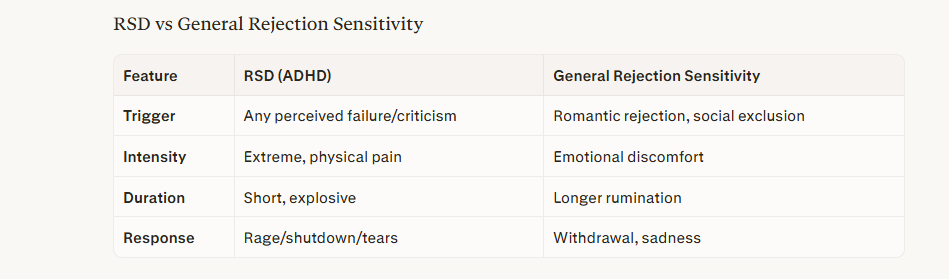
Key point: RSD is not in DSM‑5 but widely recognised by ADHD specialists.
2. What Causes RSD in ADHD?
Neurological Roots
ADHD involves dopamine and noradrenaline dysregulation in the prefrontal cortex, impairing emotional regulation:
Poor emotional braking: ADHD brains struggle to "turn down" emotional responses
Hyperactive amygdala: Overreacts to social threat cues
Delayed prefrontal maturation: Weaker top‑down control of emotions
fMRI studies show ADHD adults have heightened amygdala activation to negative social feedback.
Developmental Factors
Childhood experiences amplify RSD:
Repeated failure: School/work struggles → hypersensitivity to more failure
Social rejection: Impulsivity → bullying/exclusion → fear of repeat
Low self‑esteem: Chronic underperformance erodes resilience
Research: 99% of ADHD adults report RSD symptoms; 50% rate it as their most impairing symptom.
3. RSD Symptoms: How It Feels in Daily Life
Work Impact
RSD turns feedback into catastrophe:
Performance reviews: "Needs to improve organisation" → "I'm getting fired" → panic
Meetings: Colleague interrupts → "They hate me" → shutdown
Emails: Neutral tone read as criticism → avoidance/procrastination
Result: Career stagnation, job hopping, or burnout.
Relationships
Dating: One bad date → "I'll be alone forever"
Friendships: Friend cancels → "They don't like me anymore"
Family: Minor disagreement → explosive argument or silent treatment
Self‑Image
RSD fuels imposter syndrome and perfectionism: "One mistake proves I'm worthless."
UK data: ADHD adults with RSD have 2x higher anxiety/depression rates.
Treatment for RSD and ADHD
Medication Options
Stimulants (methylphenidate, lisdexamfetamine) often reduce RSD intensity by improving emotional regulation:
Alpha‑2 agonists (guanfacine, clonidine) specifically target emotional dysregulation
SSRIs if anxiety/depression co‑occur
UK prescribing: NICE recommends stimulants first‑line; alpha agonists as adjunct.
Therapy and Skills
CBT for ADHD teaches:
Cognitive restructuring: "Boss feedback = growth opportunity, not character flaw"
Emotional awareness: Name the feeling → pause → respond
Self‑compassion: Accept imperfection as human
DBT skills particularly effective for RSD.
Lifestyle Strategies
Sleep hygiene: Poor sleep worsens emotional reactivity
Exercise: Boosts dopamine naturally
Journaling: Track triggers and patterns
FAQs
What is RSD in ADHD?
Rejection Sensitive Dysphoria (RSD) is an extreme emotional pain response to perceived rejection, criticism, or failure, common in ADHD. It feels physically painful, triggers rage/tears/shutdown, and resolves quickly—unlike typical rejection sensitivity.
Is there treatment for rejection dysphoria?
Yes. Stimulant medications (methylphenidate, lisdexamfetamine) often reduce RSD intensity. Alpha‑2 agonists (guanfacine) target emotional dysregulation specifically. CBT/DBT teach cognitive restructuring and distress tolerance. Lifestyle (sleep, exercise) helps too.
How do I know if I have rejection dysphoria?
Common signs: intense physical/emotional pain from minor feedback, rapid mood swings after social interactions, avoidance of criticism/performance reviews, disproportionate relationship conflicts. 99% of ADHD adults experience it; screening via ADHD specialist is recommended.
RSD doesn't have to control your career or relationships. Book an ADHD assessment at Focus Gently to explore medication, therapy, and strategies. Our nurse practitioner specialises in adult ADHD emotional dysregulation.