ADHD and Anxiety: Understanding the Overlap for UK Adults
Up to 50% of adults with ADHD also have an anxiety disorder—the most common co‑occurrence. The result? Double trouble: ADHD's chaos plus anxiety's constant worry, avoidance, and physical symptoms.
This comprehensive guide covers how ADHD and anxiety overlap, why they co‑occur, symptom differences, treatment options (medication + therapy), and UK assessment pathways. If you're an adult struggling with both, this is your roadmap to clarity and relief.
1. How Are ADHD and Anxiety Linked?
Prevalence and Co‑morbidity
50% of ADHD adults meet criteria for an anxiety disorder (GAD, social anxiety, panic)
25% of anxiety patients have undiagnosed ADHD
Bidirectional risk: ADHD increases anxiety risk by 2‑3x; anxiety can mask ADHD
UK studies show anxiety is the #1 reason adults seek ADHD assessment—often after years of misdiagnosis.
Shared Brain Chemistry
Both involve dysregulated noradrenaline and serotonin:
ADHD: Dopamine/noradrenaline deficit → poor focus, impulsivity
Anxiety: Hyperactive amygdala + noradrenaline surge → worry, fight/flight
Overlap: ADHD meds often improve anxiety by stabilising executive function.
2. Symptoms: Which Come First and How to Tell Them Apart
Overlapping Symptoms (The Confusion Zone)
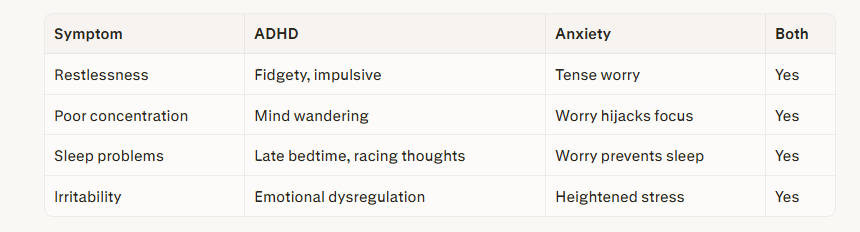
Key differentiator: ADHD symptoms are lifelong (since childhood); primary anxiety often starts later.
ADHD‑Specific Symptoms
Time blindness, chronic lateness
Hyperfocus on interests, task paralysis on boring work
Impulsivity (interrupts, spends recklessly)
Anxiety‑Specific Symptoms
Excessive worry about future events
Physical tension, muscle aches
Avoidance of social/professional situations
Diagnostic tip: If symptoms persist after anxiety treatment, ADHD likely underlies.
3. Why Do ADHD and Anxiety Occur Together?
Neurological Overlap
Prefrontal cortex dysfunction impairs both attention regulation and worry control
Amygdala hyperactivity common to both
Noradrenergic imbalance drives restlessness in ADHD, panic in anxiety
Developmental Cascade
ADHD childhood struggles → academic/social failure → low self‑esteem
Low self‑esteem → heightened rejection sensitivity → anxiety
Untreated ADHD → chronic stress → generalised anxiety disorder
Genetic Links
Twin studies show 40‑60% heritability overlap between ADHD and anxiety.
4. Treatment Options That Address Both Anxiety and ADHD
Medication Strategies
Stimulants remain first‑line for ADHD and often improve anxiety:
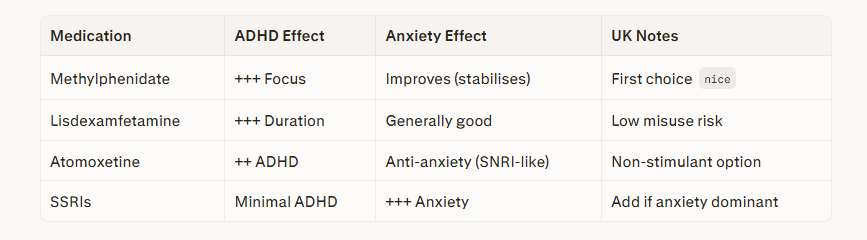
Alpha‑2 agonists (guanfacine) target emotional dysregulation in both.
NICE guidance: Trial stimulant → if anxiety worsens, consider atomoxetine or add SSRI.
Therapy for the Overlap
CBT‑ADHD addresses both:
Cognitive restructuring for anxious worry loops
Behavioural activation for ADHD procrastination
Mindfulness for emotional regulation
Success rate: 70% symptom reduction when treating both.
FAQs
What is the best medication for ADHD and anxiety?
Methylphenidate or lisdexamfetamine (stimulants) are first‑line for ADHD and often improve anxiety by stabilising focus/emotion. Atomoxetine suits anxiety‑dominant cases. SSRIs (sertraline) added if anxiety persists. Always individualise with specialist input.
Can ADHD be mistaken for anxiety?
Yes—very commonly. ADHD inattention looks like anxious worry; restlessness looks like agitation. ADHD is lifelong (childhood onset); primary anxiety often starts later. If anxiety treatment fails or symptoms persist, screen for ADHD.
How do you treat ADHD when anxiety is present?
Step 1: Stimulant trial (methylphenidate/lisdexamfetamine)—often reduces both.
Step 2: If anxiety worsens, switch to atomoxetine or add SSRI.
Step 3: CBT‑ADHD + lifestyle (sleep, exercise).
Step 4: Alpha‑2 agonists for emotional dysregulation. Specialist ADHD assessment essential.
ADHD + anxiety doesn't have to be a double burden. Book your adult ADHD assessment at focusgently.com to untangle symptoms, trial the right medication, and get CBT strategies. Our nurse practitioner specialises in co‑morbid anxiety.