Atomoxetine and QT Prolongation: What ADHD Patients Need to Know About Heart Safety

Atomoxetine (brand name Strattera) is a popular non-stimulant medication prescribed for attention-deficit/hyperactivity disorder (ADHD) in children, adolescents, and adults. Unlike stimulant medications such as methylphenidate or amphetamines, atomoxetine works by selectively inhibiting norepinephrine reuptake, making it an attractive option for patients who can't tolerate stimulants or have substance use concerns.
However, one question keeps coming up among patients and healthcare providers: Does atomoxetine cause QT prolongation, a potentially dangerous heart rhythm condition? This comprehensive guide examines the scientific evidence, explains the real risks, and provides actionable information for anyone considering or currently taking atomoxetine.
What Is QT Prolongation?
The QT interval is a measurement on an electrocardiogram (ECG) that represents the time it takes for the heart's ventricles to contract and then recharge. QT prolongation occurs when this interval is abnormally long, which can predispose individuals to a life-threatening arrhythmia called torsades de pointes. This abnormal rhythm can lead to fainting, seizures, or sudden cardiac death in severe cases.
Certain medications are known to prolong the QT interval, including some antibiotics, antipsychotics, antiarrhythmics, and antidepressants. When multiple QT-prolonging drugs are combined, the risk increases substantially.
What the Science Says: Does Atomoxetine Prolong QT?
Key Clinical Findings
The relationship between atomoxetine and QT prolongation is nuanced. Here's what rigorous clinical studies have found:

The most comprehensive cardiac safety review concluded that atomoxetine was not associated with QT interval prolongation at therapeutic doses. The cardiovascular effects were minimal, and the medication was well-tolerated in both short- and long-term studies.
Important Caveat: Female Patients
One study identified a potential sex difference: female patients experienced prolonged QTcB after atomoxetine treatment, with a significant positive correlation between atomoxetine dosage and QTcB (r = 0.631, p = 0.012). Male patients showed no such correlation. This suggests clinicians should exhibit particular caution when prescribing atomoxetine to female patients.
Real Cardiovascular Side Effects of Atomoxetine
While QT prolongation is rare, atomoxetine does have documented cardiovascular effects that patients should monitor:
Common Cardiovascular Changes
Increased heart rate: Mean pulse rate increases across all age groups, approximately <10 beats per minute
Elevated blood pressure: Small but statistically significant increases—systolic in adults, diastolic in children/adolescents (<5 mm Hg)
Clinically important changes: 6–12% of patients experience significant increases (≥15–20 mm Hg blood pressure or ≥20 bpm heart rate)
Sustained increases: 15–32% of those with changes have sustained or progressive elevations
Palpitations: Reported in 3.7% of adult patients vs. 0.8% with placebo
Why These Changes Matter
Although the risk of serious cardiovascular events with atomoxetine is extremely low at therapeutic doses, sustained increases in heart rate or blood pressure could have serious clinical implications for a small proportion of patients, especially when increases are progressive.
A large study of ADHD medication initiators found no increased risk of heart failure or cardiomyopathy with longer-term use of ADHD medications, including atomoxetine.
Who Should Avoid or Use Caution with Atomoxetine?
Contraindications and Warnings
Atomoxetine should not be used in patients with:
Severe cardiac disorders
Structural cardiac abnormalities
Cardiomyopathy
Recent heart attack
Severe arrhythmias
Use with MAOIs (must wait 14 days after stopping MAOI)
Use with Caution in Patients With:
Mild to moderate cardiac conditions (under close monitoring)
Hypertension (uncontrolled)
Tachycardia or history of arrhythmias
Female sex (due to QTc findings)
Concurrent use of QT-prolonging medications
CYP2D6 poor metabolizers (higher atomoxetine levels)
Drug Interactions That Increase Risk
Atomoxetine interacts with several medications that can amplify cardiac risks:
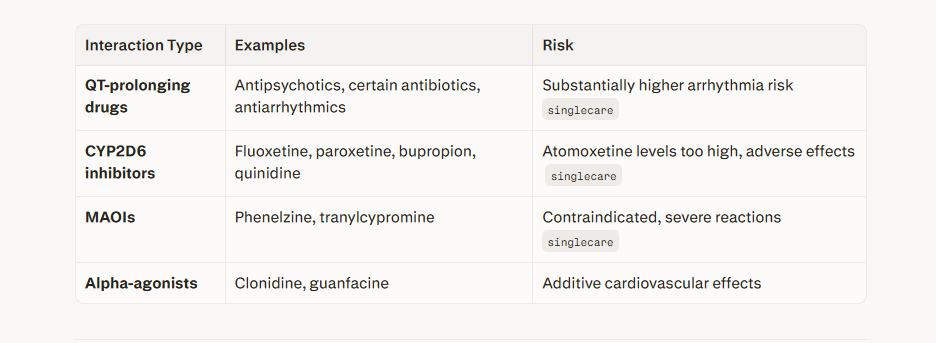
Monitoring Recommendations for Atomoxetine Safety
Before Starting Treatment
Complete medical history including cardiac conditions, family history of sudden death, or arrhythmias
Baseline vital signs: Blood pressure and heart rate
Consider baseline ECG in patients with pre-existing cardiac conditions
Review all medications for QT-prolonging drugs or CYP2D6 inhibitors
During Treatment
Monitor vital signs before treatment initiation and regularly during treatment
Schedule more frequent monitoring during dose adjustments
Watch for cardiovascular adverse events, particularly palpitations
Consider periodic ECG monitoring in patients with pre-existing cardiac conditions
Discontinue if clinically significant increases in heart rate or blood pressure occur
When to Call Your Doctor Immediately
Patients or caregivers should call their doctor right away if they experience any signs of heart problems while taking atomoxetine:
Chest pain
Irregular heart rate
Palpitations
Shortness of breath
Dizziness or lightheadedness
Fainting (syncope)
FAQs About Atomoxetine and Heart Safety
Q1: Does atomoxetine cause QT prolongation?
A: Current evidence shows atomoxetine does not cause clinically significant QT prolongation at therapeutic doses. While some studies found statistically small QTc increases with higher plasma concentrations, these were not clinically concerning. However, female patients may show more QTc prolongation, so caution is warranted.
Q2: Is atomoxetine safe for people with heart conditions?
A: Atomoxetine should not be used in patients with severe cardiac disorders. However, it may be cautiously considered in patients with mild to moderate cardiac conditions under close monitoring with regular vital sign checks and possibly periodic ECGs.
Q3: How does atomoxetine compare to stimulants for heart safety?
A: Both stimulants and atomoxetine can increase heart rate and blood pressure. Stimulants typically cause slightly larger increases, but atomoxetine has the advantage of not causing QT interval prolongation unlike some other medications. The overall cardiovascular risk with atomoxetine is extremely low at therapeutic doses.
Q4: What should I do if I'm concerned about my heart while taking atomoxetine?
A: Discuss your concerns with your prescribing physician. They may order a baseline ECG, monitor your vital signs more frequently, adjust your dose, or consider alternative treatments. Do not stop atomoxetine abruptly without medical supervision, as this can cause withdrawal symptoms.
Q5: Can I take atomoxetine with other medications that affect heart rhythm?
A: Combining atomoxetine with other QT-prolonging medications substantially increases the risk of dangerous heart rhythms like torsades de pointes. Always inform your doctor of all medications you're taking, including over-the-counter drugs and supplements.
Q6: Are women at higher risk for heart problems with atomoxetine?
A: Yes, studies suggest female patients may be at higher risk for QTc prolongation with atomoxetine, showing a significant correlation between dosage and QTcB interval. Clinicians should exhibit particular caution when prescribing atomoxetine to women.
Q7: How common are serious heart events with atomoxetine?
A: The risk of serious cardiovascular events with atomoxetine is extremely low at therapeutic doses. Large studies found no increased risk of heart failure or cardiomyopathy with long-term use. However, 6–12% of patients experience clinically important changes in blood pressure or heart rate.
Q8: Can children take atomoxetine safely?
A: Yes, atomoxetine is approved for children with ADHD. Children show similar cardiovascular effects (small increases in heart rate and blood pressure), but the risk of serious events remains extremely low. Regular monitoring of vital signs is essential.
The Bottom Line: Weighing Benefits vs. Risks
For most patients, atomoxetine is a safe and effective ADHD treatment with minimal cardiovascular risk at therapeutic doses. The medication offers a valuable non-stimulant alternative for those who can't tolerate stimulants or have contraindications to stimulant therapy.
However, informed patients and providers should:
Recognize that small increases in heart rate and blood pressure are common but usually benign
Understand that QT prolongation is rare and not clinically significant for most patients
Be aware that female patients may need extra monitoring due to sex-specific QT findings
Monitor regularly and report any concerning symptoms immediately
Avoid atomoxetine in severe cardiac disease and use caution in mild-moderate conditions
The key is individualized care: your healthcare provider should evaluate your cardiac history, current medications, and risk factors before prescribing atomoxetine and monitor you appropriately throughout treatment.
Ready to Explore ADHD Treatment Options?
If you're struggling with ADHD symptoms and considering medication options, understanding the safety profile is just the first step. Every person's needs are unique, and finding the right treatment often requires working with knowledgeable healthcare providers who can personalize your care.
Discover more about ADHD treatment options and personalized care at Focus Gently.
Visit FocusGently.com to learn more about ADHD management and connect with healthcare professionals