ADHD Shared Care Protocol with Nurse Prescribers: The Complete Guide & FAQs

If you've been diagnosed with ADHD or are considering treatment, you've likely heard the term "shared care protocol"—or perhaps you're about to meet with a nurse prescriber for the first time. These concepts are central to how ADHD medication is managed in the UK's healthcare system, yet they remain confusing for many patients.
A shared care agreement is a formal arrangement between you, your specialist (psychiatrist or nurse prescriber), and your GP that enables ADHD treatment to continue smoothly after initial diagnosis and dose stabilization. Meanwhile, nurse prescribers are increasingly playing a vital role in ADHD assessment, titration, and ongoing management—particularly through NHS Right to Choose pathways.
This comprehensive guide explains everything you need to know about ADHD shared care protocols with nurse prescribers, including your rights, what to expect, common challenges, and answers to the most frequently asked questions.
What Is a Shared Care Protocol (SCP)?
A Shared Care Protocol (SCP) or Shared Care Agreement (SCA) is a formal agreement between three parties:
The patient (you)
The specialist clinician (psychiatrist or qualified nurse prescriber)
Your GP practice
This agreement enables the care and treatment you receive for ADHD to be shared between the specialist and your GP after your medication has been stabilized.
How It Works in Practice
According to NICE guidance issued in 2018 on the diagnosis and management of ADHD in adults:
"After titration and dose stabilisation, prescribing and monitoring of ADHD medication should be carried out under Shared Care Protocol arrangements with primary care"
This means:
The specialist initiates your medication and oversees the titration phase (finding the right dose)
Once your dose is stable (typically after 3 months), responsibility for ongoing prescribing and monitoring transfers to your GP
The specialist remains available for ongoing follow-up and advice if needed
You continue receiving NHS-funded medication through your GP rather than paying privately
What Is a Nurse Prescriber in ADHD Care?
A nurse prescriber is a registered nurse who has completed additional training and certification to prescribe medications independently. In ADHD care, this typically refers to:
Psychiatric nurse specialists with ADHD expertise
Advanced nurse practitioners specializing in mental health
Nurse prescribers working in ADHD clinics or services
What Can Nurse Prescribers Do?
Nurse prescribers involved in ADHD care can:
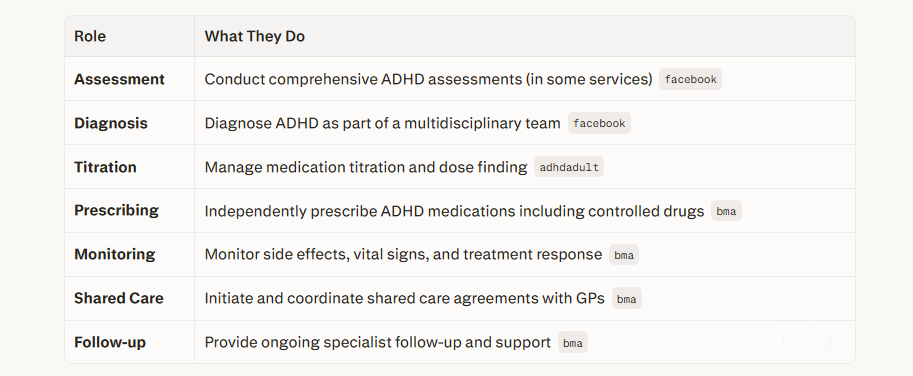
Nurse prescribers are increasingly important in ADHD services, particularly because they help address the significant shortage of ADHD specialists and reduce waiting times for assessments and treatment.
Why Shared Care Protocols Matter for ADHD Patients
The Financial Reality
Without a shared care agreement:
Private ADHD diagnosis means your GP is not legally obliged to sign a shared care agreement
If a GP refuses shared care, you must continue paying privately for all ADHD medication prescriptions
ADHD medications are controlled drugs (methylphenidate, lisdexamfetamine), making private prescriptions expensive
What Shared Care Enables
With a shared care agreement in place:
Your GP prescribes ADHD medication on the NHS at standard prescription cost (or free if you're eligible)
You receive ongoing NHS monitoring including blood pressure, heart rate, and blood tests
The specialist team remains available for specialist advice and reviews if complications arise
Treatment becomes sustainable long-term without prohibitive private prescription costs
Key Principles of Shared Care Prescribing
According to the British Medical Association (BMA), the following principles should apply to all shared care prescribing:
1. Voluntary Activity for GPs
Shared care prescribing is non-core voluntary activity that can be declined by the GP practice for any reason. This includes:
Inadequate capacity within the practice
Inadequate competency about specialist medication, despite training
Lack of assurance to provide ongoing specialist support required for shared care
Important: Any refusal must be consistent and framed by principles so it's not discriminatory to specific patient groups.
2. Quality Assurance Required
The GP practice must be satisfied with the quality assurance and clinical governance of the specialist provider. This is more challenging if the provider is not commissioned by the NHS.
3. Clear Monitoring Responsibilities
If ongoing medical monitoring is required, responsibility must be clear within the shared care agreement guidance.
4. Stabilization Period Required
The appropriate stabilization period must occur before prescribing transfers to the GP practice. Duration is determined by the shared care agreement (often 3 months).
5. Enduring Specialist Input
There must be enduring specialist input, such as:
Ongoing outpatient follow-up
A mechanism allowing timely advice from the specialist, possibly converted to outpatient review
6. Funded Monitoring
Any additional work for medication monitoring must be delivered through a funded, commissioned pathway, usually as an ICB medicines monitoring Local Enhanced Service.
What Happens If Your GP Refuses Shared Care?
Unfortunately, a GP is not legally bound to sign a shared care agreement—it's considered a "professional courtesy" that GPs often sign to help patients.
Why GPs May Refuse
Common reasons include:
Concerns about the burden of responsibility
Lack of experience with ADHD medications
Inadequate practice capacity for monitoring
Provider is private and not NHS-commissioned
Concerns about controlled drug prescribing
What You Can Do
If your GP refuses shared care, options are limited but you can try:
Ask to meet your GP and explain how not accessing medication will impact your life
Request an explanation of how their refusal aligns with NHS Guidance on private care
Ask for an NHS referral and shared care while waiting for public services
Consider changing GP (ensure the new GP will accept shared care first)
Contact your practice manager to discuss the refusal
Your Rights Under NHS Guidance
NHS guidance states:
"The NHS should not withdraw NHS Care because a patient chooses to buy private care, nor should patients who access private care be placed at an advantage or disadvantage in relation to the NHS care they receive"
You can ask your GP to explain how their refusal does not break this NHS Guidance.
ADHD Shared Care Protocol: What's Included?
A comprehensive shared care protocol for ADHD typically includes:
Medication Coverage
Shared care guidelines are approved for specific ADHD medications across NHS regions, including:
Atomoxetine for adults and children
Dexamfetamine for adults and children
Guanfacine for adults and children
Lisdexamfetamine for adults and children
Methylphenidate for adults and children
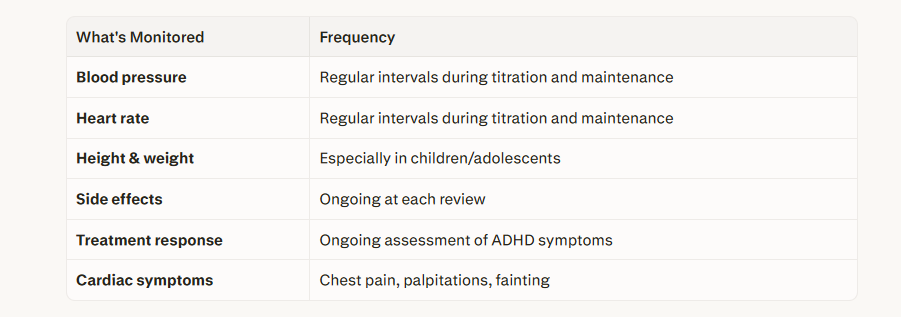
Monitoring Requirements
Specialist Responsibilities
Complete initial assessment and diagnosis
Conduct titration to stable dose
Provide written shared care agreement to GP
Remain available for specialist advice
Conduct periodic specialist reviews if needed
GP Responsibilities
Prescribe medication once stabilized
Monitor vital signs (BP, heart rate)
Order blood tests if required
Renew prescriptions regularly
Report concerns to specialist team
FAQs About ADHD Shared Care Protocol with Nurse Prescribers
Q1: What is an ADHD shared care protocol?
A: A shared care protocol is a formal agreement between you, your specialist (psychiatrist or nurse prescriber), and your GP. It enables ADHD treatment to be shared between the specialist and GP after your medication is stabilized, allowing NHS prescribing through your GP instead of private prescriptions.
Q2: Can a nurse prescriber initiate shared care for ADHD?
A: Yes. Qualified nurse prescribers with ADHD expertise can initiate shared care agreements. They can assess, diagnose (as part of a team), prescribe ADHD medications, manage titration, and coordinate shared care with GPs.
Q3: How long does titration take before shared care begins?
A: The stabilization period is typically 3 months, but this is determined by the specific shared care agreement. Your specialist must confirm your dose is stable before transferring prescribing responsibility to your GP.
Q4: Is my GP legally required to accept shared care for ADHD?
A: No. Shared care is voluntary activity that GPs can decline for any reason, including inadequate capacity or competency. However, refusals should be consistent and non-discriminatory.
Q5: What if my GP refuses to sign the shared care agreement?
A: You can:
Meet with your GP to explain the impact on your life
Ask how their refusal aligns with NHS Guidance on private care
Request an NHS referral and shared care while waiting
Consider changing GP (ensure they'll accept shared care first)
Without shared care, you'll need to continue paying for private ADHD medication prescriptions.
Q6: Does Right to Choose guarantee shared care?
A: Yes, in most cases. Shared care agreements with private healthcare providers when the service is provided on behalf of the NHS (such as through the Right to Choose scheme) are common and generally accepted by GPs.
Q7: What monitoring is required during shared care?
A: Monitoring includes regular blood pressure and heart rate checks, assessment of side effects, treatment response evaluation, and monitoring for cardiac symptoms like chest pain or palpitations. In children, height and weight are also monitored.
Q8: Can shared care be withdrawn after it's started?
A: Yes. If clinically significant increases in heart rate or blood pressure occur, or if concerns arise, prescribing may revert to the specialist team. The GP can also withdraw from shared care if they feel unable to continue.
Q9: What ADHD medications are covered by shared care protocols?
A: Common medications include methylphenidate, lisdexamfetamine, atomoxetine, dexamfetamine, and guanfacine for both adults and children. Specific protocols vary by NHS region.
Q10: What if my GP says there's no ADHD service in my area?
A: In England and Wales, everyone is entitled to an ADHD assessment per NICE guidelines. In England, you can use Right to Choose or request an Individual Funding Request (IFR). Wales and Northern Ireland have their own IFR processes.
Q11: Is shared care different for children vs. adults?
A: The principle is the same, but children require additional monitoring of growth (height and weight). Shared care protocols exist for both pediatric and adult ADHD populations.
Q12: What happens if I stop attending specialist follow-up?
A: Enduring specialist input is a requirement for shared care. If you stop attending specialist follow-up, the GP may withdraw from shared care as the arrangement no longer meets safety requirements.
Q13: Can I get a copy of the shared care protocol?
A: Yes. You should receive a copy of your shared care agreement, and it should be provided to your GP practice. Ask your specialist team for a copy if you don't have one.
Q14: What if I move to a different GP practice?
A: You'll need to register with the new GP and request they accept the shared care agreement. It's wise to confirm they'll accept shared care before transferring.
Q15: Are nurse prescribers as qualified as psychiatrists for ADHD care?
A: Yes, when properly qualified. Nurse prescribers working in ADHD services have completed advanced training, certification in prescribing, and specialized ADHD training. They work within their scope of practice and often as part of multidisciplinary teams.
The Bottom Line: What Patients Need to Know
Understanding shared care protocols and nurse prescribers is essential for navigating ADHD treatment successfully in the UK:
Key Takeaways
Shared care agreements enable NHS prescribing of ADHD medication after dose stabilization
Nurse prescribers are qualified to assess, prescribe, and manage ADHD treatment including shared care
GP acceptance is voluntary—they can refuse shared care for various reasons
Right to Choose pathways typically result in shared care agreements that GPs accept
Stabilization period is typically 3 months before transferring to GP prescribing
Regular monitoring of blood pressure, heart rate, and side effects is required
You have rights under NHS guidance if you encounter difficulties
Making Shared Care Work for You
To maximize your chances of successful shared care:
Choose an NHS-commissioned provider when possible (e.g., through Right to Choose)
Ensure your specialist provides complete documentation to your GP
Attend all monitoring appointments with both specialist and GP
Communicate openly with your GP about your treatment
Keep copies of your shared care agreement and specialist correspondence
Report concerns immediately to both your GP and specialist team
Ready to Access ADHD Assessment and Treatment?
Navigating ADHD diagnosis, treatment, and shared care protocols can feel overwhelming—but you don't have to do it alone. Whether you're seeking your first assessment, considering a medication change, or struggling with shared care arrangements, knowledgeable healthcare professionals can guide you through every step.
Discover personalized ADHD care with qualified nurse prescribers and specialists who understand shared care protocols inside and out.
Visit FocusGently.com to learn about ADHD assessment, treatment options, and connect with experienced healthcare professionals