ADHD Annual Review NICE NG87: Complete Guide, Checklist & FAQs for Patients

If you're living with ADHD and taking medication, you've probably been told you need annual reviews—but what does that actually mean? What happens during these reviews, how often should you have them, and what are your rights under current guidelines?
The NICE (National Institute for Health and Care Excellence) guideline NG87, titled "Attention deficit hyperactivity disorder: diagnosis and management" (updated 2019), is the gold standard for ADHD care in the UK. It provides clear, evidence-based recommendations on monitoring and review of ADHD medication, including the crucial requirement for annual specialist reviews.
This comprehensive guide explains everything you need to know about ADHD annual reviews under NICE NG87, what to expect, monitoring requirements for different age groups, and answers to the most frequently asked questions.
What Is NICE NG87?
NICE Guideline NG87 is the current UK guideline for ADHD diagnosis and management. Published in 2018 and updated in 2019, it updates and replaces Clinical Guideline CG72 from 2008.
The guideline covers:
Recognition of ADHD symptoms
Information and support for people with ADHD
Managing ADHD including non-pharmacological interventions
Medication, including monitoring and review
Adherence to treatment
Service organisation and training
Identification and referral
Diagnosis
Dietary advice
The guideline applies to children, young people, and adults with ADHD, providing age-specific recommendations throughout.
What Does NICE NG87 Say About Annual Reviews?
The Core Requirement
According to NICE Quality Standard QS39, which supports NG87:
"People with attention deficit hyperactivity disorder (ADHD) who are taking drug treatment have a specialist review at least annually to assess their need for continued treatment."
This is not a suggestion—it's a quality standard that healthcare providers must meet.
Who Should Conduct the Review?
The annual review should be conducted by:
An ADHD specialist (psychiatrist, nurse prescriber, or multidisciplinary team), OR
In primary care (GP) if agreed by the person with ADHD and their specialist, under a locally agreed shared care arrangement after titration and dose stabilisation
Key Points About Annual Reviews
Annual = at least once per year (more frequent reviews may be needed during titration)
Mandatory for shared care — missing annual reviews can result in GP withdrawal from shared care
Required regardless of stability — even if medication is working well
Applies to all ages — children, young people, and adults
What's Included in an ADHD Annual Review?
According to NICE NG87 recommendation 1.10.1, the annual specialist review of drug treatment should include a comprehensive assessment of the following:
1. Patient Preference and Preferences
Preference of the child, young person, or adult with ADHD (and their family or carers as appropriate)
Discussion about treatment goals and expectations
Patient's view on medication effectiveness
2. Benefits and Effectiveness
How well the current treatment is working throughout the day
Symptom control across different settings (home, school/work, social)
Duration of effect and whether it covers needed periods
3. Adverse Effects
Side effects (physical and psychological)
Tolerability of medication
Any new or worsening symptoms
4. Clinical Need and Optimisation
Whether medication has been optimised (right dose, right timing)
Continued clinical need for medication
Whether dose adjustments are needed
5. Impact on Education and Employment
Effect on school performance (children/young people)
Impact on work productivity (adults)
Academic or occupational functioning
6. Effects of Missed Doses and Treatment Interruptions
Effects of missed doses
Planned dose reductions (if any)
Periods of no treatment (drug holidays, breaks)
7. Impact on Other Health Conditions
Effect of medication on existing or new mental health conditions
Effect on physical health conditions
Effect on neurodevelopmental conditions (autism, learning disabilities, etc.)
8. Need for Additional Support
Need for support and type of support if medication has been optimised but ADHD symptoms continue to have a significant impact
Psychological support (CBT, coaching, therapy)
Educational support (school accommodations, IEPs)
Social support (family therapy, support groups)
Monitoring Requirements by Age Group
NICE NG87 includes age-specific monitoring recommendations that go beyond just the annual review:
Children Under 10 Years Old
Review frequency: At least 3 times per year (every 4 months)
身高 and weight: Must be checked and plotted on correct growth chart
Blood pressure and heart rate: Should be checked at each review
Children and Young People Over 10 Years Old
Review frequency: At least twice per year (every 6 months)
Growth monitoring: Height and weight checks with growth chart plotting
Cardiovascular monitoring: Blood pressure and heart rate at each review
Adults
Review frequency: At least annually once stabilised on medication
Blood pressure and heart rate: Should be monitored regularly
Weight monitoring: Recommended, especially if weight changes are noticed
What the Audit Reveals
Unfortunately, an audit of NICE guideline compliance found poor monitoring overall:
Only 30% of under-10s were seen three times per year as recommended
Height and weight poorly plotted on correct growth charts
Blood pressure and heart rate not always checked
This highlights that not all patients receive guideline-compliant care, and patients should be proactive about ensuring their monitoring is adequate.
What Happens During the Annual Review Appointment?
Before the Appointment
You should prepare for your annual review by:
Completing any questionnaires sent by your specialist team
Gathering information from your GP about vital signs (BP, heart rate)
Noting any side effects or concerns since your last review
Thinking about how medication affects different areas of your life
Bringing a list of questions you want to ask
During the Appointment
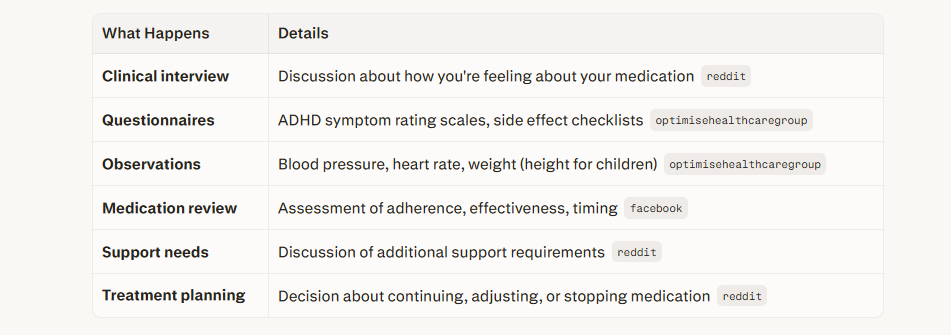
A typical annual review includes:
After the Appointment
You should receive:
Clear documentation of the review outcome
Updated prescription if continuing medication
Next appointment date or referral back to GP for shared care
Written summary for your GP if in shared care arrangement
Why Annual Reviews Are Mandatory
For Patient Safety
Annual reviews are mandatory (not optional) for several critical reasons:
Safety monitoring: ADHD medications are controlled drugs that can affect heart rate, blood pressure, and mental health
Effectiveness check: Medication that worked before may need adjustment as circumstances change
Side effect detection: New side effects may emerge over time
Optimisation: Ensuring the dose is optimised for current needs
For Shared Care Agreements
If you're on a shared care agreement with your GP:
Annual reviews are mandatory and must be attended to continue under shared care
Missing annual reviews can result in your GP withdrawing from shared care
Without shared care, you'll need to pay for private prescriptions
For Quality Assurance
Healthcare providers must demonstrate they're meeting NICE Quality Standard QS39, which requires annual specialist reviews for all patients on ADHD medication.
FAQs About ADHD Annual Reviews Under NICE NG87
Q1: How often do I need an ADHD annual review?
A: You need a specialist review at least once per year if you're taking ADHD medication. This is a NICE Quality Standard requirement. Children under 10 need reviews 3 times per year, while those over 10 need twice per year.
Q2: Can my GP do my annual review instead of a specialist?
A: Yes, if agreed by you and your specialist under a locally agreed shared care arrangement after titration and dose stabilisation. However, the initial review should be by a specialist, and ongoing GP reviews require mutual agreement.
Q3: What happens if I miss my annual review?
A: Missing annual reviews can result in your GP withdrawing from shared care, meaning you'll need to pay for private prescriptions. Annual reviews are mandatory to continue under shared care.
Q4: How long does an annual review appointment take?
A: Typical appointments last 30-60 minutes, depending on whether it's a full specialist review or a GP monitoring appointment. Complex cases or those requiring additional assessments may take longer.
Q5: Do I need to attend in person for the annual review?
A: Traditionally yes, but form-based systems are being implemented that can replace routine face-to-face reviews while still meeting NICE guidelines, significantly enhancing service efficiency. However, this depends on your clinic's policies.
Q6: What if I feel my medication is working perfectly? Do I still need an annual review?
A: Yes. Annual reviews are required regardless of stability to assess ongoing need, manage side effects, and ensure continued safety. Even optimal medication needs regular monitoring.
Q7: What questions should I ask during my annual review?
A: Ask about: medication effectiveness throughout the day, side effects, optimisation of dose, impact on education/employment, need for additional support, and whether any changes are needed.
Q8: Can I get a copy of my annual review report?
A: Yes. You have a right to access your medical records, including annual review documentation. Ask your specialist team for a copy.
Q9: What's the difference between a 6-month review and an annual review?
A: 6-month reviews (for those over 10) focus on monitoring vital signs and short-term effectiveness. Annual reviews are comprehensive assessments including all eight areas specified in NICE NG87.
Q10: How much does an annual review cost?
A: If you're on NHS shared care, annual reviews are typically free. Private annual reviews cost from £120 depending on the clinic. Some clinics may charge additional fees for questionnaires or additional assessments.
Q11: What if my GP refuses to do monitoring between annual specialist reviews?
A: This is a funded, commissioned pathway issue. Your GP should be able to monitor vital signs (blood pressure, heart rate) between specialist reviews. If they refuse, contact your practice manager or consider changing GP.
Q12: Do I still need annual reviews if I'm not taking medication?
A: NICE NG87 specifically requires annual reviews for people taking drug treatment. If you're not on medication, you may still benefit from regular reviews but it's not a strict requirement.
Q13: What if I've moved to a different area since my last review?
A: You should register with a new GP and transfer your shared care arrangement. Contact your previous specialist team to request transfer of your records and inform them of your move.
Q14: Can annual reviews be done by phone or video call?
A: This depends on your clinic's policies. Some clinics offer remote reviews for stable patients, but observations (BP, heart rate, weight) typically need to be done in person or at your GP practice.
Q15: What if I disagree with my specialist's recommendation at the annual review?
A: You have the right to express your preferences and concerns. The review should include discussion of your preference and views about treatment. If you disagree, ask for a second opinion or discuss with your GP.
The Annual Review Checklist: What to Bring
Documents to Bring
Previous annual review report (if you have it)
List of current medications (including supplements)
Blood pressure/heart rate readings from GP (if available)
Questionnaires completed before the appointment
Named third party (parent, carer, friend) if you want support
Information to Prepare
Medication adherence: How often you miss doses
Effectiveness: How well medication works throughout the day
Side effects: Any new or ongoing problems
Impact: Effect on work, school, relationships
Questions: What you want to discuss or change
The Bottom Line: Annual Reviews Protect You
ADHD annual reviews under NICE NG87 are not bureaucratic box-ticking—they're essential for:
Ensuring your medication is still safe for your heart and overall health
Confirming it's still effective for your current life circumstances
Detecting and managing side effects before they become serious
Optimising your treatment for the best possible outcomes
Maintaining your shared care agreement and NHS prescribing access
Key Takeaways
Annual specialist review is mandatory for all patients on ADHD medication
Children under 10 need 3 reviews per year; those over 10 need 2 per year
Comprehensive assessment includes 8 key areas from patient preference to support needs
Missing annual reviews can lose you shared care and NHS prescribing
Even stable patients need annual reviews — it's not optional
You have the right to participate in decisions about your treatment
Ready to Access Comprehensive ADHD Care?
Navigating ADHD treatment, annual reviews, and shared care protocols can feel overwhelming—but you deserve expert support every step of the way. Whether you're seeking your first assessment, managing medication, or preparing for your annual review, qualified healthcare professionals can guide you through the process.
Get evidence-based ADHD care that meets NICE NG87 guidelines, with experienced specialists who understand the importance of thorough annual reviews.
Visit FocusGently.com to learn about ADHD assessment, medication management, and connect with healthcare professionals who prioritise comprehensive care.