From Titration to Stable Dose: A Step-by-Step Elvanse Monitoring Checklist for Clinics

Elvanse (lisdexamfetamine) titration is a structured clinical process—not simply a matter of increasing the dose until symptoms improve. A safe pathway combines baseline assessment, gradual dose adjustment, objective symptom tracking, physical-health monitoring, side-effect review, and shared decision-making. NICE recommends recording symptoms, impairment, and adverse effects at baseline and at each dose change, with titration continuing until symptoms and functioning improve while adverse effects remain tolerable.
This clinic-focused checklist is designed for UK ADHD services and clinicians involved in initiation, titration, stabilisation, and shared care. Local protocols, the current BNF, the Elvanse Summary of Product Characteristics (SmPC), and professional judgement should always take precedence over a generic checklist.
Clinical note: This article is an educational resource, not a prescribing protocol. Elvanse should be initiated and adjusted by a healthcare professional with appropriate ADHD expertise.
What Does “Stable Dose” Mean?
A patient is not necessarily stable simply because they have taken the same dose for several weeks. A stable dose should represent a clinically considered balance between:
Meaningful improvement in ADHD symptoms.
Better functioning in relevant settings.
Acceptable duration of effect.
Tolerable or absent adverse effects.
Satisfactory cardiovascular and physical-health monitoring.
No significant new psychiatric or neurological concerns.
A clear plan for ongoing review.
The licensed Elvanse SmPC states that the dose should be individualised, taken at the lowest effective level, and increased by 10 mg or 20 mg at approximately weekly intervals when required. The usual starting dose is 30 mg once daily in the morning, although 20 mg may be used when a lower starting dose is clinically appropriate. The maximum recommended dose is 70 mg daily.
NICE describes dose optimisation as achieving reduced symptoms, positive behavioural change, and improved education, employment, or relationships, with adverse effects that are tolerable.
Step 1: Confirm the Treatment Is Appropriate
Before initiating Elvanse, confirm that the patient has:
A diagnosis of ADHD made by an appropriately trained specialist.
Clinically significant impairment requiring medication.
A treatment plan that also considers psychological, behavioural, educational, occupational, or environmental support.
A documented discussion of benefits, risks, alternatives, and patient preferences.
An appropriate previous medication history, including response or inadequate response to methylphenidate where relevant.
A plan for communication with the patient, family or carers, school, employer, GP, and pharmacy where appropriate.
For children and young people, the licensed indication specifies that Elvanse is used when response to previous methylphenidate treatment is clinically inadequate. In adults, lisdexamfetamine may be a first-line pharmacological option under NICE treatment pathways, subject to individual assessment.
The clinic should also consider whether symptoms may be better explained or significantly affected by anxiety, depression, trauma, sleep disorders, substance use, autism, learning difficulties, bipolar disorder, psychosis, or physical illness.
Step 2: Complete the Baseline Assessment
Document the baseline assessment before the first dose. The SmPC requires a cardiovascular assessment, relevant medical and psychiatric history, family history of sudden cardiac or unexplained death, and accurate pre-treatment weight. For children and adolescents, height and weight should be recorded on a growth chart.
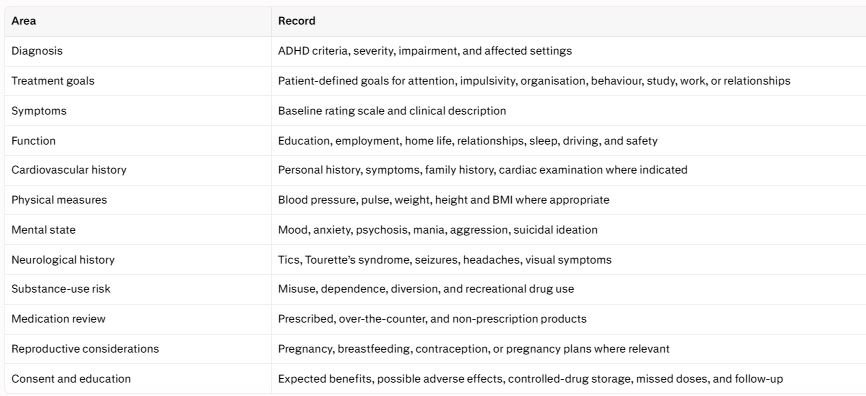
An ECG is not routinely needed for every patient. It may be indicated when the history or examination identifies a cardiac concern, such as congenital heart disease, sudden cardiac death in a close relative, exertional fainting, palpitations, chest pain, a murmur, hypertension, or treatment with another medicine that increases cardiac risk.
Step 3: Agree Measurable Treatment Goals
Medication reviews are more useful when the clinic defines what success should look like before titration begins.
Goals should be specific and observable. For example:
“Complete morning preparation with fewer prompts on four school days each week.”
“Remain engaged with a work task for 30 minutes before taking a planned break.”
“Reduce missed deadlines from four per month to one or fewer.”
“Improve classroom note-taking and homework completion.”
“Reduce impulsive interruptions during family conversations.”
Use a combination of:
Patient self-report.
Parent or carer observations.
Teacher feedback for children and young people.
Partner or family feedback where consent is given.
Work or education feedback.
Standardised rating scales.
Functional measures, not just symptom scores.
NICE recommends recording symptoms, impairment, and adverse effects at baseline and at each dose change. During titration, regular specialist contact—for example, weekly telephone contact—may be appropriate.
Step 4: Start Elvanse and Explain Administration
The usual starting dose is 30 mg once daily in the morning. A 20 mg starting dose may be appropriate in some circumstances. Dose increases are generally made in 10 mg or 20 mg increments at approximately weekly intervals, based on response and tolerability.
Give clear administration advice:
Take the dose in the morning.
Take it with or without food.
Avoid afternoon dosing because of the risk of insomnia.
Do not double the next dose after a missed dose.
The capsule may be swallowed whole or opened and mixed with soft food or water, but the entire mixture should be consumed immediately.
Do not divide one capsule or take only part of the contents.
Explain that response is not assessed solely by whether the patient “feels stimulated”. The relevant question is whether ADHD-related impairment is improving without unacceptable adverse effects.
Step 5: Review Before Each Dose Increase
Before increasing the dose, document both benefit and harm. A dose increase should not be automatic simply because symptoms remain.
Pre-increase checklist
Has there been a meaningful improvement in target symptoms?
Which symptoms remain?
Is the medication lasting long enough?
Is the patient taking it as prescribed?
Are sleep, appetite, mood, and anxiety acceptable?
Has there been irritability, emotional lability, aggression, tics, or unusual behaviour?
Is there chest pain, fainting, palpitations, or breathlessness?
What are the current blood pressure, pulse, and weight?
Has the patient started any new medication or supplement?
Is there evidence of misuse, overuse, sharing, loss, or diversion?
Does the patient want to continue, increase, pause, or reconsider treatment?
A UK shared care protocol recommends checking heart rate, blood pressure, and weight before every dose change, then assessing heart rate, blood pressure, and new or worsening psychiatric symptoms after the change.
If adverse effects are prominent and benefit is limited, consider holding the dose, reducing it, switching medication, or reviewing the diagnosis and coexisting conditions rather than continuing upward titration.
Step 6: Monitor Physical Health During Titration
Cardiovascular monitoring
Record blood pressure and pulse at each dose adjustment and at least every six months once treatment is established. For children and young people, measurements should be interpreted using appropriate age-related centiles.
A sustained resting tachycardia, arrhythmia, palpitations, or a clinically significant blood-pressure increase requires prompt clinical review. NICE advises dose reduction and referral when sustained resting tachycardia is above 120 beats per minute, arrhythmia is present, or systolic blood pressure is above the 95th percentile or has increased significantly on two occasions.
Urgent assessment is required for symptoms such as:
Chest pain.
Exertional fainting.
Severe breathlessness.
New neurological symptoms.
Sustained or clinically concerning palpitations.
Weight, appetite, and growth
Appetite suppression and weight loss are common stimulant-related concerns. Record weight regularly in adults, and record height, weight, and appetite at least six-monthly in children and adolescents while maintaining a growth chart.
During titration, ask about:
Breakfast intake.
Lunch completion.
Evening appetite.
Unintentional weight loss.
Food restriction or eating-disorder symptoms.
Growth trajectory in children.
Energy, fatigue, and exercise tolerance.
If weight loss persists or growth is affected, consider taking the medication with or after food, adding nutritious early-morning or evening snacks, seeking dietary advice, reducing the dose, considering a treatment break, or changing medication. A shared care protocol based on NICE recommends additional meals or snacks when stimulant effects have worn off and specialist review if the problem persists.
Step 7: Assess Psychiatric and Neurological Effects
At each dose change, ask specifically about:
Anxiety or agitation.
Low mood or depression.
Irritability.
Aggression or hostility.
Emotional flattening.
Mania or hypomania.
Paranoia or hallucinations.
Suicidal thoughts.
Tics or worsening Tourette’s symptoms.
Headaches, visual changes, or seizures.
Sleep onset, sleep duration, and sleep quality.
The Elvanse SmPC advises monitoring for new or worsening psychiatric disorders at every dose adjustment and at least every six months thereafter.
New psychotic or manic symptoms require urgent clinical assessment and consideration of the stimulant’s role. New or worsening seizures require discontinuation and specialist review. A patient with suicidal thoughts, mania, or psychosis should receive urgent mental-health support according to local safeguarding and crisis procedures.
Step 8: Decide Whether the Dose Is Optimised
A dose is optimised when it provides the best overall balance of:
Symptom improvement.
Functional benefit.
Duration of coverage.
Patient preference.
Acceptable sleep, appetite, mood, and physical effects.
Safe cardiovascular monitoring.
Sustainable adherence.
Avoid defining success as complete elimination of every ADHD symptom. Some residual difficulties may remain and may be better addressed with environmental changes, coaching, psychological support, education adjustments, workplace adjustments, or treatment of a coexisting condition.
Conversely, do not label treatment successful solely because the patient reports improved concentration if they have severe insomnia, weight loss, anxiety, emotional blunting, or cardiovascular symptoms.
The SmPC states that treatment should be stopped if symptoms do not improve after appropriate dose adjustment over one month. Paradoxical worsening or intolerable adverse events should prompt dose reduction or discontinuation.
Step 9: Document the Stable-Dose Review
Before transfer to shared care or routine maintenance prescribing, record:
Final dose, formulation, and administration time.
Duration on the dose.
Symptom and functional response.
Patient’s treatment goals and whether they were met.
Blood pressure and pulse.
Weight, appetite, and height where applicable.
Sleep and mental-health review.
Cardiovascular and neurological symptoms.
Adherence and controlled-drug safety.
Misuse or diversion assessment.
Current medicines and interaction review.
Patient understanding of missed doses and adverse effects.
Follow-up interval.
Named specialist contact.
Criteria for urgent referral or re-referral.
The current UK shared care protocol states that transfer to primary care should usually occur once the dose has been optimised and investigations are satisfactory for four weeks. The specialist should provide the GP with the diagnosis, current dose, relevant results, monitoring requirements, and contact details.
Shared care is not automatic. The GP must agree to participate, and the specialist retains responsibility when the GP does not accept the arrangement.
Step 10: Maintain Ongoing Monitoring
Stabilisation is not the end of monitoring. Under the Elvanse SmPC:
Blood pressure and pulse should be recorded at each dose adjustment and at least every six months.
Children and adolescents should have height, weight, and appetite recorded at least six-monthly.
Adults should have weight monitored regularly.
Psychiatric status should be reviewed at dose adjustments, at visits, and at least every six months.
NICE recommends that ADHD medication is reviewed at least annually by a healthcare professional with ADHD expertise, including discussion of whether treatment should continue. The review should consider benefits, adverse effects, adherence, preferences, and the ongoing need for medication.
A planned trial reduction or medication-free period may be considered when clinically appropriate, but trial discontinuation should be managed by the specialist under local arrangements.
Clinic-Ready Summary Checklist
Before starting
Confirm specialist diagnosis and indication.
Document treatment goals and shared decision-making.
Review medical, psychiatric, cardiovascular, neurological, medication, and substance-use history.
Record BP, pulse, weight, height, and BMI where relevant.
Complete ECG or referral if clinically indicated.
Explain administration, side effects, controlled-drug rules, and follow-up.
During titration
Review symptoms, impairment, function, and adverse effects at each contact.
Check BP, pulse, and weight before dose changes.
Recheck BP, pulse, and psychiatric symptoms after dose changes.
Monitor appetite, sleep, mood, anxiety, tics, seizures, and cardiovascular symptoms.
Use parent, teacher, patient, or workplace feedback where appropriate.
Increase only when benefit remains inadequate and tolerability is acceptable.
Keep within the maximum recommended dose of 70 mg daily.
Before stabilisation or shared care
Confirm clinically meaningful benefit.
Confirm acceptable adverse-effect profile.
Confirm satisfactory physical-health monitoring.
Document the final dose and monitoring plan.
Provide the GP with written shared-care information.
Arrange specialist follow-up and clear escalation routes.
Frequently Asked Questions
How often should Elvanse be increased during titration?
The SmPC permits increases of 10 mg or 20 mg at approximately weekly intervals. The actual interval should reflect response, adverse effects, age, physical health, and clinical judgement.
What monitoring is required after each dose change?
Clinics should assess symptom response, impairment, adverse effects, blood pressure, pulse, and relevant psychiatric symptoms. Weight should also be assessed during titration, with height and growth monitored in children and adolescents.
What is the maximum Elvanse dose?
The maximum recommended dose is 70 mg once daily. Higher doses have not been studied in the SmPC.
When should Elvanse be discontinued for lack of benefit?
The SmPC states that treatment should be stopped if symptoms do not improve after appropriate dose adjustment over a one-month period. The wider clinical decision should consider adherence, diagnosis, comorbidities, functional goals, and alternative treatments.
Is an ECG required before prescribing?
Not routinely for every patient. An ECG or further cardiac assessment may be appropriate when the history or examination identifies cardiac risk factors or symptoms.
How often should children have height and weight monitored?
The SmPC states that height, weight, and appetite should be recorded at least every six months and plotted on a growth chart. Local protocols may require more frequent weight checks, particularly during initiation or when concerns arise.
When can prescribing move to the GP?
Usually after the specialist has completed titration, the dose is optimised, investigations are satisfactory, and the patient has been stable for the period specified in the local protocol. One current UK protocol describes four weeks of satisfactory results before transfer, but local arrangements may differ.
What should clinicians do if blood pressure rises?
Repeat and interpret the result in context, assess for symptoms and recent dose changes, and discuss with the specialist. NICE recommends dose reduction and referral for sustained tachycardia, arrhythmia, or clinically significant blood-pressure elevation on repeated measurements.
Book an ADHD Assessment
Safe Elvanse prescribing begins with a careful ADHD assessment and a treatment plan that reflects the patient’s symptoms, goals, health history, and daily responsibilities.
If you or your child is experiencing difficulties with attention, impulsivity, organisation, emotional regulation, education, work, or relationships, a specialist assessment can clarify what is happening and identify appropriate next steps.
Focus Gently offers structured ADHD assessments with attention to:
Developmental and clinical history.
Symptoms across settings.
Functional impairment.
Coexisting mental-health and neurodevelopmental conditions.
Treatment preferences.
Medication and non-medication options.
Practical recommendations for school, work, and home.
Do not rely on trial-and-error prescribing or unstructured dose changes. A thorough assessment provides the foundation for safe, personalised care.