ADHD Medication: The Complete Guide to Types, Dosages, Side Effects & What to Expect

ADHD Medication: The Complete Guide to Types, Dosages, Side Effects & What to Expect
If you've been diagnosed with Attention Deficit Hyperactivity Disorder (ADHD), you're likely considering whether medication is the right choice for you. ADHD medication can be one of the most effective treatments for managing symptoms, particularly for moderate to severe cases. According to clinical research, stimulant medications improve symptoms in 70-80% of adults and 70-90% of children with ADHD, making them the gold standard of treatment [medical consensus].
This comprehensive guide covers everything you need to know about ADHD medication, including the different types available, how they work, dosing guidelines, common side effects, the titration process, monitoring requirements, and practical tips for managing your medication safely. Whether you're just starting to explore medication options or you're already on treatment and want to understand it better, this article will help you make informed decisions about your care.
Understanding ADHD Medication: How It Works
ADHD medication works by targeting specific neurotransmitters in the brain—primarily dopamine and norepinephrine—that are involved in attention, focus, impulse control, and behaviour regulation. People with ADHD often have lower levels or inefficient use of these neurotransmitters in certain brain regions responsible for executive function.
The Science Behind ADHD Medication
Stimulant medications (the most common type) work by:
Increasing dopamine availability: Dopamine is crucial for motivation, reward processing, and sustained attention
Boosting norepinephrine: This neurotransmitter helps with alertness, focus, and response to important stimuli
Enhancing brain communication: Improving signals between brain regions involved in attention and behaviour control
Reducing impulsivity: Helping the brain "pause" before acting
Improving working memory: Supporting the ability to hold and manipulate information mentally
Most ADHD medications are classified into two main categories: stimulants and non-stimulants. Stimulants are generally more effective and work faster, while non-stimulants are options when stimulants aren suitable or effective.
Types of ADHD Medication: Stimulants vs. Non-Stimulants
Stimulant Medications (First-Line Treatment)
Stimulants are the most effective and commonly prescribed ADHD medications. They typically show effects within 30-60 minutes and are recommended as first-line treatment by major guidelines including NICE (UK) and APA (USA).
1. Methylphenidate
Most common brand names: Concerta, Medikinet, Ritalin, Metadate
How it works: Blocks dopamine and norepinephrine reuptake, increasing their availability in the brain.
Available forms:
Long-acting (slow-release): Concerta tablets (18mg start, max 108mg), Medikinet capsules (10mg start)
Short-acting: Ritalin tablets (5mg, 2-3 times daily)
Typical dosing for adults:
Starting: 10-18mg once daily
Increase: Weekly by 10-18mg
Maximum: 108mg daily
Duration: Long-acting forms last 8-12 hours; short-acting lasts 3-4 hours
Best for: Most adults and children; flexible dosing options
2. Lisdexamfetamine
Brand name: Vyvanse (US), Elvanse (EU/UK)
How it works: A prodrug that converts to dextroamphetamine in the body, increasing dopamine and norepinephrine release.
Available forms: Single capsule form (30mg, 50mg, 70mg)
Typical dosing for adults:
Starting: 30mg once daily
Maximum: 70mg daily
Increase: Based on response and side effects
Duration: 10-13 hours (single daily dose)
Best for: Those who prefer simpler dosing (once daily); may have fewer side effects than methylphenidate for some
3. Dextroamphetamine
Brand names: Dexedrine, Dextrostat
How it works: Similar to lisdexamfetamine but as active dextroamphetamine
Typical dosing: Start 5mg, increase gradually; max 40mg daily
Duration: Short-acting (4-6 hours); long-acting available
Best for: Those who don't respond to methylphenidate
Non-Stimulant Medications (Second-Line Treatment)
Non-stimulants are typically considered when:
Stimulants aren effective after adequate trial
Stimulants cause intolerable side effects
There's active substance misuse (stimulants contraindicated)
Severe anxiety makes stimulants unsuitable
Cardiac risk factors exist
1. Atomoxetine (Strattera)
How it works: Selective norepinephrine reuptake inhibitor (doesn't directly affect dopamine)
Typical dosing:
Starting: 40mg daily
Target: 60-100mg daily
Full effects may take 4-8 weeks
Duration: 24 hours (once daily)
Best for: Those who can't use stimulants; may also help with anxiety
Pros: No abuse potential; once daily; may help emotional dysregulation
Cons: Takes longer to work; generally less effective than stimulants
2. Guanfacine (Intuniv)
How it works: Alpha-2A adrenergic receptor agonist
Typical dosing: Start 1mg, increase gradually; max 4-5mg daily
Best for: Children; those with aggression or tics
Pros: Non-stimulant; may help emotional control
Cons: Less effective than stimulants; can cause fatigue
3. Clonidine (Kapvay)
How it works: Similar to guanfacine (alpha-2 agonist)
Best for: Children; those with sleep problems or aggression
ADHD Medication Dosage Guidelines by Age
Adults (18+)
Methylphenidate:
Long-acting tablets: 18mg start → increase weekly → max 108mg
Long-acting capsules: 10mg start → increase gradually → doctor determines optimal
Short-acting: 5mg, 2-3 times daily, 4+ hours between doses
Lisdexamfetamine:
30mg start → max 70mg daily
Once daily dosing
Atomoxetine:
40mg start → 60-100mg target
Takes 4-8 weeks for full effect
Children (5-17 years)
Methylphenidate (first-line):
Start low (typically 10mg daily)
Increase gradually weekly
Maximum varies by weight (typically 60-90mg)
Atomoxetine (if methylphenidate unsuitable):
Weight-based dosing (typically 0.5-1.2mg/kg)
Max 100mg daily
Important Dosing Principles
Start low, go slow: Begin with lowest effective dose
Individual response varies: No way to predict optimal dose beforehand
Titration is essential: Gradually increase until therapeutic dose found
Morning dosing: Most stimulants taken morning to avoid sleep disruption
Food considerations: Some forms better with food; check specific medication
The Titration Process: Finding Your Right Dose
Before reaching a stable therapeutic dose, most patients undergo titration—the careful process of starting low and gradually increasing while monitoring effects.
What Is Titration?
Titration is like tuning a radio: you adjust the frequency until finding the clearest signal. The lowest dose might work perfectly for some, while others need higher doses. There's no way to predict this beforehand—you must test through titration.
Typical Titration Timeline
Duration: 12-16 weeks (average 14 weeks)
Week 1:
Start first prescription (low dose)
Day 5: Complete first monitoring form
Begin tracking symptoms and side effects
Weeks 2-14:
Every 2 weeks: Monitoring form with BP, pulse, weight, symptoms
Every 3 weeks: ASRS (symptom scale) progress review
Dose adjustments based on response
Prescriber responds within 2-3 working days
Weeks 12-16:
End of titration review
Dose considered stable
Treatment plan finalized
Monitoring Requirements During Titration
Blood Pressure & Pulse:
Take 1-2 hours after medication
Record every 2 weeks
Warning: Heart rate >100 bpm or BP >140mmHg → stop/review
Weight:
Track for significant unplanned loss
Report rapid changes
Symptoms & Side Effects:
Document improvements
Note any distressing side effects
Most minor side effects improve as body adjusts
Critical: Missing three monitoring updates in a row may result in discharge from service.
Common ADHD Medication Side Effects
Most Common Side Effects
Stimulants (Methylphenidate, Lisdexamfetamine):
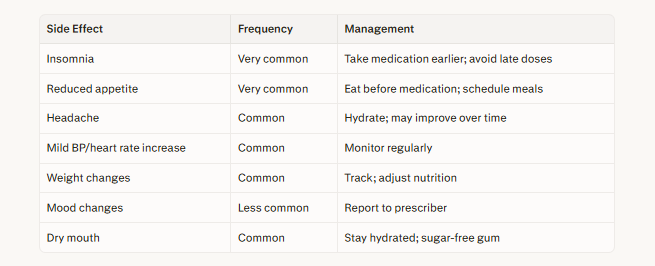
Non-Stimulants (Atomoxetine):
Fatigue/tiredness
Nausea
Decreased appetite
Mood swings
Dizziness
Takes longer to show effects
When Side Effects Improve
Most minor side effects improve as your body adjusts, typically within:
1-2 weeks for appetite changes
2-4 weeks for sleep issues
4-6 weeks for mood stabilization
When to Contact Your Prescriber Immediately
Report promptly:
Palpitations or chest pain
Dizziness
Persistent heart rate >100 bpm
Blood pressure systolic >140mmHg
Emerging psychosis or mania
Severe mood changes
Any distressing side effects
Practical Tips for Managing ADHD Medication
Taking Your Medication
Timing: Take stimulants in the morning (unless short-acting needed later)
Food: Some forms work better with food; check specific instructions
Consistency: Take at same time daily for steady effects
Missed dose: Take if remembered same day; skip if next day (don't double)
Never stop abruptly: Consult prescriber before discontinuing
Optimizing Your Experience
Nutrition:
Eat protein-rich breakfast before medication
Schedule meals (appetite may be reduced)
Stay hydrated throughout day
Limit caffeine (can increase side effects)
Sleep:
Maintain consistent sleep schedule
Create calming bedtime routine
Limit screens before bed
Adjust medication timing if causing insomnia
Exercise:
Regular physical activity improves focus
Reduces impulsivity
Boosts mood and energy
Monitoring:
Keep BP/pulse log
Track symptoms weekly
Note side effects promptly
Attend all monitoring appointments
Medication and Lifestyle Considerations
Alcohol:
Avoid or limit alcohol
Can increase side effect risk
Read medication leaflet for specific guidance
Cold/Flu Medicines:
Avoid decongestants (can interact)
Avoid caffeine-containing products
Check with prescriber before taking
Work/School:
Medication may improve performance
Consider accommodations if needed
Track effectiveness during work hours
Travel:
Keep medication in original container
Carry prescription copy
Plan for time zone changes
Check local regulations for controlled substances
ADHD Medication: Safety and Long-Term Use
Is ADHD Medication Safe Long-Term?
Yes, when properly monitored. Research shows:
ADHD medications are safe for long-term use
Benefits generally outweigh small cardiovascular risks
Regular monitoring minimizes potential issues
Most people continue medication safely for years
Monitoring for long-term users:
BP, pulse, weight every 6 months
Annual symptom review
Monitor for emerging side effects
Assess continued need and effectiveness
Cardiovascular Considerations
Research findings:
ADHD medications cause only small increases in blood pressure and heart rate
Continued professional monitoring recommended
Benefits generally outweigh cardiovascular risks
Inform prescriber of any heart conditions
Warning signs:
Chest pain
Palpitations
Dizziness
Shortness of breath
Pregnancy and Breastfeeding
Discuss with prescriber:
Some medications may need adjustment
Benefits vs. risks evaluation
Non-stimulant options may be considered
Individualized decision based on your situation
Substance Misuse Considerations
If you have active substance misuse:
Stimulants may be contraindicated
Non-stimulants (atomoxetine) may be preferred
Discuss openly with prescriber
Treatment may need adjustment
ADHD Medication FAQs: Common Questions Answered
How long does ADHD medication take to work?
Stimulants: Show effects within 30-60 minutes of taking. Full benefits through titration take 12-16 weeks.
Non-stimulants (atomoxetine): May take 4-8 weeks for full effects.
What is a therapeutic dose?
The therapeutic dose is the most effective dose providing greatest symptom relief with least side effects. This is the goal of titration—unique to each person.
Can I skip titration and start at a higher dose?
No. Starting low ensures safe adjustment to medication. Some need lowest dose; others need higher—cannot predict beforehand. Titration is essential for safety.
What if my first medication doesn't work?
If first-line treatment isn effective after 6 weeks, switch to alternative stimulant (methylphenidate ↔ lisdexamfetamine). If both fail, consider non-stimulant (atomoxetine). May require 4+ appointments to establish right medication.
Can I drink alcohol while on ADHD medication?
Avoid or limit alcohol. It can increase side effect risk. Always read medication leaflet for specific guidance.
Can I take cold/flu medicines with ADHD medication?
Avoid cold/flu medicines with decongestants or caffeine—they can interact. Check with prescriber before taking any new medications.
Can GPs prescribe ADHD medication?
Generally no. GPs cannot initiate ADHD medication. They can prescribe under Shared Care Agreement with specialist after titration complete. Some exceptions for continuing stable prescriptions.
What happens if my GP refuses Shared Care?
Psychiatrist continues prescribing and monitoring. You can:
Request GP meeting to discuss
Change to GP accepting shared care
Use NHS Right to Choose for alternatives
Is off-label prescribing safe?
Yes. Some ADHD medications licensed only for children but recommended for adults by guidelines. This "off-label" prescribing is safe and evidence-based.
Can I work while on ADHD medication?
Yes. Medication often improves work performance by reducing impulsivity, improving focus, and helping time management. Many employers offer ADHD accommodations.
How much does ADHD medication cost?
NHS: Free at point of use (standard prescription fees if applicable in your region)
Private: Medication costs vary (£20-£100/month depending on type and dose)
What if my pharmacy doesn't have my medication?
Options:
Pharmacy releases prescription for another pharmacy
Another pharmacy retrieves prescription
Prescription code for alternative pharmacy
Do I need to monitor blood pressure at home?
Yes. Check BP and pulse 1-2 hours after medication, record every 2 weeks during titration.
What if I miss monitoring forms?
Missing three monitoring updates in a row may result in discharge. GP can re-refer in future, but review needed before restarting.
Can ADHD medication cause weight loss?
Yes, commonly. Stimulants may reduce appetite and cause weight loss. Track weight; eat before medication; schedule meals; report significant changes.
Is ADHD medication addictive?
When used as prescribed: Low risk. Stimulants are controlled substances but addiction risk is low when medically supervised. Misuse (taking without prescription, higher doses) increases risk significantly.
Can I stop ADHD medication suddenly?
Don't stop abruptly. Consult prescriber for safe discontinuation. Some may need gradual dose reduction.
Ready to Learn More About ADHD Medication?
Understanding ADHD medication empowers you to make informed decisions about your treatment. Whether you're considering medication for the first time or optimizing your current regimen, the right information and support make all the difference.
You don't have to navigate this alone. Visit Focus Gently for personalized guidance on ADHD medication management, coping strategies, workplace accommodations, and neurodiversity-friendly lifestyle tips. Our resources help you thrive with ADHD medication and build sustainable strategies for long-term success.
Your journey to better ADHD management starts with the right knowledge—and the right support is available now. https://www.focusgently.com/