Elvanse and Sleep: Tips to Reduce Insomnia | UK Guide
Elvanse can cause insomnia in some people, but sleep problems are often manageable with careful timing, consistent routines and a review with your prescriber. Elvanse’s UK patient information specifically advises avoiding afternoon doses because they can disturb sleep, while NICE recognises sleep as an important part of ADHD treatment planning and monitoring.
mportant: Do not stop, skip, delay or change your Elvanse dose without advice from your prescriber. If sleep problems are severe, persistent or affecting your safety, contact the clinician who manages your ADHD treatment.
Why Elvanse can affect sleep
Elvanse contains lisdexamfetamine, a prodrug that the body converts into dexamfetamine. Because it is usually taken once daily in the morning, its effects can continue for many hours; the product information reports effects lasting up to 13 hours in children and 14 hours in adults in clinical studies.
Insomnia is listed as a very common side effect of Elvanse across children, adolescents and adults. The patient information also advises against taking an afternoon dose because of the risk of sleep disturbance.
Sleep can be affected in different ways:
Difficulty falling asleep after a normally active evening.
Waking during the night.
Waking too early and being unable to return to sleep.
Feeling mentally “switched on” at bedtime.
A rebound in tiredness, irritability or low concentration as the medicine wears off.
Not everyone who takes Elvanse develops insomnia. Individual response, dose, timing, caffeine, stress, screen use and existing sleep habits all influence how restful sleep feels.
Start with medication timing
The most important first step is to check that Elvanse is being taken at the time your prescriber recommended. The UK patient information says to take one capsule each morning and to avoid afternoon doses because of the possibility of insomnia.
If you are taking it later than intended—perhaps because of a late start, shift work or forgetting a dose—do not simply move it later without advice. The product information says that if a dose is missed, treatment should resume the next day rather than taking a double dose.
A simple medication-and-sleep diary can reveal patterns:
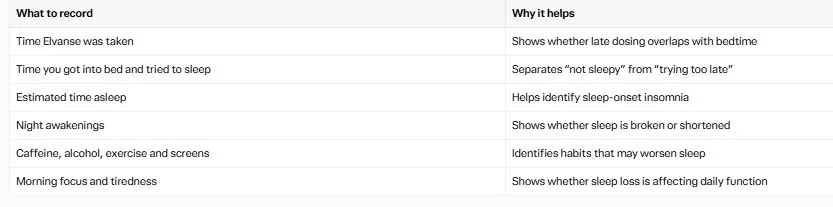
Bring this record to your next review. NICE advises that treatment plans should consider how ADHD symptoms affect everyday life, including sleep, and that prescribers should tailor treatment to individual needs.
Build an ADHD-friendly wind-down routine
A wind-down routine is especially useful if your mind tends to remain busy at bedtime. The aim is not perfection; it is to give your body and brain a predictable signal that the day is ending.
Try a 30–60 minute routine such as:
Dim the lights and put your phone away from the bed.
Write tomorrow’s top three tasks or any worries on paper.
Have a shower, change into comfortable clothes and brush your teeth.
Read something light, listen to calming audio or do gentle stretching.
Keep the bedroom cool, dark and quiet.
Get into bed only when you feel sleepy, rather than lying awake scrolling.
For ADHD, external cues matter. Alarms for “start winding down”, “medication tomorrow” and “lights out” can reduce the mental load of remembering each step.
Manage caffeine and evening stimulation
Caffeine can add to the stimulant effect of Elvanse and make it harder to fall asleep. Coffee, energy drinks, cola, some teas and pre-workout supplements can all contribute, especially if consumed in the afternoon or evening.
Practical steps include:
Avoid caffeine after early afternoon if you notice sleep problems.
Reduce energy drinks and high-caffeine supplements, particularly alongside stimulant medication.
Avoid alcohol close to bedtime; it may make you feel sleepy initially but can fragment sleep.
Limit intense exercise close to bedtime, although regular daytime exercise can support better sleep.
Reduce late-night work, gaming or scrolling if it keeps your mind alert.
NICE highlights the value of a healthy lifestyle, including regular exercise, as part of ADHD care. It also recommends discussing treatment preferences, concerns and adherence factors before and during treatment.
Protect appetite, meals and hydration
Elvanse commonly reduces appetite, and poor food intake can leave you feeling depleted by evening. Low energy, headaches and irritability can make it harder to settle at night. The product information lists decreased appetite, weight loss, dry mouth and headache among the most common side effects.
Helpful habits include:
Eat a regular breakfast and lunch, even if appetite is low.
Keep simple, appealing foods available: yoghurt, milk drinks, smoothies, soup, eggs, sandwiches, fruit or nuts.
Avoid going to bed hungry; a light snack may help if hunger is keeping you awake.
Drink water through the day, but reduce large amounts immediately before bed to limit night-time waking.
Tell your prescriber about ongoing appetite loss or weight loss.
NICE recommends monitoring physical health during ADHD medication treatment, including weight, pulse and blood pressure. Sleep, appetite and weight changes are relevant information for your prescriber.
What to do if insomnia continues
If you take Elvanse in the morning, follow good sleep habits and still cannot sleep, contact your prescriber. They may review:
The dose and whether it is providing more benefit than side effects.
The timing of your dose.
Whether another formulation or ADHD medicine may suit you better.
Coexisting issues such as anxiety, depression, shift work, sleep apnoea or other sleep disorders.
Other medicines, caffeine or substances that could affect sleep.
NICE says that when prescribing stimulants, clinicians should recognise that effect size, duration and adverse effects vary between people. It also says medication should be tailored to the individual, and that treatment decisions can be revisited.
Do not use sleeping tablets, antihistamines, alcohol or extra ADHD medication to force sleep without clinical advice. These approaches can create new problems, interact with medication or mask an issue that needs review.
When to seek urgent help
Contact your prescriber promptly if insomnia is accompanied by:
A sustained very fast heart rate, palpitations or chest pain.
Fainting, severe dizziness or breathlessness.
New or worsening anxiety, agitation, low mood, hallucinations or unusual thoughts.
Severe headache, confusion or visual disturbance.
Sleep loss that makes driving, work or caring responsibilities unsafe.
The Elvanse product information lists palpitations, tachycardia, anxiety, agitation, dizziness and blurred vision among possible adverse effects, and advises prompt cardiac assessment for symptoms such as exertional chest pain or unexplained fainting.
For an emergency, call 999. For urgent but non-emergency NHS advice in the UK, call 111.
Book an ADHD assessment
If sleep problems, poor focus, restlessness or daytime exhaustion have been affecting your life and you suspect ADHD may be part of the picture, a proper assessment can help. NICE says ADHD should be diagnosed by an appropriately qualified specialist following a full clinical and psychosocial assessment, including developmental and psychiatric history—not from a rating scale alone.
FAQs
Does Elvanse cause insomnia?
Yes, insomnia is a very common side effect of Elvanse. The UK product information lists insomnia among the most frequent adverse effects and advises avoiding afternoon doses because they may disturb sleep.
What time should I take Elvanse?
Take it exactly as your prescriber has advised. UK patient information says Elvanse is usually taken once each morning and should not be taken in the afternoon because of the risk of insomnia.
Can I take a missed Elvanse dose later in the day?
No. The product information says a missed dose should be skipped and treatment resumed the next day; it also warns against afternoon dosing because of insomnia risk. Never take a double dose to catch up.
How long does Elvanse stay in your system?
Elvanse’s effects can continue for many hours. In clinical studies, effects were ongoing 13 hours after dosing in children and 14 hours after dosing in adults when taken in the morning. This is why timing matters for sleep.
What should I do if Elvanse keeps me awake?
Keep a sleep and medication diary, review caffeine and evening habits, and contact your prescriber if the problem continues. They can assess dose, timing, side effects and whether a different treatment approach may be more suitable.
Can sleep problems mean my Elvanse dose is too high?
Not necessarily. Insomnia can occur at different doses and can also be influenced by timing, caffeine, anxiety, stress or other sleep conditions. Only your prescriber can decide whether a dose adjustment is appropriate.
Ready to understand your symptoms and explore the right support? Book an ADHD assessment with Focus Gently. Focus Gently offers a comprehensive online adult ADHD assessment with a written report, and states that people diagnosed through the service can move into treatment with the clinic.