
Many people notice some effect from Elvanse within about 1–2 hours of taking it in the morning, but the full benefit and the right dose can take several weeks to establish. Elvanse is a long-acting ADHD medicine: in clinical studies, its effects were still ongoing 13 hours after dosing in children and 14 hours after dosing in adults when taken once daily in the morning.
Important: This article is general information, not personal medical advice. Do not increase, skip or stop Elvanse without speaking to your prescriber.
Why Elvanse takes time to work
Elvanse contains lisdexamfetamine, a prodrug. After you swallow the capsule, your body absorbs lisdexamfetamine and converts it—mainly in red blood cells—into dexamfetamine, the active stimulant responsible for the therapeutic effect.
This conversion process means Elvanse does not act instantly like an immediate-release tablet. Instead, it is designed to provide a gradual onset and a longer period of effect, which can be useful for work, study and daily routines.
When you may notice effects
Individual response varies, but a typical pattern is:
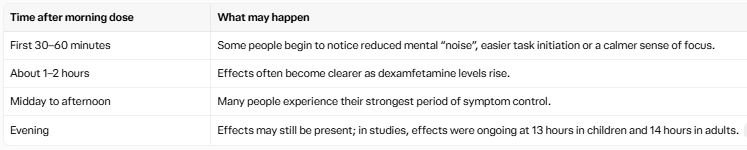
Food can affect how quickly dexamfetamine reaches its peak level. The product information reports that a high-fat meal delayed the time to peak concentration by about one hour, although it did not affect the overall amount of dexamfetamine absorbed.
First dose versus the right dose
There is an important difference between Elvanse starting to work and Elvanse working optimally.
First dose: Some people feel a noticeable change on day one; others notice little at first.
First week: Your prescriber may assess whether the starting dose is helping and whether side effects are manageable.
Titration period: The dose may be adjusted in steps, often at approximately weekly intervals, until benefits and side effects are balanced.
Several weeks: It can take time to identify whether the current dose is right, whether timing needs review, and whether another option may suit you better.
The UK product information states that the usual starting dose is 30 mg once daily in the morning, with 20 mg as a possible lower start when a clinician considers it appropriate. Doses may be increased by 10 mg or 20 mg at approximately weekly intervals, and the maximum recommended dose is 70 mg daily. These are prescribing details, not instructions to change your dose.
What “working” feels like
Elvanse may not feel dramatic. For many adults, the benefit is less about feeling stimulated and more about everyday tasks becoming easier.
Possible signs include:
Starting tasks with less delay.
Staying with a task for longer.
Finding it easier to follow conversations or instructions.
Less impulsive interrupting, spending or decision-making.
Better ability to use routines, lists and reminders.
Reduced overwhelm when switching between tasks.
NICE advises that medication should be titrated against both symptoms and adverse effects, and that treatment should be tailored to the individual.
Why it may seem not to work
If Elvanse does not seem to be helping, consider these common explanations:
It is too early. The first few days may not reflect the eventual response.
The dose is not yet right. Titration exists because the best dose differs between people.
Timing is inconsistent. Taking it much later than usual can change the pattern of effect and may disturb sleep.
Sleep is poor. Insomnia is a very common Elvanse side effect and can reduce next-day focus.
Food timing matters. A high-fat meal can delay peak dexamfetamine levels by around an hour.
Another condition is contributing. Anxiety, depression, sleep disorders, stress or other neurodevelopmental conditions can affect attention and functioning.
The medicine may not suit you. NICE recommends considering a switch after an adequate six-week trial if there has not been enough benefit.
How to track whether it is working
A simple daily record can make medication reviews more useful. Track:
Time you took Elvanse.
When you first noticed an effect.
How long the effect lasted.
Ability to start and complete key tasks.
Sleep, appetite, mood, anxiety and physical symptoms.
Blood pressure and pulse if your prescriber has asked you to monitor them.
NICE recommends monitoring heart rate and blood pressure before and after each dose change and every six months thereafter. It also recommends recording ADHD symptoms, impairment and adverse effects during titration.
When to contact your prescriber
Contact your prescriber if:
You notice no benefit after several weeks at an adequate dose.
Benefits wear off too early or interfere with sleep.
You have significant appetite loss, weight loss, anxiety, low mood or irritability.
You develop palpitations, chest pain, fainting, severe headache or breathlessness.
You feel pressured to increase the dose yourself.
Elvanse’s product information says treatment should be stopped if symptoms do not improve after appropriate dose adjustment over one month. It also advises prompt cardiac assessment for exertional chest pain, unexplained fainting or other symptoms suggesting heart disease.
For urgent symptoms, call 999. For urgent non-emergency NHS advice, call 111.
FAQs
How quickly does Elvanse start working?
Many people notice effects within about 1–2 hours of a morning dose, although this varies. Elvanse is a prodrug, so it needs to be absorbed and converted into dexamfetamine before it becomes active.
How long does Elvanse last?
In clinical studies, effects were ongoing 13 hours after dosing in children and 14 hours after dosing in adults when taken once daily in the morning. Individual duration varies.
Does food affect how quickly Elvanse works?
Elvanse can be taken with or without food. A high-fat meal can delay the time to peak dexamfetamine concentration by about one hour, although it does not reduce the total amount absorbed.
What if I feel nothing on the first day?
Do not increase your dose yourself. Some people need dose titration and several weeks of review before the right balance of benefit and side effects is found.
What if Elvanse wears off too early?
Tell your prescriber. They may review dose, timing, sleep, side effects and whether a different ADHD medicine or formulation may be more suitable. NICE advises considering a switch after an adequate six-week trial if benefit is insufficient.
Can I take Elvanse later in the day if it wears off too soon?
No. Do not change the timing or take an extra dose without prescriber advice. The product information says a missed dose should be skipped and treatment resumed the next day, and warns that afternoon doses can cause insomnia.
Book an ADHD assessment
If you are still waiting for a diagnosis, or you are unsure whether ADHD is contributing to difficulties with focus, organisation or impulsivity, a full assessment is the appropriate first step. NICE says ADHD should be diagnosed by an appropriately qualified specialist following a full clinical and psychosocial assessment, including developmental and psychiatric history—not from a rating scale alone.
Ready to get clarity and support? Book an ADHD assessment with Focus Gently. Focus Gently provides comprehensive online adult ADHD assessments with a written report, and offers clinician-led medication titration for adults with an existing UK diagnosis.