NICE NG87 ADHD Medication Guidelines 2026: Complete Guide for UK Adults & Treatment Recommendations

The NICE NG87 guideline (Attention deficit hyperactivity disorder: diagnosis and management) is the gold standard for ADHD treatment in the UK. Published in 2018 and last reviewed on 7 May 2025, this comprehensive guideline sets the clinical standards that every NHS trust, private clinic, and healthcare professional must follow when prescribing ADHD medication.
For UK adults with ADHD, understanding NICE NG87 is crucial. These guidelines determine which medications you can access, how treatment should be monitored, what doses are appropriate, and when medication should be started or stopped. Following NG87 ensures you receive evidence-based, safe, and effective treatment.
This comprehensive guide breaks down everything you need to know about NICE NG87 ADHD medication recommendations, including the medication hierarchy, dosing protocols, monitoring requirements, shared care agreements, and practical FAQs to help you navigate your treatment journey.
What Is NICE NG87?
Overview
NICE Guideline NG87 is the National Institute for Health and Care Excellence's comprehensive guideline on ADHD diagnosis and management. It:
Covers children, young people, and adults with ADHD
Updates and replaces the older NICE guideline CG72 (2008)
Applies across the UK (NHS and private sectors)
Becomes mandatory for NHS services and expected standard for private practice
Key Areas Covered
NG87 includes recommendations on:
Recognition and referral
Information and support
Medication, including monitoring and review
Adherence to treatment
Service organisation and training
Diagnosis
Dietary advice
Why NG87 Matters for Patients
Following NG87 ensures:
Evidence-based treatment backed by the latest research
Safe medication practices with proper monitoring
Consistent care standards across all UK healthcare providers
Protection from inappropriate prescribing
Clear pathways for treatment escalation or switching
Medication Hierarchy for Adults: What NICE NG87 Says
First-Line Treatment: Stimulants
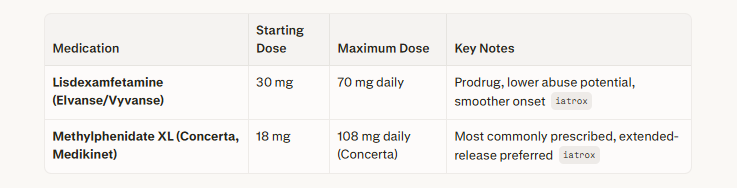
According to NG87, stimulant medications are first-line treatment for adults with ADHD. The guideline specifies:
When to Start Stimulants
NG87 recommends stimulants for adults with ADHD when:
Diagnosis is confirmed by a specialist
ADHD symptoms cause significant impairment in multiple areas (work, relationships, daily functioning)
No contraindications exist (cardiac issues, active substance misuse, severe anxiety)
Patient prefers medication over non-pharmacological interventions
Switching Between Stimulants
Key NG87 recommendation: If one stimulant is ineffective after 6 weeks, switch to the other.
Example pathway:
Start methylphenidate XL 18mg
Increase gradually over 4-6 weeks
If insufficient response at maximum tolerated dose → switch to lisdexamfetamine 30mg
Titrate lisdexamfetamine over 4-6 weeks
If still ineffective → consider non-stimulant (atomoxetine)
Second-Line Treatment: Non-Stimulants
Atomoxetine (Strattera) is the recommended second-line option when:
Stimulants are contraindicated (active substance misuse, severe anxiety, cardiac risk)
Stimulants are not tolerated (significant side effects)
Stimulants are ineffective after adequate trials of both methylphenidate and lisdexamfetamine
Patient prefers non-controlled medication
Atomoxetine Dosing
Weight-based dosing (important for adults under or over average weight)
Takes 4-8 weeks for full therapeutic effect
Risk of liver toxicity (rare but serious)
Risk of suicidal ideation (especially in young adults)
Requires monitoring for mood changes
When Atomoxetine Is Preferred
NG87 specifically recommends atomoxetine for:
Patients with active substance use disorders (lower abuse potential)
Those with severe anxiety that stimulants might worsen
Patients with cardiac risk factors where stimulants are contraindicated
People who prefer non-controlled medication (not a Schedule 2 drug)
NICE NG87 Monitoring Requirements: Essential Safety Protocols
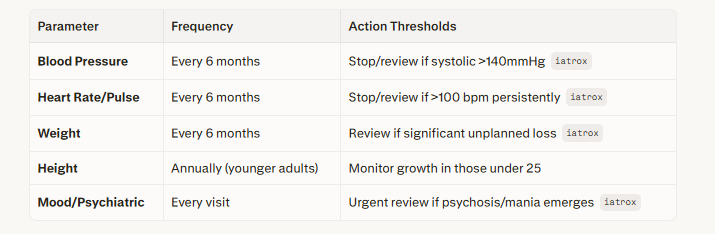
Physical Monitoring Every 6 Months
NG87 mandates essential monitoring every 6 months for all adults on ADHD medication:
ECG Requirements
ECG is NOT routinely required for all patients. NG87 specifies:
ECG only if cardiac history or symptoms exist
No routine ECG for patients without cardiac risk factors
Consider ECG if family history of sudden cardiac death
Consider ECG if patient reports palpitations, chest pain, or fainting
Medication Adherence Monitoring
NG87 emphasizes monitoring adherence to treatment:
Ask patients about missed doses
Discuss barriers to taking medication
Address concerns about side effects
Simplify regimens (e.g., switch to once-daily extended-release)
Shared Care Agreements (SCA): NG87 Requirements
What Is a Shared Care Agreement?
A Shared Care Agreement (SCA) is the formal arrangement where:
Specialist initiates and titrates medication
GP prescribes at stabilized dose under NHS rates
Specialist retains clinical responsibility for ADHD treatment
Monitoring continues as per NG87 requirements
NG87 "Must Dos" for Shared Care
DO NOT accept SCA if:
Patient is unstable (dose still being adjusted)
Dose is not finalized
Monitoring requirements are unclear
Stop or Review if:
Heart rate >100 bpm persistently
Blood pressure systolic >140mmHg
Significant unplanned weight loss
New psychosis or mania symptoms → Urgent Specialist Review
When SCAs Should Be Established
NG87 recommends establishing shared care when:
Patient is on stable, effective dose
No significant side effects
Monitoring plan is clear and understood by GP
Patient demonstrates good adherence
At least 3 months of stability at maintenance dose
NICE NG87 Dosing Protocols: Step-by-Step
Methylphenidate Titration (Adults)
Week 1-2: Start 18mg XL once daily
Week 3-4: Increase to 36mg XL if insufficient response
Week 5-6: Increase to 54mg XL if tolerated and needed
Week 7-8: Increase to 72mg XL if needed
Week 9-12: Increase to 108mg XL (maximum) if needed
Key points:
Increase by 18mg increments every 2 weeks
Monitor response and side effects at each step
Don't exceed 108mg daily
Some patients respond at lower doses (36-54mg)
Lisdexamfetamine Titration (Adults)
Week 1-2: Start 30mg once daily
Week 3-4: Increase to 50mg if insufficient response
Week 5-6: Increase to 70mg (maximum) if needed
Key points:
Increase by 20mg increments every 2 weeks
70mg is the maximum recommended dose
Prodrug converts slowly, providing smoother onset
Lower abuse potential than methylphenidate
Atomoxetine Titration (Adults)
Week 1-2: Start 40mg once daily
Week 3-4: Increase to 80mg if tolerated and needed
Week 5+: Maximum 100mg if necessary
Key points:
Takes 4-8 weeks for full effect
Weight-based dosing for under/over average weight
Monitor for mood changes and suicidal ideation
Monitor liver function if symptoms develop
What NG87 Says About Specific Populations
Adults with Comorbid Conditions
ADHD + Anxiety/Depression:
Treat ADHD first (stimulants may improve anxiety)
If anxiety worsens, consider atomoxetine
Monitor mood closely during titration
ADHD + Substance Use Disorder:
Atomoxetine preferred (lower abuse potential)
If using stimulants, use lisdexamfetamine (prodrug, lower abuse potential)
Avoid immediate-release formulations
Close monitoring for misuse
ADHD + Cardiac Conditions:
Cardiac assessment before starting stimulants
ECG if cardiac history or symptoms
Consider atomoxetine if cardiac risk is significant
Monitor BP and HR closely
ADHD + Bipolar Disorder:
Stabilize mood before treating ADHD
Psychiatric specialist must manage both conditions
Stimulants may trigger mania in unipolar bipolar
Monitor for mood switching
Older Adults (Over 60)
NG87 notes limited evidence for older adults but recommends:
Lower starting doses
Slower titration
More frequent monitoring (cardiovascular focus)
Consider drug interactions with other medications
Weigh benefits vs risks carefully
Dietary Advice and NG87
What NICE NG87 Says About Diet
NG87 includes specific recommendations on dietary advice:
No evidence that specific diets treat ADHD in adults
Avoid food colorings and preservatives if they worsen symptoms (more relevant for children)
Maintain healthy, balanced diet while on medication
Take medication with food if appetite suppression occurs
Avoid vitamin C/acidic foods within 1 hour of stimulant doses (reduces absorption)
Weight Management
Given that appetite suppression affects 30-50% of stimulant users:
Monitor weight every 6 months
Encourage eating before medication
Suggest high-calorie snacks during peak medication effect
Consider appetite "booster" doses in evening if significant weight loss
FAQs About NICE NG87 ADHD Medication Guidelines
Q1: Is NICE NG87 legally binding for private clinics?
A: While NG87 is mandatory for NHS services, private clinics are expected to follow it as the gold standard of care. Reputable private clinics follow NG87 to maintain CQC registration and clinical credibility. Deviating significantly from NG87 could raise concerns about care quality.
Q2: Can doctors prescribe outside NG87 recommendations?
A: Yes, doctors can prescribe off-guideline if clinically justified (e.g., unusual circumstances, patient-specific factors). However, they must document the rationale and accept responsibility for the decision. NG87 is the standard, so deviating requires strong clinical reasoning.
Q3: Why does NG87 recommend stimulants as first-line treatment?
A: Stimulants have the strongest evidence base with 70-80% response rates in adults. They work within 30-60 minutes, have predictable effects, and are well-studied. NG87 bases recommendations on the highest quality evidence available.
Q4: How long should I stay on ADHD medication according to NG87?
A: NG87 doesn't specify a maximum duration. Medication can be continued long-term if:
It provides sustained benefit
Side effects are manageable
Annual reviews confirm continuing need
No contraindications develop
Patient wishes to continue
Q5: What happens if NG87 guidelines change?
A: NG87 was last reviewed on 7 May 2025. Guidelines are typically reviewed every 3-5 years. When updated, healthcare providers have 3-6 months to implement changes. Your prescriber should explain any changes affecting your treatment.
Q6: Can I request a specific medication under NG87?
A: Yes, you can discuss preferences with your prescriber. NG87 provides options (methylphenidate or lisdexamfetamine as first-line), and patient preference is considered. However, the prescriber makes the final decision based on clinical assessment.
Q7: Does NG87 apply to children and adults equally?
A: NG87 covers both children/young people and adults but has different recommendations for each group. For example, medication thresholds differ, and children have additional monitoring requirements (growth, school performance).
Q8: What if my GP refuses shared care despite NG87 recommendations?
A: NG87 provides guidance, but GP acceptance is not guaranteed. Your GP may refuse for various reasons (lack of expertise, practice policy). If this happens, you'll need to continue private prescribing or seek shared care at another practice.
Q9: Are there any medications NG87 explicitly recommends against?
A: NG87 doesn't explicitly recommend against specific medications but notes that:
Bupropion is not recommended (insufficient evidence for ADHD in UK)
Modafinil is not recommended (not licensed for ADHD in UK)
Alpha-2 agonists (guanfacine) have limited evidence in adults
Q10: How often should medication reviews happen under NG87?
A: NG87 specifies:
Titration phase: Every 2-4 weeks
Stable phase: Every 6 months (physical monitoring)
Annual review: Comprehensive assessment of continuing need
More frequent if side effects or concerns arise
The Bottom Line: NG87 Ensures Safe, Effective ADHD Care
NICE NG87 represents the gold standard for ADHD medication in the UK. By following evidence-based guidelines for medication selection, dosing, monitoring, and shared care, NG87 protects patients while ensuring access to effective treatment.
Key takeaways:
Stimulants (methylphenidate or lisdexamfetamine) are first-line
Monitoring every 6 months is essential (BP, pulse, weight)
Switch after 6 weeks if one stimulant is ineffective
Atomoxetine is second-line for contraindications or intolerance
Shared care requires stable dose and clear monitoring plan
Take Control of Your ADHD Treatment with Evidence-Based Care
Understanding NICE NG87 empowers you to advocate for high-quality, evidence-based ADHD treatment. Whether you're starting medication, switching treatments, or ensuring proper monitoring, these guidelines exist to protect your health while maximizing treatment benefits.
Ready to access ADHD treatment following NICE NG87 standards? Connect with clinically-informed resources, ADHD-friendly tools, and upcoming nurse-led assessments that follow evidence-based guidelines:
Visit Focus Gently for ADHD-friendly digital planners and evidence-based content: https://www.focusgently.com/