Private ADHD Titration in the UK: Costs, Appointments & What's Included

Getting a private ADHD diagnosis in the UK is only the beginning. For most people who start medication, the next phase—titration—is where treatment actually takes shape. This guide explains what private ADHD titration involves, typical costs in 2026, what happens at each appointment, and how to plan your budget and timeline with confidence.
What is ADHD titration?
ADHD titration is the structured process of starting medication at a low dose and gradually adjusting it under specialist supervision until you reach the lowest effective dose with acceptable side effects. It is not a one-off prescription; it is a monitored pathway that usually spans 6–12 weeks, sometimes longer if you switch medications or need extra time to stabilise.
The goal is to balance symptom control (focus, organisation, impulsivity, restlessness) against side effects (sleep, appetite, mood, heart rate, blood pressure). Titration is recommended by NICE and is standard practice across both NHS and private services in the UK.
How long does private ADHD titration take?
Most private titration pathways run over 8–12 weeks, with reviews every 1–4 weeks depending on the provider and medication. A typical pattern looks like this:
Weeks 0–2: Baseline checks and starting dose
Weeks 2–6: Stepwise dose adjustments (often weekly or fortnightly)
Weeks 6–12: Fine-tuning timing, formulation, or switching if needed
Month 3–6: Consolidation and preparation for shared care or ongoing private prescribing
Some clinics offer a 12-week "titration package" with three scheduled prescriber sessions (T1, T2, T3), while others charge per review appointment.
What happens at a titration appointment?
A private titration appointment is more focused than the diagnostic assessment. You and your prescriber review data, adjust the plan, and agree on the next prescription. Expect the following:
Review of symptom change since the last dose adjustment (focus, productivity, emotional regulation)
Side-effect check (sleep, appetite, anxiety, irritability, palpitations)
Physical observations where indicated (blood pressure, pulse, weight)
Discussion of daily functioning (work, study, relationships, driving)
Dose adjustment decision (increase, maintain, reduce, or switch medication)
Safety advice and when to contact the clinic between appointments
New private prescription if appropriate
Keeping brief daily notes between reviews (focus ratings, sleep hours, appetite, mood) makes these conversations much more precise and speeds up stabilisation.
Private ADHD titration costs in 2026
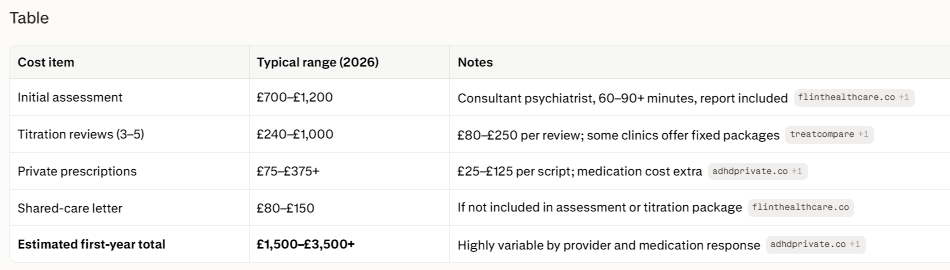
Costs vary by provider, clinician seniority, and whether you buy a package or pay per review. In 2026, typical figures are:
Initial private ADHD assessment: £500–£1,500 (median around £950–£1,050 for consultant-led assessments)
Titration follow-up appointments: £80–£250 each, with most people needing 3–5 reviews
Titration packages: £350–£750 for a 3-appointment pathway; some clinics charge £150–£400 per month during titration
Private prescriptions: £25–£125 per script, plus the pharmacy cost of the medication
Shared-care letter to GP: often £80–£150 if charged separately
Realistically, if you proceed to medication, total first-year spend (assessment + titration + prescriptions) commonly lands between £1,500 and £3,500+, depending on how many reviews you need and whether your GP accepts shared care.
Typical cost breakdown (adult, private route)
What's included in a private titration service?
Inclusion varies, so always ask for a written breakdown before booking. Common inclusions in a private titration package are:careadhd.
One initial medication consultation (treatment goals, options, baseline checks)
Two or more follow-up check-ins (weeks 4 and 8, or similar)
Dose adjustments and personalised guidance
Private prescriptions when clinically appropriate
Monitoring of symptoms, side effects, and basic observations
A titration summary letter once stable
Common exclusions (often charged separately) include:
The medication itself (paid at the pharmacy)
Additional reviews beyond the package
ECG or specialist physical monitoring if required
Ongoing quarterly reviews after titration
Repeat prescription admin fees between appointments
Private vs NHS titration: key differences
Private titration is faster and more flexible, but you pay for speed and continuity.
Waiting times: Private titration often starts within days or weeks of diagnosis; NHS titration can take months, especially if your local service is backlogged.
Review frequency: Private services typically offer weekly or fortnightly contact during dose changes; NHS services may review every 3–6 weeks.
Cost: Private titration is an out-of-pocket expense; NHS titration is free but slower and less flexible.
Shared care: Both routes aim to transfer stable prescribing to your GP via a shared-care agreement, but private pathways often provide more structured documentation to support this.
How to choose a private titration provider
To avoid surprise costs and delays, ask these questions before booking:
Is the assessment and titration led by a consultant psychiatrist or a nurse prescriber under psychiatric oversight?
How many titration reviews are included, and over what timeframe?
What is the cost per review if I need extra appointments?
Are private prescriptions included, or charged per script?
Do you provide a shared-care letter to my GP once I'm stable?
What baseline checks do you require (BP, pulse, weight, ECG if indicated)?
How quickly can I start titration after diagnosis?
Providers that are transparent about their pathway, costs, and shared-care support tend to deliver smoother experiences and better value.
Preparing for your titration journey
You can make titration more efficient by preparing in advance:
Track baseline symptoms for a week (focus, organisation, impulsivity, restlessness)
Note sleep patterns, appetite, caffeine/alcohol use, and any anxiety or mood symptoms
List current medications and supplements
Measure home blood pressure and pulse if you can (some clinics request this)
Identify 2–3 functional goals (e.g., "finish reports on time", "reduce careless errors", "manage household tasks")
Bring this information to your first titration appointment. It helps your prescriber personalise your starting dose and adjustment schedule.
FAQs: Private ADHD titration in the UK
Is titration included in the private ADHD assessment fee?
Usually not. Most private assessment fees cover the diagnostic interview, report, and initial treatment recommendations, but titration is billed separately as a series of follow-up appointments or a fixed package.
How many titration appointments will I need?
Most adults need 3–5 reviews over 8–12 weeks to reach a stable dose. Some people stabilise faster; others need longer, especially if they switch medications or experience significant side effects.
Can my GP take over prescribing after private titration?
Often, yes. Once you are stable, your specialist writes to your GP requesting a shared-care agreement. Acceptance varies by GP and ICB, so ask your provider how they support shared-care applications.
What if titration doesn't work or side effects are severe?
Your prescriber can reduce the dose, pause temporarily, or switch to a different medication class (e.g., from methylphenidate to lisdexamfetamine, or to a non-stimulant like atomoxetine). Severe or persistent side effects should be reported promptly.
Do I need physical tests before starting stimulants?
Most prescribers check blood pressure, pulse, weight, and cardiovascular history before starting stimulant medication. An ECG may be requested if you have risk factors or a relevant history.
Ready to start your ADHD journey?
If you're considering a private ADHD assessment or need structured titration support, Focus Gently offers streamlined, UK-based pathways with clear pricing and specialist oversight.
Book your ADHD Assessment today at focusgently.com and take the first step toward a clearer diagnosis, a personalised treatment plan, and faster access to titration support.