Starting ADHD Medication UK NHS 2026: Complete Guide to Pathways, Wait Times & How to Get Treatment Fast

Starting ADHD Medication UK NHS: Complete 2026 Guide to Pathways, Wait Times & Treatment Options
Starting ADHD medication through the NHS in the UK can take anywhere from 2–5 years — but there are faster alternatives that can get you treatment in just 2–8 weeks. If you're struggling with ADHD symptoms affecting your work, relationships, or daily life, waiting years for assessment isn't just frustrating — it's actively harmful to your quality of life.
This comprehensive guide covers everything you need to know about starting ADHD medication through the NHS in 2026, including the standard NHS pathway timeline, the Right to Choose alternative that speeds things up, typical wait times across different NHS trusts, the medication options available once diagnosed, the titration process, and how private treatment can help you skip the waiting list entirely.
Understanding Your ADHD Treatment Options in the UK
In the UK, you have three main pathways to access ADHD diagnosis and medication treatment. Each has different costs, wait times, and requirements that matter when deciding how to proceed.
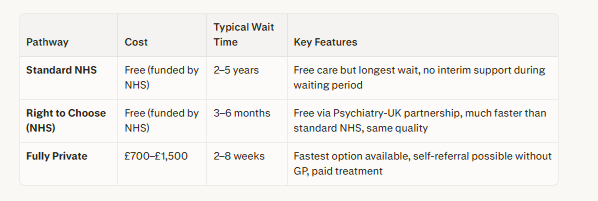
Understanding these differences is crucial because every pathway requires a GP referral except some private self-referral options, and once diagnosed, NHS provides ongoing care including medication management at no cost regardless of which diagnostic pathway you used.
The Standard NHS Pathway: Why It Takes So Long
The traditional NHS pathway is free but has become increasingly problematic due to overwhelming demand and limited specialist resources across most NHS trusts.
How the Standard NHS Pathway Works Step by Step
GP referral to your local NHS ADHD specialist service
CAMHS referral for under-18s through Child and Adolescent Mental Health Services
Adult community mental health team referral for adults over 18
Waiting list placement — this is where most people wait 2–5 years
Assessment appointment when a slot becomes available after years of waiting
Diagnosis confirmation if ADHD is clinically confirmed
Medication initiation started by specialist if medication is appropriate
Shared care agreement setup with your GP for ongoing prescription management
The Reality of Current NHS Wait Times in 2026
The wait times have become a major barrier to treatment:
Current national average wait: 2–5 years depending on your specific NHS trust location
List closures happening: Some NHS trusts have temporarily closed their lists to new referrals due to capacity issues
No interim support: During your entire wait, you receive no medication, no formal workplace accommodations, no ADHD coaching, and no specialist support
Regional variation is extreme: Wait times vary significantly by trust location — some areas have 1-year waits while others have 5-year waits
Millions affected: Millions of people with ADHD symptoms are left without proper treatment while waiting for assessment
This means people struggling daily with ADHD symptoms are forced to wait years before even getting assessed, with no support available during that time.
Right to Choose: Your Legal Right to Faster NHS Treatment
Right to Choose is a legal right under the NHS Constitution that allows you to choose which qualified healthcare provider assesses and treats you, rather than being restricted to your local NHS trust. This is the best option for people who want NHS-funded treatment but cannot wait 2–5 years.
How Right to Choose Works Specifically for ADHD
GP referral to your NHS trust — you still need the GP to initiate the referral
Request referral to Psychiatry-UK — which has a formal partnership agreement with NHS England for Right to Choose ADHD assessments
Assessment within 3–6 months instead of the standard 2–5 years — this is the biggest benefit
Diagnosis confirmation if ADHD is clinically confirmed by Psychiatry-UK specialists
Medication initiation by Psychiatry-UK if medication is appropriate and prescribed
Shared care agreement setup with your GP for ongoing prescribing after initial specialist treatment
Key Benefits That Make Right to Choose Worth pursuing
Entire process is completely free — referral, assessment, diagnosis, and all medication costs covered by NHS
Much faster timeline — 3–6 months versus 2–5 years for standard NHS pathway
Established and trusted provider — Psychiatry-UK has formal NHS England partnership specifically for ADHD
Shared care model guaranteed — your GP continues prescribing after the specialist initiates treatment
Same quality of care — NHS-standard assessment and treatment with faster access
Legal right — this is your right under NHS Constitution, not a special program
This pathway has successfully helped thousands of people across the UK access ADHD treatment without enduring the standard NHS waiting period.
NHS Medication Options Once You're Diagnosed
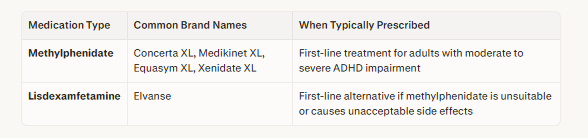
Once diagnosed through any pathway (standard NHS, Right to Choose, or private), the NHS follows NICE Guideline NG87 for medication selection and prescribing decisions.
First-Line Medications Recommended by NICE
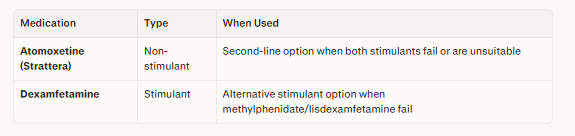
Second-Line Medication Options
If first-line stimulants are ineffective or cause unacceptable side effects that cannot be managed:
Critical Medication Facts You Should Know
Stimulants provide rapid onset — effects begin within 30–60 minutes of taking medication, with high response rates in most patients
Non-stimulants take longer — atomoxetine takes 2–4 weeks before you notice full effects, but has no abuse potential
Drug treatment is first-line for adults with ADHD who have moderate or severe functional impairment according to NICE guidelines
All medications require titration — finding the right dose through gradual adjustment is essential for safety and effectiveness
The NHS Titration Process: Finding Your Optimal Dose
Whether you access treatment through standard NHS, Right to Choose, or private clinics, titration is the standard medical process for safely starting ADHD medication and finding your optimal dose.
What Exactly Is Titration?
Titration is the carefully monitored process of finding the lowest effective dose that provides maximum benefit with minimal side effects. This process is crucial for safe ADHD medication initiation and prevents overdosing or underdosing.
How the NHS Titration Process Works Step by Step
Start with a low dose — typically 30mg Elvanse or 5mg methylphenidate for adults
First review after 7–10 days — some NHS services use 3–4 week review intervals instead
Increase dose in steps — weekly or biweekly adjustments based on response and side effects
Monitor carefully throughout — track sleep patterns, appetite changes, mood fluctuations, and focus improvements
Finalize optimal dose — once you reach the dose providing best results with acceptable side effects
Document the outcome — specialist records your optimal dose for future reference
Set up shared care with GP — GP takes over ongoing prescribing while specialist monitors periodically
How Long Does Titration Typically Take?
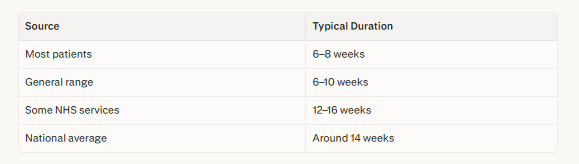
Review appointments occur every 3–4 weeks during the titration process to monitor progress and adjust doses appropriately. Once you're stable on your optimal dose, review frequency changes to every 6 months for adults or every 3 months for children.
After Diagnosis: Your Ongoing Care Options
Once diagnosed and medication is successfully initiated through titration, you'll discuss and decide on ongoing care arrangements for long-term management.
Three Main Care Models Available
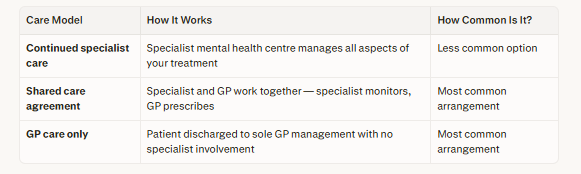
Shared care and GP care only are the most common post-diagnosis arrangements in the NHS system.
Standard Aftercare Review Schedule
During active titration phase: Every 3–4 weeks for dose adjustments and monitoring
Once stable (adults): Every 6 months for routine check-ins
Once stable (children): Every 3 months due to faster development and dosage changes needed
Common Challenges and Problems with NHS ADHD Treatment
Known Systemic Issues with Standard NHS Pathway
Extremely long waiting times — 2–5 years average creates treatment delays that worsen symptoms
No interim support available — no medication, workplace accommodations, or specialist coaching during years of waiting
Frequent list closures — some NHS trusts temporarily close to new referrals due to capacity overload
Extreme regional variation — wait times vary significantly by location, creating geographic inequality
Limited provider choice — standard pathway forces you to use only your local trust with no alternatives
Important NHS Prescribing Restrictions You Must Know
Primary care practitioners (GPs) should NOT make initial diagnoses or start medication in children or young people with suspected ADHD
Diagnosis must be made by specialist services — either CAMHS for children or adult community mental health teams for adults
GPs can only prescribe after specialist diagnosis — they cannot initiate ADHD medication independently
Private ADHD Treatment: The Fast Alternative to NHS Waiting
If you cannot wait 2–5 years for NHS treatment, private ADHD clinics offer the fastest route to diagnosis and medication with complete transparency about costs and timelines.
Focus Gently: UK-Wide Private ADHD Clinic Solution
Focus Gently offers nurse-led private ADHD assessment, diagnosis, and treatment services UK-wide with these distinguishing features:
Fast assessment timeline — 2–8 weeks instead of 2–5 years NHS wait
Private prescribing included — medication dispensed within 1–3 days of clinical sign-off
No GP referral required — self-referral available, you can book directly
Remote appointment options — flexible delivery across the entire UK without travel
Transparent pricing structure — clear costs upfront with no hidden fees
CQC registration in progress — working toward full Care Quality Commission regulatory compliance
How Private Treatment Works Step by Step
Book assessment directly — no GP referral needed, self-referral available
Complete assessment — via remote video appointment or in-person depending on location
Receive diagnosis — if ADHD is clinically confirmed by qualified specialist
Get private prescription — medication prescribed immediately if appropriate
Medication dispatched — via registered UK pharmacy within 1–3 days of clinical approval
Optional shared care — some GPs accept shared care agreements after private diagnosis (varies by GP)
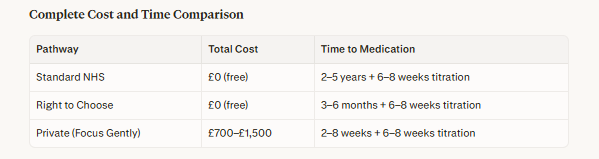
Which ADHD Treatment Pathway Should You Choose?
Choose Standard NHS If:
You have absolutely no budget available for private treatment costs
You can realistically wait 2–5 years before getting assessed
You prefer traditional NHS care model and trust
Your local NHS trust has acceptable wait times for your area
Choose Right to Choose If:
You want completely free NHS-funded treatment
You need reasonably faster access (3–6 months instead of years)
Your GP is supportive of making Right to Choose referral
You want NHS-standard care quality with significantly reduced wait time
Choose Private Treatment If:
You need treatment quickly (2–8 weeks instead of months or years)
You have budget available for private care costs
You want to avoid GP referral requirements entirely
You prefer flexible remote appointment options
You cannot wait even 3–6 months for assessment
Important Safety and Legal Considerations
Medication Safety Requirements
Never adjust medication dosage without medical supervision — this is dangerous and can cause serious health problems
Report severe side effects immediately to your prescriber without waiting for next appointment
Regular monitoring is essential during titration phase to ensure safety and effectiveness
Common side effects include mild appetite changes, sleep disruption issues, and temporary headaches that are closely monitored
GP Relationship Considerations
Some GPs accept shared care agreements after private diagnosis — varies significantly by individual GP
Some GPs may require NHS diagnosis before prescribing — policies vary by trust and GP
Right to Choose guarantees GP shared care as part of the NHS pathway by legal requirement
GPs cannot refuse private diagnosis but may refuse to prescribe based on private diagnosis
Emergency Situations Protocol
For emergency mental health issues, call 999 immediately or visit Emergency Department
ADHD medication does not treat emergency situations — it's for chronic symptom management
Have crisis plan in place if experiencing severe symptoms while waiting for treatment
Next Steps: Start Your ADHD Treatment Journey Today
Understanding your treatment options is the first important step, but taking action is what actually gets you diagnosed and started on medication. Whether you choose standard NHS, Right to Choose, or private treatment through Focus Gently, the ultimate goal is getting properly diagnosed and starting safe, effective medication treatment.
If you're frustrated by 2–5 year NHS wait times and want to start treatment quickly without waiting years, private ADHD clinics can get you assessed in 2–8 weeks with medication prescribed and dispensed within days of diagnosis.
Ready to Skip the NHS Waiting List?
Book your ADHD assessment with Focus Gently today and start your treatment journey in weeks instead of waiting years.
Visit Focus Gently for:
Fast assessment — complete it in 2–8 weeks instead of 2–5 years
No GP referral needed — direct self-referral available, book immediately
Private prescribing — medication dispatched within 1–3 days of clinical approval
Remote appointments — flexible UK-wide delivery without travel required
Transparent pricing — clear upfront costs with no hidden fees
Complete service — full assessment plus prescribing in one place