ADHD Medication Dosage Guidelines UK 2026: Complete Dosage Chart & Titration Guide

ADHD Medication Dosage Guidelines UK: Complete 2026 Guide for Adults & Children
Getting diagnosed with ADHD is a major milestone, but for most people, the next question is immediate: What medication will I be prescribed, and what dosage is right for me? Understanding ADHD medication dosage guidelines in the UK can help you navigate treatment confidently and work effectively with your prescriber.
This comprehensive guide covers everything you need to know about ADHD medication dosages in the UK, including starting doses, maximum doses, titration processes, and the latest NICE guidelines for 2026. Whether you're an adult or parent of a child with ADHD, you'll find specific dosage information for all major medications.
Which ADHD Medications Are Prescribed in the UK?
UK prescribers follow NICE Guideline NG87, which recommends two broad classes of ADHD medication:

Stimulants are first-line treatment for most adults with ADHD, offering rapid onset (30–60 minutes) and high response rates. Non-stimulants are typically second-line options when stimulants cause side effects or aren't suitable due to cardiovascular risks.
Methylphenidate Dosage Guidelines UK
Methylphenidate is the most commonly prescribed ADHD medication in the UK. Here are the specific dosage guidelines:
Starting Doses
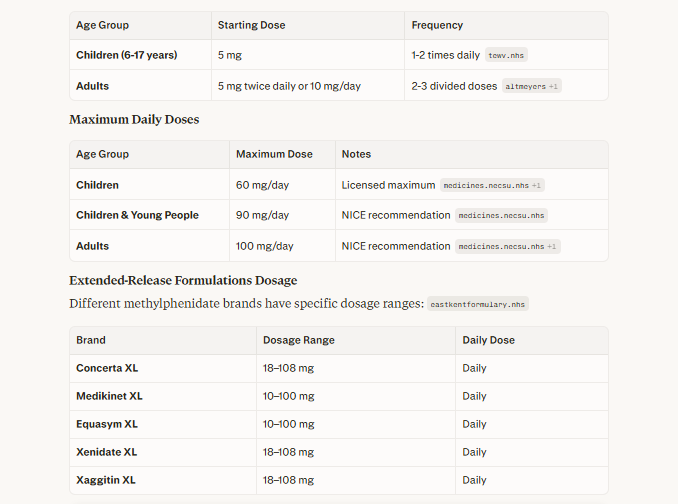
For children under 70kg, dosing may be weight-based: 500mcg–1.8mg/kg/day.
Lisdexamfetamine (Elvanse) Dosage Guidelines UK
Lisdexamfetamine (brand name Elvanse) is another first-line stimulant option in the UK, known for being long-acting, consistent, and well-tolerated.
Adult Dosage
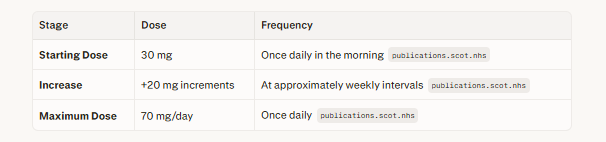
Titration Process for Elvanse
The dose may be increased by 20 mg increments at weekly intervals until the optimal therapeutic dose is reached. Most patients find their effective dose between 30–70 mg daily.
Atomoxetine (Strattera) Dosage Guidelines UK
Atomoxetine is a non-stimulant option typically prescribed when stimulants aren't suitable or cause unacceptable side effects. It takes 2–4 weeks to take effect and has no abuse potential.
Adults & Children Over 6 Years (Weight-Based)
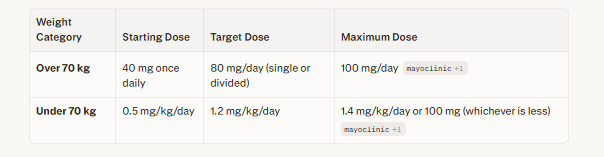
Key Atomoxetine Details
Initial dosing: 40 mg per day for adults
Increase after: Minimum of 3 days
Time to effect: 2–4 weeks
Administration: Single dose in morning OR divided into 2 doses (morning and late afternoon)
Guanfacine Dosage Guidelines UK
Guanfacine is used off-label in adults in the UK, typically where anxiety or tics are present alongside ADHD. Specific dosage guidelines vary as it's not formally licensed for adult ADHD in the UK.
General Usage
Typically prescribed when other medications aren't suitable
Often chosen for patients with co-existing anxiety or tic disorders
Dosage is individualized based on clinical response
Requires careful monitoring by your prescriber
The ADHD Medication Titration Process UK
Titration is the process of finding the lowest effective dose with minimal side effects. This is a crucial part of starting ADHD medication in the UK.
How Titration Works
The titration process follows these steps:
Start with a low dose (e.g., 30mg Elvanse or 5mg methylphenidate)
Review after 7–10 days (or 3–4 weeks for some services)
Increase in steps weekly or biweekly
Monitor carefully for sleep, appetite, mood, and focus changes
Finalize optimal dose and document the outcome
How Long Does Titration Take?
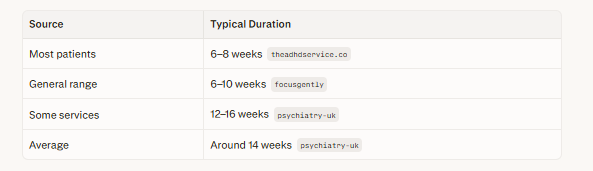
Review appointments typically occur every 3–4 weeks during titration. Once stable, you'll have 6-month reviews (adults) or 3-month reviews (children).
Common ADHD Medication Side Effects & Management
Yes, there are side effects, but they're generally manageable with proper monitoring:
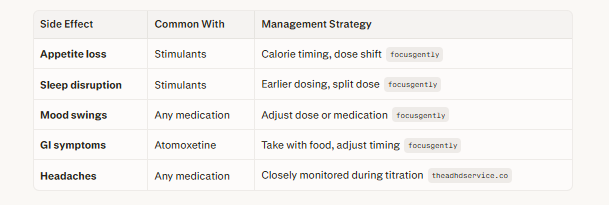
Common side effects include mild appetite changes, sleep issues, or headaches, which are closely monitored during titration.
NICE Guidelines NG87: Key Recommendations
The NICE Guideline NG87 is the official UK standard for ADHD treatment:
Drug treatment is first-line for adults with ADHD with moderate or severe impairment
Methylphenidate or lisdexamfetamine are recommended first-line treatments
If ineffective or unacceptable, atomoxetine or dexamfetamine can be tried
Guidelines cover children, young people, and adults
Aim is to improve recognition, diagnosis, and quality of care
Can I Request a Specific Medication?
You can express preferences, but prescribing is based on clinical judgement. Your prescriber will consider:
Symptom profile (inattentive vs impulsive)
Past treatment history
Sleep, appetite, and anxiety patterns
Co-existing health conditions
Patient preference
You might be offered a different medication than expected, a slower titration to minimize risk, or a follow-up review before dose adjustments.
FAQ: ADHD Medication Dosage UK
What is the starting dose for ADHD medication in the UK?
Starting doses vary by medication:
Methylphenidate: 5 mg (children), 10 mg/day (adults)
Lisdexamfetamine (Elvanse): 30 mg once daily (adults)
Atomoxetine: 40 mg/day (adults), 0.5 mg/kg/day (children <70kg)
What is the maximum dose of methylphenidate for adults?
The maximum dose is 100 mg/day for adults according to NICE guidelines, though the licensed maximum is 60 mg/day.
How long does it take for ADHD medication to work?
Stimulants (methylphenidate, lisdexamfetamine): 30–60 minutes rapid onset
Non-stimulants (atomoxetine): 2–4 weeks to take effect
Is ADHD medication dosage different for children vs adults?
Yes, significantly. Children typically start at lower doses (5 mg methylphenidate) with weight-based calculations for atomoxetine, while adults start at higher doses (10 mg methylphenidate, 30 mg Elvanse).
What happens if my ADHD medication dose isn't working?
Your clinician will adjust your dosage or medication type during titration reviews. The titration process is designed to find the optimal dose through gradual increases.
Can I stop ADHD medication suddenly?
Always consult your prescriber before stopping medication. Some medications require gradual tapering to avoid withdrawal effects.
How often do I need ADHD medication reviews?
During titration: Every 3–4 weeks
Once stable (adults): Every 6 months
Once stable (children): Every 3 months
Is atomoxetine better than methylphenidate?
Neither is universally "better." Stimulants (methylphenidate) are first-line with rapid onset and high response rates. Atomoxetine is second-line, taking longer to work but having no abuse potential.
What if I can't tolerate methylphenidate?
If methylphenidate is ineffective or unacceptable, lisdexamfetamine is the other first-line option. If both stimulants fail, atomoxetine or dexamfetamine can be tried.
Do I need a GP referral for ADHD medication in the UK?
No, GP referral is not required for private ADHD assessment and treatment. Many private clinics offer direct access to assessment and prescribing.
When to Contact Your Doctor
Contact your prescriber immediately if you experience:
Severe side effects that don't improve
Significant mood changes or worsening anxiety
Heart palpitations or chest pain
Severe sleep disruption
Unusual thoughts or behaviors
Next Steps: Start Your ADHD Treatment Journey
Understanding dosage guidelines is essential, but individualized treatment is key. Every person responds differently to ADHD medication, and your optimal dose will be determined through careful titration with a qualified prescriber.
If you're in the UK and ready to move forward with ADHD assessment and treatment, Focus Gently offers nurse-led private ADHD clinics UK-wide with fast assessment, diagnosis, private prescribing, and treatment. They provide remote and flexible appointments, with CQC registration in progress.
Ready to Get Started?
Book your ADHD assessment today or join our waitlist to begin your treatment journey.