Best ADHD Medication for Adults in the UK: Methylphenidate vs Lisdexamfetamine vs Atomoxetine
Best ADHD Medication for Adults in the UK: Methylphenidate vs Lisdexamfetamine vs Atomoxetine
If you're an adult with ADHD in the UK, you're likely wondering which medication works best. The evidence is clear: stimulants and atomoxetine are the only treatments with proven efficacy in reducing ADHD symptoms in adults. In the UK, methylphenidate is the most commonly prescribed ADHD medication, while lisdexamfetamine (brand name Elvanse) is widely used as an alternative. Atomoxetine is the main non-stimulant option, especially if stimulants aren't tolerated.
This guide compares the three main adult ADHD medications in the UK—methylphenidate, lisdexamfetamine, and atomoxetine—so you can understand which might be best for your situation.
What makes a medication "best" for adults with ADHD?
The "best" ADHD medication depends on your symptoms, lifestyle, side-effect tolerance, and any comorbid conditions (like anxiety, depression, or autism). Key factors include:
Effectiveness: How well it reduces core ADHD symptoms (inattention, hyperactivity, impulsivity)
Speed of response: How quickly you notice benefits
Side effects: Which side effects you're most concerned about
Dosing convenience: How many doses per day and formulation (short-acting vs long-acting)
Comorbidities: Whether you have anxiety, mood issues, or sleep problems
Cost and access: NHS availability vs private prescription costs
An Oxford study published in The Lancet Psychiatry confirms that stimulants and atomoxetine are the most effective treatments for adult ADHD, with evidence from both clinicians and patients.
Methylphenidate: the most commonly prescribed stimulant in the UK
Methylphenidate is the most commonly prescribed medication for ADHD in the UK. It's a stimulant that works by increasing dopamine and norepinephrine in the brain, improving focus and reducing impulsivity.
How it works:
Short-acting: taken 2–3 times daily (30–45 minutes before meals); lasts 3–5 hours per dose
Long-acting (e.g., Medikinet XL, Concerta): taken once or twice daily; lasts 8–12 hours
Typical dosing for adults:
Start: 5 mg once or twice daily
Titration: increase by 5–10 mg weekly if needed
Average effective dose: 20–30 mg/day
Max: 60 mg/day for conventional tablets
Pros:
Most prescribed in the UK, so widely available and familiar to clinicians
Fast-acting (effects within 30–60 minutes)
Flexible dosing (short- and long-acting options)
Generally effective for core ADHD symptoms
Cons:
Common side effects: insomnia, decreased appetite, headache, dry mouth, nervousness/anxiety
Can increase blood pressure and heart rate (requires monitoring every 6 months)
Short-acting forms may cause rebound effects (worsening symptoms after dose wears off)
Is a Schedule 2 controlled drug, so prescribing and storage rules are strict
Best for:
Adults who want the most established, widely available option
Those who prefer flexible dosing or long-acting convenience
People without significant anxiety or sleep issues
Lisdexamfetamine (Elvanse): the alternative stimulant
Lisdexamfetamine (brand name Elvanse) is increasingly prescribed for adults in the UK. It's a stimulant that's converted to dexamfetamine in the body. Many UK adults report Elvanse as the initial prescribed medication.
How it works:
Taken once daily in the morning
Lasts 10–13 hours, providing smooth day-long coverage
Often preferred for adults who want to avoid multiple daily doses
Typical dosing for adults:
Start: 20 mg/day
Titration: increase by 20 mg weekly to 40–60 mg/day as needed
Max: 60 mg/day
Pros:
Single daily dose (convenient for work/school)
Smooth, long coverage reduces rebound effects
Often effective for adults who don't respond well to methylphenidate
Less likely to cause midday dose interruptions
Cons:
Similar side effects to methylphenidate: insomnia, decreased appetite, anxiety, dry mouth, headache
Can increase blood pressure and heart rate
May be slightly more expensive than methylphenidate on private prescriptions
Less familiarity among some NHS clinicians compared to methylphenidate
Best for:
Adults who want once-daily dosing
Those who experience rebound with short-acting methylphenidate
People who haven't responded well to methylphenidate
Atomoxetine: the main non-stimulant option
Atomoxetine is the primary non-stimulant medication for ADHD in the UK. It's often used when stimulants aren't tolerated, aren't effective, or when anxiety or mood instability is prominent.
How it works:
Takes longer to reach full effect (builds up over weeks)
Works by increasing norepinephrine in the brain
Usually taken once or twice daily
Typical dosing for adults:
Start: 20–40 mg/day
Titration: increase to 60 mg/day, then consider 100 mg/day if needed
Full effect may take 4–8 weeks
Pros:
Lower risk of stimulant-related side effects (e.g., less impact on appetite, sleep, or blood pressure)
May help with anxiety or mood symptoms alongside ADHD
Not a controlled drug (simpler prescribing rules)
Good option if stimulants cause intolerable side effects
Cons:
Slower to work (4–8 weeks for full effect)
Less effective than stimulants for some people
Side effects: nausea, decreased appetite, fatigue, dizziness, dry mouth, sleep disturbances
Suicidal-related behaviour has been reported more frequently (though still uncommon); monitor mood closely
Very rare reports of liver injury; watch for unexplained nausea, vomiting, abdominal pain, dark urine, or yellow discolouration
Best for:
Adults with significant anxiety, mood instability, or sleep problems
Those who can't tolerate stimulants
People who prefer a non-stimulant option
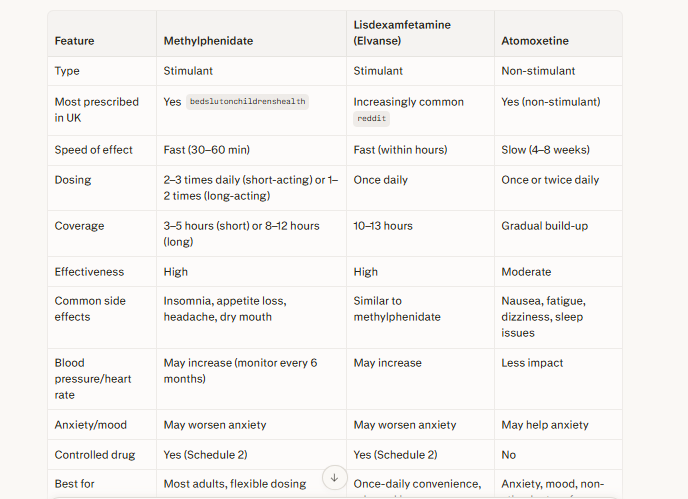
Comparing the three: quick comparison table
NHS vs private access for adult ADHD medication in the UK
NHS route:
Methylphenidate is most commonly prescribed and widely available
Lisdexamfetamine is increasingly used but may vary by region
Atomoxetine is available but may require specialist approval
Waiting times for ADHD assessment and titration can be long (6–18 months total)
Private route:
Faster access to assessment and titration (often 2–4 months total)
More flexibility to choose medication and formulation
Costs: £400–£1,200+ for assessment; medication costs vary by pharmacy
Shared care: Many private clinicians can write a shared care letter so your GP continues prescribing once stable
How to choose the best medication for you
Consider these factors:
Symptoms and priorities:
If focus and organisation are the main issues, stimulants (methylphenidate or lisdexamfetamine) are often most effective.
If anxiety or mood instability is prominent, atomoxetine may be better.
Lifestyle and dosing convenience:
If you want one daily dose, lisdexamfetamine is ideal.
If you prefer flexible dosing, methylphenidate short-acting may work.
Long-acting methylphenidate is also convenient for many adults.
Side-effect tolerance:
If appetite loss or insomnia is a concern, atomoxetine may be preferable.
If you're sensitive to stimulant side effects, consider lisdexamfetamine or atomoxetine.
Comorbid conditions:
Anxiety: atomoxetine may help both ADHD and anxiety.
Sleep issues: avoid late stimulant doses; consider atomoxetine.
Autism: stimulants are often effective, but titration may need to be slower.
Cost and access:
NHS: methylphenidate is most accessible.
Private: more flexibility to choose lisdexamfetamine or atomoxetine.
Practical tips for starting ADHD medication
Start low and go slow: Begin at the lowest dose and increase gradually based on response.
Track symptoms: Use a symptom log to note focus, mood, sleep, appetite, and energy.
Monitor side effects: Report any concerning symptoms to your clinician promptly.
Take with food: For methylphenidate and atomoxetine, taking after food can reduce nausea.
Avoid late doses: To prevent insomnia, take the last dose more than 6 hours before bedtime.
Plan meals: For appetite loss, focus on breakfast and evening meals when medication levels are lower; add calorie-rich snacks.
When to consider switching medications
If you're not getting clear benefits or side effects are problematic:
Switch formulation: Short-acting to long-acting methylphenidate may reduce rebound.
Switch medication: If methylphenidate doesn't work, lisdexamfetamine is a good alternative. If stimulants aren't tolerated, consider atomoxetine.
Adjust dose: Lowering the dose may reduce side effects while maintaining benefit.
FAQs
What is the most effective ADHD medication for adults in the UK?
Stimulants (methylphenidate and lisdexamfetamine) and atomoxetine are the most effective treatments for adult ADHD, with proven efficacy from both clinicians and patients. Methylphenidate is the most commonly prescribed in the UK.
Which ADHD medication works fastest?
Stimulants work fastest—methylphenidate and lisdexamfetamine show effects within 30–60 minutes. Atomoxetine takes 4–8 weeks to reach full effect.
Is lisdexamfetamine (Elvanse) better than methylphenidate?
Not necessarily. Lisdexamfetamine offers once-daily dosing and smoother coverage, which some adults prefer. Methylphenidate is more widely prescribed and familiar. Choice depends on your response and lifestyle.
What if I have anxiety alongside ADHD?
Atomoxetine may be better if anxiety is prominent, as it can help both ADHD and anxiety. Stimulants may worsen anxiety in some people.
Do I need monitoring on ADHD medication?
Yes. For methylphenidate and lisdexamfetamine, blood pressure and heart rate are usually checked every 6 months. Mood should be monitored closely, especially with atomoxetine.
Can I get ADHD medication on the NHS after private assessment?
Many NHS services accept private diagnosis and offer shared care. Policies vary locally—discuss with your GP.
Is atomoxetine a controlled drug?
No. Atomoxetine is not a controlled drug, so prescribing rules are simpler than for stimulants.
What if stimulants cause intolerable side effects?
Consider atomoxetine, which has lower risk of stimulant-related side effects like appetite loss or sleep problems.
How long does titration take?
Active titration typically takes 6–12 weeks for methylphenidate, 4–8 weeks for lisdexamfetamine, and 6–10 weeks for atomoxetine.
Which medication is best for adults who want once-daily dosing?
Lisdexamfetamine (Elvanse) is ideal for once-daily dosing with 10–13 hours of coverage.
Key takeaways
Stimulants and atomoxetine are the most effective treatments for adult ADHD in the UK, with proven efficacy.
Methylphenidate is the most commonly prescribed ADHD medication in the UK.
Lisdexamfetamine (Elvanse) is increasingly prescribed and offers convenient once-daily dosing.
Atomoxetine is the main non-stimulant option, especially for adults with anxiety or mood issues.
Choose based on symptoms, lifestyle, side-effect tolerance, comorbidities, and access (NHS vs private).
If you're ready to explore ADHD medication options or want personalised support with treatment and strategies, visit Focus Gently for resources and guidance: https://www.focusgently.com/