ADHD Medication Review Template Primary Care: Complete GP Guide, Checklist & FAQs

For GPs and primary care teams across the UK, managing ADHD medication under shared care agreements presents both opportunities and challenges. While specialists initiate and stabilize ADHD treatment, primary care takes on the responsibility of ongoing prescribing and monitoring once the patient is stable.
The problem? Many practices lack a standardized ADHD medication review template, leading to inconsistent monitoring, missed safety checks, and potential non-compliance with NICE guidelines.
According to recent audits, poor monitoring compliance is common in primary care ADHD reviews, with blood pressure, pulse rate, and weight not always checked at recommended intervals. This puts both patients and practices at risk.
This comprehensive guide provides everything primary care teams need to conduct safe, compliant, and thorough ADHD medication reviews—including a practical template structure, monitoring requirements, NICE guideline compliance checklist, and answers to frequently asked questions.
Why a Standardized ADHD Review Template Matters
The Current Challenge
Primary care faces significant challenges in ADHD management:
Variable monitoring practices across different GPs and practices
Lack of standardized templates for ADHD reviews
Time pressure during consultations (often 10-minute appointments)
Limited ADHD training among primary care clinicians
Shared care complexity with unclear responsibilities
Controlled drug prescribing requiring additional safeguards
An audit of shared care guideline compliance found that only 30% of patients under 10 received the recommended 3 reviews per year, and vital sign monitoring was often incomplete.
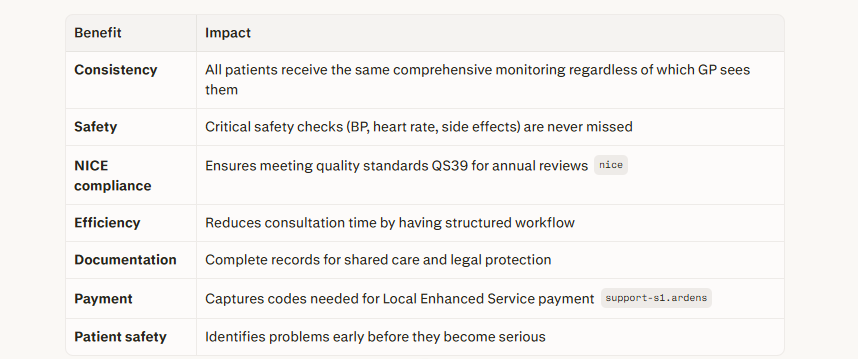
The Benefits of Standardization
A standardized ADHD medication review template provides:
NICE Guidelines: What Primary Care Must Monitor
NICE NG87 Requirements
According to NICE Guideline NG87 and Quality Standard QS39, people with ADHD on drug treatment must have:
"A specialist review at least annually to assess their need for continued treatment"
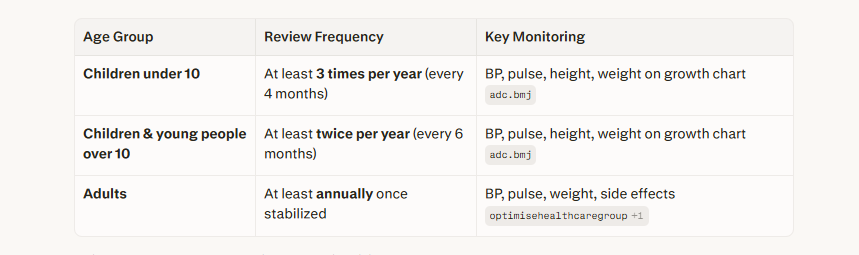
For primary care monitoring between specialist reviews:
Monitoring Frequency by Age
What Must Be Monitored (NICE Checklist)
According to NICE NG87 recommendation 1.10.1, annual reviews must include assessment of:
Patient preference for treatment
Benefits and effectiveness throughout the day
Adverse effects (physical and psychological)
Clinical need and whether medication has been optimized
Impact on education or employment
Effects of missed doses and treatment interruptions
Effect on other mental/physical health conditions
Need for additional support if symptoms continue despite optimized medication
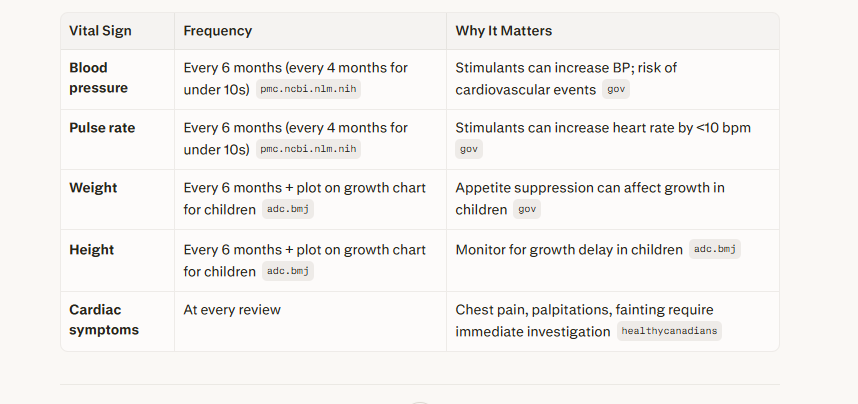
Physical Monitoring Requirements
All ADHD medication reviews must include:
ADHD Medication Review Template: Complete Structure
Template Overview
Below is a comprehensive ADHD medication review template suitable for primary care. This can be adapted for EMIS, SystmOne, or paper-based systems.
ADHD MEDICATION REVIEW – PRIMARY CARE CHECKLIST
Section 1: Patient Information
Patient Name: _
Date of Birth: _
Date of Review: _
Review Type: ☐ 6-month ☐ Annual ☐ Problem-focused
GP Name: _
Medication: _
Dose: _
Dosing Frequency: _
Section 2: Shared Care Agreement Status
Shared Care Agreement Active: ☐ Yes ☐ No
Specialist Team: _
Date of Last Specialist Review: _
Next Specialist Review Due: _
Last Specialist Dose: _
Is Current Dose Stable? ☐ Yes ☐ No (If no, refer back to specialist)
Section 3: Vital Signs & Physical Monitoring
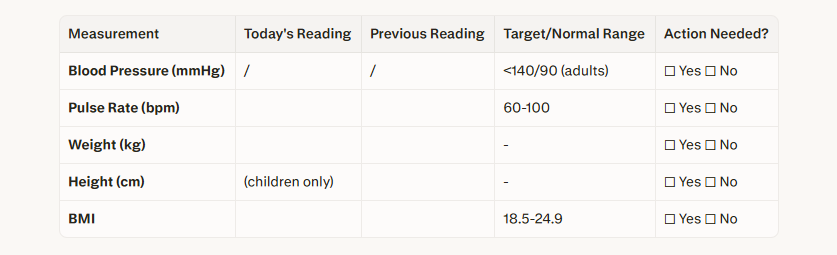
For Children Only:
☐ Height plotted on correct growth chart
☐ Weight plotted on correct growth chart
☐ Growth velocity normal
☐ Concerns about growth: ☐ Yes ☐ No
Cardiovascular Risk Assessment:
☐ No cardiac symptoms reported
☐ Chest pain: ☐ Yes ☐ No
☐ Palpitations: ☐ Yes ☐ No
☐ Fainting/syncope: ☐ Yes ☐ No
☐ Shortness of breath: ☐ Yes ☐ No
If cardiac symptoms present: ☐ Refer to specialist immediately ☐ ECG required ☐ Cardiology referral
Section 4: Medication Adherence & Effectiveness
Medication Adherence:
☐ Taking medication as prescribed
☐ Missed doses: How often?
☐ Reason for missed doses: _
Effectiveness Throughout the Day:
☐ Works well all day
☐ Wears off too early
☐ Too strong at onset
☐ Rebound symptoms when wearing off
☐ Effectiveness adequate for school/work
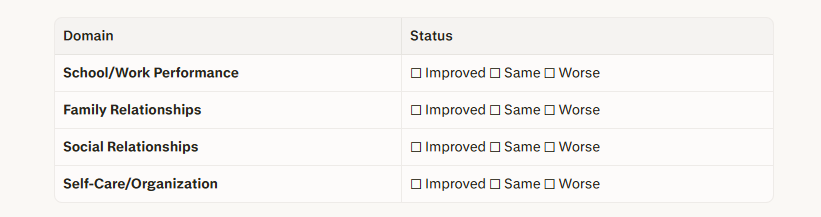
Impact on Life Domains (Rate: ☐ Improved ☐ Same ☐ Worse):
Section 5: Side Effects & Adverse Effects
Physical Side Effects (Check all that apply):
☐ None
☐ Decreased appetite
☐ Weight loss
☐ Sleep problems (insomnia)
☐ Headache
☐ Stomach upset
☐ Dizziness
☐ Dry mouth
☐ Cardiovascular: ☐ Rapid heartbeat ☐ High BP
☐ Other: _
Psychiatric Side Effects (Check all that apply):
☐ None
☐ Anxiety/nervousness
☐ Irritability
☐ Mood swings
☐ Depression
☐ Suicidal thoughts
☐ Psychotic symptoms
☐ Tics: ☐ New ☐ Worsening ☐ None
☐ Seizures: ☐ Yes ☐ No
Severity Assessment:
Side effects ☐ None ☐ Mild ☐ Moderate ☐ Severe
Tolerability: ☐ Excellent ☐ Good ☐ Fair ☐ Poor
If side effects present:
☐ Dose adjustment needed
☐ Medication change needed
☐ Refer back to specialist
☐ Discontinue medication
Section 6: Comorbidities & Contraindications
Current Comorbidities:
☐ Anxiety disorder
☐ Depression
☐ Bipolar disorder
☐ Autism spectrum disorder
☐ Learning disability
☐ Tics/Tourette's
☐ Substance use disorder
☐ Cardiac condition
☐ Hypertension
☐ Other: _
New Medical Issues Since Last Review: _
Current Medications (Check for interactions):
☐ No new medications
☐ Other psychotropic medications
☐ QT-prolonging drugs
☐ CYP2D6 inhibitors (fluoxetine, paroxetine, bupropion)
☐ MAOIs (contraindicated)
☐ Other: _
Section 7: Lifestyle & Support Needs
Lifestyle Factors:
☐ Smoking status: ☐ Never ☐ Former ☐ Current
☐ Alcohol consumption: ☐ None ☐ Moderate ☐ Excessive
☐ Caffeine intake: ☐ Low ☐ Moderate ☐ High
☐ Sleep quality: ☐ Good ☐ Fair ☐ Poor
☐ Exercise: ☐ Regular ☐ Occasional ☐ None
Support Needs:
☐ No additional support needed
☐ Educational accommodations needed
☐ Occupational support needed
☐ Psychological support (CBT, coaching)
☐ Family support/education
☐ Referral to specialist services needed
Section 8: Patient Preference & Goals
Patient's View on Treatment:
☐ Satisfied with current medication
☐ Wants dose adjustment
☐ Wants to try different medication
☐ Wants to discontinue medication
☐ Uncertain about continuing
Treatment Goals:
Primary goal: _
Is goal being met? ☐ Yes ☐ Partially ☐ No
Section 9: Review Outcome & Plan
Decision:
☐ Continue current medication (stable, effective, no concerns)
☐ Dose adjustment recommended (refer to specialist)
☐ Medication change needed (refer to specialist)
☐ Discontinue medication (safety concerns or patient preference)
☐ Further investigation needed (ECG, blood tests, specialist review)
Prescribing:
☐ Prescribe current medication (repeat prescription)
☐ Quantity:
☐ Frequency:
☐ Next review date:
Actions Required:
☐ No further action needed
☐ BP/heart rate check in weeks
☐ ECG required
☐ Blood tests: ☐ Full blood count ☐ LFTs ☐ Other:
☐ Refer to specialist (reason: _)
☐ Patient education provided
☐ Shared care reminder sent
Next Review Due:
☐ 6 months (standard for adults)
☐ 3 months (children under 10)
☐ Specific date:
Section 10: Coding & Documentation
Clinical Codes to Apply:
☐ ADHD annual review coded (XaVw9)
☐ BP recorded
☐ Pulse rate recorded
☐ Weight recorded
☐ Height recorded (children)
☐ QOF diagnosis code updated (if applicable)
Documents Generated:
☐ Prescription issued
☐ Review summary added to EMIS/SystmOne
☐ Specialist notified (if changes made)
☐ Patient given copy of review summary
☐ Shared care agreement confirmed
Clinician Signature: _
Date: _
Implementation Tips for Primary Care Teams
EMIS & SystmOne Templates
Many practices use commercial templates like Ardens for ADHD management:
Ardens ADHD template includes tabs for Home, Diagnosis, Review, Referral, and Resources
Review tab includes coding for ADHD annual review (XaVw9)
Vitals & Lifestyle section captures BP, HR, smoking, alcohol
Presets available for frequently typed text
Streamlined Form-Based Reviews
Recent research shows form-based systems can replace routine face-to-face reviews for stable patients:
Single-page ADHD-friendly form consistent with NICE guidelines
Patients complete by phone or email in less than 3 minutes
80% of patients can be reviewed this way without needing clinic appointments
Saves 560 patient hours annually while maintaining NICE compliance
Patients requiring intervention are offered clinic appointments
Service Support Options
Some areas have Enhanced Primary Care Hubs supporting ADHD reviews:
Vertis Health delivers ADHD reviews on behalf of GP practices in Worcestershire
Clinicians are UKAAN-trained in ADHD diagnosis and treatment
Reviews recorded in EMIS in real time
Urgent issues trigger EMIS tasks to practice
FAQs About ADHD Medication Reviews in Primary Care
Q1: What must be included in an ADHD medication review?
A: Every ADHD medication review must include: blood pressure, pulse rate, weight (height for children), side effect assessment, medication adherence, effectiveness, patient preference, impact on daily life, comorbidities, and medication interactions.
Q2: How often should ADHD medication be reviewed in primary care?
A: Adults: annually (at minimum). Children over 10: twice per year (every 6 months). Children under 10: 3 times per year (every 4 months).
Q3: Can a GP do the annual ADHD review instead of a specialist?
A: Yes, if agreed by the patient and specialist under a shared care arrangement after titration and stabilization. However, the initial review should be by a specialist.
Q4: What happens if vital signs are abnormal during review?
A: If BP or heart rate is significantly elevated, or cardiac symptoms are present, refer to specialist for further assessment. Consider ECG if indicated. May need dose adjustment or medication change.
Q5: Do I need to monitor liver function for atomoxetine?
A: Yes. Atomoxetine has hepatic warnings. Monitor for signs of liver injury and consider LFTs if symptoms develop. This should be included in medication review.
Q6: What coding is needed for ADHD annual review?
A: Code "ADHD annual review" (XaVw9) for payment purposes. Also code vital signs (BP, pulse, weight, height). Add QOF diagnosis code if applicable.
Q7: Can streamlined form-based reviews replace face-to-face appointments?
A: Yes, for stable patients. Research shows form-based reviews for 80% of patients maintained NICE compliance while saving significant time. Patients needing intervention are offered clinic appointments.
Q8: What if the GP practice refuses shared care?
A: Shared care is voluntary. If refused, prescribing responsibility remains with the specialist. Patients can ask to meet their GP, request NHS referral, or consider changing GP.
Q9: What monitoring is needed before starting ADHD medication?
A: Before initiation: baseline BP, pulse, weight, height (children), cardiac history, family history of sudden death, ECG if cardiac history present, and review of all medications for interactions.
Q10: How do I know if medication is working?
A: Assess effectiveness throughout the day, impact on school/work, family/social relationships, patient preference, and whether life goals are being met. Use functional impairment scales like WFIRS if available.
Q11: What if a patient misses their annual review?
A: Missing annual reviews can result in GP withdrawing from shared care. Contact patient to schedule review. If they disengage, notify specialist team.
Q12: Are there specific requirements for children vs. adults?
A: Yes. Children require more frequent monitoring (3x/year for under 10, 2x/year for over 10) and growth chart plotting. Adults require annual monitoring focused on cardiovascular risk and side effects.
Q13: What ECG requirements are there for ADHD medication?
A: ECG is required if: cardiac history present, family history of sudden death, abnormal vital signs, or cardiac symptoms. Some clinics arrange ECGs at specialist centers.
Q14: Can I prescribe ADHD medication without a shared care agreement?
A: No. Without shared care, the specialist retains prescribing responsibility. GP should not prescribe controlled drugs without formal shared care agreement in place.
Q15: What resources are available for GP training in ADHD?
A: UKAAN training, Vertis Health clinical support, Ardens templates, NHS Herefordshire & Worcestershire Shared Care Agreement, and local ICB pathways.
The Bottom Line: Standardization Saves Lives
An ADHD medication review template is not just administrative paperwork—it's a patient safety tool that ensures:
Key Takeaways
NICE compliance is maintained through standardized monitoring
Critical safety checks (BP, pulse, side effects) are never missed
Children receive appropriate growth monitoring with growth chart plotting
Shared care agreements are properly documented and maintained
Payment codes are captured for Local Enhanced Services
Streamlined reviews can save time while maintaining quality
Specialist support is available for complex cases
Patient safety is prioritized through systematic assessment
Implementation Checklist for Practices
☐ Adopt or create a standardized ADHD review template
☐ Train all clinicians on template use
☐ Implement coding for ADHD annual reviews (XaVw9)
☐ Set up EMIS/SystmOne template for easy access
☐ Consider streamlined form-based reviews for stable patients
☐ Establish clear referral pathways to specialist services
☐ Monitor compliance through audit (BP, pulse, weight at required intervals)
Ready to Access High-Quality ADHD Care?
Whether you're a healthcare professional looking to improve your practice's ADHD management or a patient seeking comprehensive ADHD care that follows NICE guidelines, having the right support makes all the difference. Quality ADHD care includes proper medication reviews, systematic monitoring, and accessible specialist support.
Discover ADHD assessment and treatment services that prioritize comprehensive monitoring and evidence-based care.
Visit FocusGently.com to learn about ADHD assessment, medication management, and connect with healthcare professionals who follow best-practice monitoring guidelines