From Titration to Shared Care: How ADHD Prescribing Moves to Your GP

Once your ADHD medication dose is stable, the goal is to transition ongoing prescribing from your specialist to your NHS GP through a shared care agreement—saving you significant costs while maintaining specialist oversight for complex decisions. Understanding this pathway, typical timelines, and what to do if your GP hesitates can help you navigate the transition smoothly and avoid costly delays.
What Is a Shared Care Agreement?
A shared care agreement (SCA) is a formal arrangement between your specialist (psychiatrist or specialist ADHD nurse), your NHS GP, and you—the patient. Under this model:
The specialist initiates diagnosis, selects the medication, conducts titration, and stabilises your dose over 3–6 months
The GP takes over routine repeat prescribing and basic monitoring (blood pressure, heart rate, weight) once your dose is stable
This pathway is explicitly recommended in NICE guideline NG87, which states that after specialist initiation and titration, ongoing prescribing and monitoring can be transferred to primary care under shared care arrangements.
The Standard ADHD Medication Pathway: Step by Step
Understanding the full journey from assessment to shared care helps set realistic expectations and reduces frustration when delays occur.
Step 1: Diagnosis (Week 0)
Following a comprehensive ADHD assessment with a consultant psychiatrist or specialist ADHD clinician, you receive a formal diagnosis if criteria are met.
What happens:
Detailed clinical interview (60–90 minutes for adults)
Collateral information (school reports, family history, partner/parent input where appropriate)
Screening for comorbidities (anxiety, depression, substance use, cardiac risk factors)
Discussion of treatment options, including medication and non-pharmacological interventions
Step 2: Titration Initiation (Weeks 1–3)
Your specialist starts medication at a low dose and schedules the first review (typically 1–3 weeks later).
Key points:
First prescription is private (you pay full cost)
Baseline vitals recorded (blood pressure, heart rate, weight)
You receive clear instructions on how to take the medication, what side effects to expect, and when to contact the clinic
Step 3: Dose Adjustment Phase (Weeks 4–20)
Over 6–20 weeks, your dose is gradually increased based on symptom response and tolerability.
Typical schedule:
Reviews every 2–4 weeks (more frequent if side effects emerge)
Each review assesses symptom improvement, side effects, vitals, and functional outcomes
Dose increases are made incrementally (e.g., +10 mg methylphenidate or +10–20 mg lisdexamfetamine per review)
Total titration duration: Typically 3–6 months from first dose to stable, reviewed dose, though this varies based on individual response, side effects, and appointment availability.
Step 4: Stabilisation (Weeks 18–26)
Once you and your specialist agree the medication is working well at a consistent dose with tolerable side effects, you enter the stabilisation phase.
Criteria for stability:
Consistent symptom control across work, home, and social settings
Side effects manageable or resolved
No further dose adjustments needed for at least 4–6 weeks
Vitals (BP, HR, weight) within acceptable ranges
Step 5: Shared Care Request to GP (Month 4–6)
Your specialist writes to your GP with a formal shared care request, including:
What the letter includes:
Diagnosis and assessment summary
Medication name, formulation, and stable dose
Monitoring requirements (BP, HR, weight every 6–12 months; annual review)
Shared care protocol document outlining roles and responsibilities
Drug monograph (BNF entry) for the prescribed medication
Contact details for the specialist team for queries or escalation
GP response time: Typically 2–6 weeks, though this varies significantly by practice.
Step 6: GP Acceptance and NHS Prescribing Begins
If your GP accepts the shared care agreement:
You receive NHS prescriptions (FP10 forms) from your GP practice
You pay the standard NHS prescription charge (£9.90 per item in England as of 2026, or free with exemptions/prepayment certificate)
Your GP conducts routine monitoring (BP, HR, weight) every 6–12 months
Your specialist conducts annual reviews and remains available for dose changes if clinically indicated
Total timeline from assessment to shared care: Typically 4–9 months, depending on titration speed and GP responsiveness.
Why Shared Care Matters: The Cost Difference
The financial impact of shared care is substantial—especially for controlled medications like methylphenidate and lisdexamfetamine, which are expensive on private prescription.
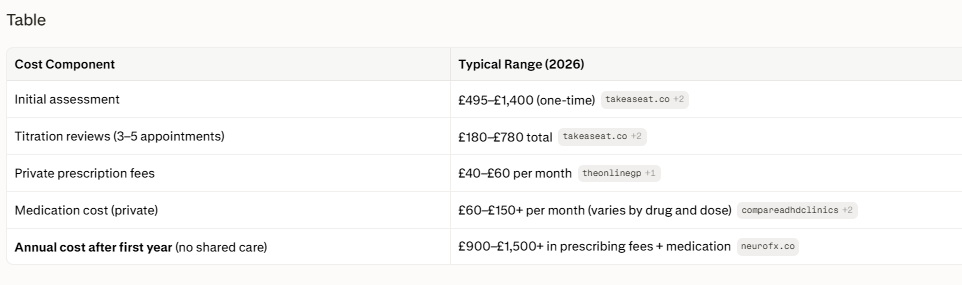
Private Prescribing Costs (Without Shared Care)
NHS Prescribing Costs (With Shared Care)
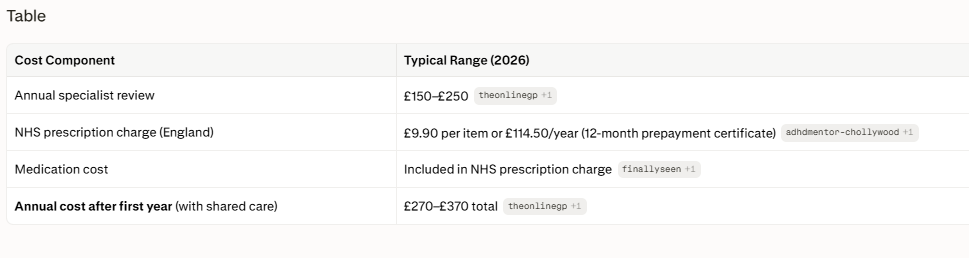
Bottom line: Shared care can reduce your annual medication costs from £1,000–£2,000+ to under £400—a savings of 70–85%.
When GPs Decline Shared Care: Why It Happens and What to Do
Despite NICE guidance, not all GPs accept shared care agreements—especially for private diagnoses. Understanding common reasons for refusal and your options can help you navigate this challenge.
Common Reasons for GP Refusal
Lack of familiarity with ADHD: Some GPs feel uncomfortable prescribing controlled drugs for a condition they don't routinely manage
Concerns about private diagnoses: Some practices have policies against accepting shared care from private providers (though this is increasingly challenged)
Workload pressures: GPs may feel they lack time for the required monitoring and annual reviews
Local ICB (Integrated Care Board) policies: Some areas have restrictive policies on shared care for private ADHD diagnoses
Controlled drug concerns: Methylphenidate and lisdexamfetamine are Schedule 2 controlled substances, which some GPs prefer not to prescribe
What to Do If Your GP Refuses
1. Ask for the refusal in writing
Request a clear explanation of the specific reasons for declining
This creates a record and sometimes prompts reconsideration
Helps you understand whether the objection is clinical, policy-based, or practical
2. Ask your specialist to liaise directly with the GP
A detailed clinical letter from the psychiatrist explaining the diagnosis, medication, and monitoring arrangements often makes the difference
Many good providers do this proactively; others will if asked
Offer to arrange a phone call between your GP and specialist
3. Speak to the practice manager
The practice manager can clarify the surgery's policy on shared care
May be able to facilitate a conversation with a different GP at the same practice who is more familiar with ADHD
4. Contact your local ICB Patient Advice and Liaison Service (PALS)
PALS can advise on local policies and your rights
May help mediate between you and the GP practice
In Scotland, contact the Patient Advice and Support Service (PASS) instead
5. Consider changing GP surgery
You have the right to register with any NHS GP practice that is accepting new patients
Before registering, ask explicitly: "Do you accept shared care agreements from ADHD specialists?"
Some online tools (e.g., GP Checkers) track which surgeries have a track record of accepting SCAs
6. Explore Right to Choose (if applicable)
If your objection is about private diagnoses specifically, consider Right to Choose as a free NHS-funded route to diagnostic confirmation
Once diagnosed via Right to Choose, GPs may be more willing to accept shared care
7. Continue private prescribing as a fallback
If all else fails, your specialist can continue prescribing privately
This is more expensive but ensures continuity of treatment
Some clinics offer reduced-rate private prescribing packages for long-term patients
What Monitoring Does Your GP Do Under Shared Care?
Once shared care is established, your GP takes on specific monitoring responsibilities to ensure ongoing safety.
Routine Monitoring Schedule
Every 6–12 months:
Blood pressure and heart rate (at each prescription renewal or at least annually)
Weight (annually, or more frequently if appetite suppression is significant)
Review of side effects and adherence
Assessment of ongoing benefit (are symptoms still controlled? any new concerns?)
Annual review:
Comprehensive review with your specialist (in person or remote)
Reassessment of diagnosis, comorbidities, and treatment plan
Discussion of whether to continue, adjust, or discontinue medication
Updated shared care letter sent to GP with any changes
When to contact the specialist (not the GP):
Need for dose adjustment due to reduced efficacy or new side effects
Emergence of new comorbidities (e.g., anxiety, depression, substance use)
Significant life changes affecting treatment (pregnancy, new cardiac diagnosis, major surgery)
Treatment failure or consideration of switching medications
Special Considerations: Controlled Drugs and Shared Care
Methylphenidate, lisdexamfetamine, and dexamfetamine are Schedule 2 controlled drugs under UK law, which adds specific requirements to shared care arrangements.
What This Means for You
Private prescriptions: Must be written on specific controlled drug prescription forms; pharmacists may need additional verification
NHS prescriptions: GPs prescribe on standard FP10 forms but must follow controlled drug regulations (e.g., prescriptions valid for 28 days only)
Prescription collection: You may need to collect prescriptions in person from the GP practice (some practices require this for controlled drugs)
Pharmacy dispensing: Not all pharmacies stock all ADHD medications; you may need to use a specific pharmacy or order in advance
Atomoxetine and Guanfacine: Not Controlled Drugs
Unlike stimulants, atomoxetine and guanfacine are not Schedule 2 controlled substances, which simplifies prescribing.
Easier GP acceptance: Some GPs are more comfortable prescribing non-controlled medications
Standard prescription forms: No special controlled drug forms required
Prescription validity: Standard 6-month validity for repeat prescriptions
Frequently Asked Questions (FAQs)
How long does it take to get shared care after ADHD diagnosis?
Typically 4–9 months total: 3–6 months for titration and stabilisation, plus 2–6 weeks for GP response to the shared care request.
Can my GP refuse shared care for ADHD medication?
Yes—shared care is voluntary for GPs, not mandatory. However, NICE NG87 sets it as the expected standard of care after specialist initiation and titration.
What if my GP refuses shared care—do I have to pay privately forever?
No. Options include asking another GP at the same practice, changing to a different GP surgery, contacting your local ICB/PALS, or pursuing Right to Choose for NHS-funded diagnostic confirmation.
How much does private ADHD prescribing cost vs NHS with shared care?
Private prescribing typically costs £900–£1,500+ per year (fees + medication), while NHS shared care costs £270–£370 per year (specialist review + prescription charges).
Does my GP need to do blood tests for ADHD medication monitoring?
Routine blood tests aren't mandated by NICE, but GPs should monitor blood pressure, heart rate, and weight every 6–12 months. Liver function tests may be considered for atomoxetine.
Can I switch GPs if my current practice refuses shared care?
Yes—you have the right to register with any NHS GP practice accepting new patients. Before registering, ask explicitly whether they accept ADHD shared care agreements.
What happens at the annual ADHD review with my specialist?
Your specialist reassesses symptom control, side effects, comorbidities, and overall treatment plan. They update your shared care letter and communicate any changes to your GP.
Ready to Start Your ADHD Treatment Journey?
Navigating from diagnosis through titration to shared care can feel complex—but with the right specialist support, the pathway becomes clear, efficient, and cost-effective. Starting with a thorough assessment and proactive shared care planning from day one maximises your chances of smooth GP acceptance and long-term NHS prescribing.
Book an ADHD Assessment today and begin your journey to stable, effective treatment with a specialist team that supports you through every step—from first dose to shared care and beyond.
Book Your Private ADHD Assessment →
At Focus Gently, we provide:
Comprehensive, NICE-aligned assessments (60–90 minutes) with full diagnostic reports
Structured titration pathway with regular reviews every 2–4 weeks
Proactive shared care coordination: detailed letters, protocols, and direct GP liaison
Ongoing specialist support for annual reviews and dose adjustments under shared care
Don't navigate ADHD treatment alone. Get expert guidance from assessment through titration to shared care—and secure affordable, long-term NHS prescribing.