ADHD Titration and Comorbidities: Anxiety, Depression, and Cardiac Risk

ADHD rarely exists in isolation—up to half of adults with ADHD also have anxiety or depression, and cardiac safety remains a key consideration during medication titration. Understanding how comorbidities influence medication choice, dosing speed, and monitoring requirements can help you and your clinician navigate titration more safely and effectively.
The Reality of ADHD Comorbidities
Comorbidity is the rule, not the exception, in ADHD. Population studies and clinical guidelines consistently show:
Anxiety disorders: 47–56% of adults with ADHD also meet criteria for an anxiety disorder
Depression: Major depressive disorder and persistent depressive disorder frequently co-occur, particularly in adults seeking treatment
Cardiac considerations: While serious cardiac events are rare, pre-existing cardiovascular conditions require careful assessment before starting stimulants or atomoxetine
These comorbidities don't just complicate diagnosis—they directly influence which medications are safest, how quickly you can titrate, and what monitoring is needed.
Anxiety and ADHD: Which Comes First?
One of the most common clinical questions is whether to treat anxiety or ADHD first when both are present. Current evidence and UK practice offer clear guidance.
When ADHD Is Driving the Anxiety
For many patients, anxiety is secondary to ADHD-related functional impairment—missed deadlines, forgotten commitments, chronic underperformance, and relationship strain create a persistent state of worry and hypervigilance.
Treatment approach:
Treat ADHD first with stimulants (methylphenidate or lisdexamfetamine) as first-line, even when anxiety is present
Rationale: Stimulants improve core ADHD symptoms in 70–80% of patients and often reduce anxiety as a secondary benefit by improving functioning and reducing stress
Evidence: Patients with ADHD and comorbid anxiety actually demonstrate better treatment responses to stimulants than those without anxiety—early concerns about stimulants worsening anxiety have been largely disproven
When Anxiety Is Primary and Severe
If anxiety is severe at baseline (major avoidance, panic attacks, significant distress independent of ADHD symptoms), treating anxiety first or concurrently may be appropriate.
Treatment approach:
Start an SSRI (fluoxetine or sertraline) alongside or before stimulant initiation
Add CBT: Cognitive behavioural therapy is strongly recommended and considered superior to medication alone for residual anxiety symptoms
Consider non-stimulants: Atomoxetine may be preferred if stimulants exacerbate anxiety or if there's concern about activation
When Stimulants Worsen Anxiety
A subset of patients experience increased anxiety, jitteriness, or activation on stimulants despite careful titration.
Management options:
Reduce dose or slow titration: Sometimes a lower dose provides adequate ADHD control without triggering anxiety
Switch formulation: Extended-release preparations may provide smoother blood levels and less "peaks and troughs" activation.
Add alpha-2 agonist: Guanfacine or clonidine as adjuncts can reduce anxiety and smooth out stimulant effects (stimulant + alpha-2 agonist combinations reduce anxiety by ~30% in some studies)
Switch to atomoxetine: Non-stimulant with demonstrated efficacy in ADHD plus comorbid anxiety without symptom exacerbation
Depression and ADHD: Breaking the Cycle
Depression and ADHD form a vicious cycle: untreated ADHD leads to chronic underachievement, shame, and stress, which fuel depressive symptoms; depression then worsens executive dysfunction, creating a self-reinforcing loop.
First-Line Approach: Treat ADHD First
Current guidelines recommend starting with stimulant medication even in the presence of depression, for several reasons:
Rapid onset: Stimulants work within days to address ADHD symptoms, whereas SSRIs take 4–8 weeks for full effect
Indirect mood benefit: Improving ADHD-related functional impairment often alleviates depressive symptoms secondary to chronic stress and failure
Depression is not a contraindication: Both conditions can be treated concurrently; stimulants do not worsen depression in most patients
Typical sequence:
Start long-acting stimulant (methylphenidate or lisdexamfetamine) at low dose
Titrate over 4–6 weeks to optimal ADHD control
Reassess mood: If ADHD improves but depression persists, add an SSRI (fluoxetine, sertraline, or escitalopram)
Alternative: If stimulants are poorly tolerated or ineffective, consider atomoxetine (though evidence does not support atomoxetine as an effective treatment for depression itself)
When to Treat Depression First
In cases of severe, treatment-resistant depression with suicidality or major functional impairment, some clinicians prioritise mood stabilisation before addressing ADHD.
Approach:
Start SSRI first (escitalopram 10 mg or sertraline 50 mg daily), titrating over 4–8 weeks
Once depression improves, reassess ADHD symptoms and add stimulant if functional impairment continues
Rationale: Severe depression can impair engagement with ADHD treatment and reduce adherence; stabilising mood first may improve overall outcomes
Atomoxetine and Suicidality Monitoring
Atomoxetine carries a boxed warning for increased risk of suicidal ideation in children and adolescents (0.4% vs 0% placebo in pooled trials).
Monitoring requirements:
Close observation for emergence or worsening of suicidal thoughts, especially in first few months and after dose changes.
Family/caregiver education: Alert healthcare professional immediately if significant mood or behaviour changes occur
Watch for: Anxiety, agitation, panic attacks, insomnia, irritability, hostility, aggressiveness, impulsivity, restlessness, mania, depression, or suicidal ideation
Despite this warning, atomoxetine is not contraindicated in depression—it simply requires proactive monitoring.
Cardiac Risk and ADHD Medications: What the Evidence Says
Cardiovascular safety is one of the most common concerns when starting ADHD medication. The good news: serious cardiac events are rare. The nuance: certain patients require cardiology referral before starting.
What Stimulants Do to Your Heart
Stimulants produce small, measurable hemodynamic changes through sympathomimetic activity:
Heart rate: Average increase of 1–2 bpm
Clinical significance: Generally insignificant in healthy individuals without pre-existing cardiac disease
Absolute Risk: How Rare Is "Rare"?
Large-scale studies and meta-analyses provide reassuring data for most patients:
Children and adolescents: Sudden cardiac death risk is 0.2–0.5 per 100,000 patient-years on stimulants—similar to the general population
Adults: Some studies suggest potential increased risk with long-term use (>2 years), particularly for hypertension and arterial disease, but absolute risk remains low
Recent findings: A 2024 Swedish study of 278,000 people found 23% higher cardiovascular disease risk after 3–5 years of stimulant use, with particularly large increases in hypertension risk
First month risk: One study found 40% higher risk of stroke, heart attack, or ventricular arrhythmia in older adults during the first month of starting stimulants
Bottom line: For healthy children and young adults without cardiac history, the absolute risk is extremely low. For older adults or those with pre-existing cardiovascular disease, individualised risk-benefit assessment is essential.
When You Need Cardiology Referral Before Starting
NICE NG87 and UK clinical guidelines are clear: routine ECGs are not required before starting ADHD medication unless specific red flags are present.
Refer for cardiology opinion before starting stimulants if the patient has:
History of congenital heart disease or previous cardiac surgery
History of sudden death in a first-degree relative under age 40 suggesting cardiac cause
Shortness of breath on exertion disproportionate to peers
Fainting (syncope) on exertion or in response to fright or loud noise
Palpitations that are rapid, regular, and start/stop suddenly
Chest pain suggesting cardiac cause
Heart murmur (not innocent murmurs in children)
Known hypertension
During treatment: Refer if sustained resting tachycardia (>120 bpm on 2 occasions), arrhythmia, or systolic BP >95th percentile on 2 occasions is confirmed despite dose reduction.
Atomoxetine and Cardiac Considerations
Atomoxetine may prolong QTc interval and cause torsades de pointes (TdP) in rare cases, based on pharmacovigilance data.
Monitoring:
Baseline and ongoing: Measure heart rate and blood pressure before starting, after each dose adjustment, and at least every 6 months
Caution in: Patients with congenital long QT syndrome, family history of sudden cardiac death, or concurrent QTc-prolonging medications
Practical Titration Strategies for Patients with Comorbidities
Slower Titration for Anxiety
Patients with comorbid anxiety often benefit from:
Lower starting doses than typical protocols
Slower dose escalation (e.g., every 2 weeks instead of weekly)
More frequent check-ins during early titration (weekly contact for first 2–4 weeks)
Evening dosing of guanfacine if added as adjunct to reduce daytime somnolence and anxiety
Monitoring Depression During Titration
For patients with comorbid depression:
Baseline mood assessment using standardised scales (PHQ-9, GAD-7)
Weekly mood check-ins during first 6–8 weeks of titration
Family/caregiver involvement to observe for mood changes, especially with atomoxetine
Clear safety plan: What to do if suicidal thoughts emerge (contact prescriber immediately, crisis lines, emergency services if acute risk)
Cardiac Monitoring Protocol
Baseline (before first dose):
Resting heart rate and blood pressure
Detailed cardiovascular history (personal and family)
Physical examination (heart murmurs, signs of structural disease)
ECG only if history/examination flags concern
During titration:
BP and HR at every dose adjustment
Watch for palpitations, chest pain, syncope, or exertional symptoms
If BP or HR consistently elevated, consider dose reduction or cardiology referral
Long-term monitoring:
BP and HR every 6 months once stable
Annual cardiovascular risk review (especially for adults >40 or with risk factors)
Reassess need for ongoing cardiology input if abnormalities detected
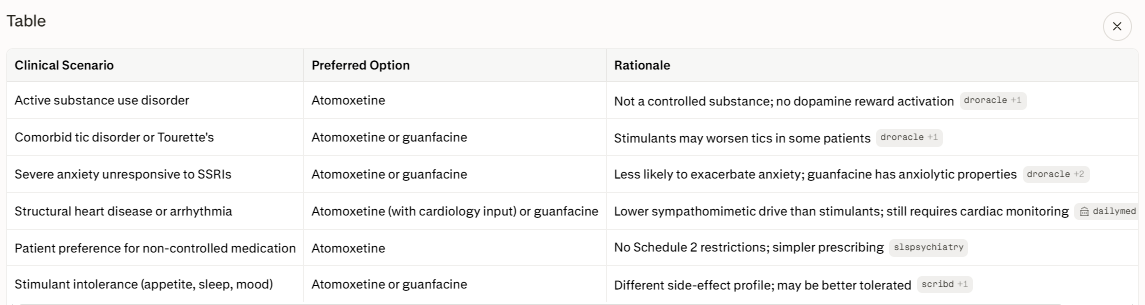
When to Choose Non-Stimulants Over Stimulants
Atomoxetine or guanfacine may be preferred when:
Frequently Asked Questions (FAQs)
Can I take ADHD medication if I have anxiety?
Yes—stimulants are first-line even with comorbid anxiety, as they often reduce anxiety by improving ADHD-related functioning. If anxiety worsens, options include dose adjustment, adding an SSRI, or switching to atomoxetine.
Will ADHD medication make my depression worse?
For most patients, no. Stimulants often improve mood indirectly by reducing functional impairment. If depression persists after ADHD is controlled, adding an SSRI is effective and safe.
Do I need an ECG before starting ADHD medication?
Not routinely. NICE guidelines state ECGs are only needed if cardiovascular history or examination raises concern (e.g., fainting on exertion, family sudden death <40, congenital heart disease).
What if I have high blood pressure—can I still take stimulants?
Mild, well-controlled hypertension may not preclude stimulant use, but requires careful monitoring. Uncontrolled or severe hypertension warrants cardiology input and may favour non-stimulants.
How do I know if my anxiety is from ADHD or a separate disorder?
A thorough assessment distinguishes primary anxiety (constant, independent of ADHD mishaps) from secondary anxiety (reactive to ADHD-related failures). Treatment prioritisation differs based on this distinction.
Is atomoxetine safer for my heart than stimulants?
Atomoxetine has less sympathomimetic activity but can prolong QTc in rare cases. Both require cardiovascular monitoring; choice depends on individual risk profile and comorbidities.
Navigating ADHD Titration with Comorbidities Requires Expert Support
Managing ADHD alongside anxiety, depression, or cardiac considerations isn't a DIY process—it requires careful assessment, individualised medication selection, and proactive monitoring. With the right specialist guidance, most patients find safe, effective treatment pathways even with complex comorbidities.
Book an ADHD Assessment today and work with a clinician who understands how to balance symptom control, comorbidity management, and safety from day one.
Book Your Private ADHD Assessment →
At Focus Gently, we provide:
Comprehensive assessments that screen for anxiety, depression, and cardiac risk factors
Personalised titration plans tailored to your comorbidity profile
Proactive monitoring protocols (mood, vitals, side effects) throughout titration
Shared-care coordination with your GP for ongoing prescribing and monitoring
Don't let comorbidities delay your treatment. Get expert, evidence-based care that addresses your whole picture—not just your ADHD symptoms.