Elvanse (lisdexamfetamine) for adult ADHD: UK patient guide to treatment, titration and costs

Elvanse (lisdexamfetamine) for adult ADHD
This article explains what Elvanse (lisdexamfetamine) is, how it is licensed and used in the UK, what titration typically involves, side effects, how it compares to other UK‑licensed ADHD medicines, and practical issues such as costs, Schedule 2 status, and what happens if you are diagnosed but have no prescriber. It is information only, not a recommendation. In the UK, guidance generally puts methylphenidate first‑line for adults, with lisdexamfetamine as an alternative first‑line option.
How Elvanse works
Elvanse contains lisdexamfetamine dimesylate, a prodrug that is inactive until your body converts it into dexamfetamine. After you swallow the capsule, lisdexamfetamine is absorbed from the gut and then broken down mainly by red blood cells into dexamfetamine, which is the active medicine. Dexamfetamine increases levels of dopamine and noradrenaline in the brain by blocking their reuptake and increasing their release, which helps improve attention, reduce impulsivity, and calm hyperactivity in people with ADHD. Because it is a prodrug, the effect comes on more smoothly and lasts longer than with immediate‑release amphetamines, typically covering most of the day after a single morning dose.
UK licensed indications: Elvanse vs Elvanse Adult
In the UK, “Elvanse” and “Elvanse Adult” are separate products with different licensed indications. They must not be treated as the same.
Elvanse (children/adolescents first, then adults)
Licensed for children aged 6 years and over when response to previous methylphenidate treatment is considered clinically inadequate.
Also licensed for adults with pre‑existing symptoms of ADHD in childhood, as part of a comprehensive treatment programme.
In practice, this means Elvanse is licensed in adults who had ADHD symptoms in childhood and are being treated within a specialist service.
Elvanse Adult (adults only)
Licensed specifically for adults with ADHD as part of a comprehensive treatment programme.
Historically, this product existed as a separate “Adult” presentation to reflect the adult‑only licence, while the standard Elvanse range was focused on children/adolescents after methylphenidate.
Recent industry consolidation has moved adults onto the single Elvanse brand in many settings, but the underlying licensing distinction remains important for prescribing and shared‑care discussions.
If you are unsure which product you have been prescribed, check the name and strength on your box and ask your prescriber or pharmacist to explain which licence applies to you.
What titration involves (week by week) and what commonly goes wrong
Titration is the process of starting low and increasing the dose gradually to find the lowest dose that gives you clear benefit with tolerable side effects. Your specialist will set the plan; you should not change your dose yourself.
Typical adult titration pattern (high‑level)
Week 1: You start on a low morning dose (often 30 mg once daily, or sometimes 20 mg if your clinician feels a lower start is appropriate).
Week 2 onwards: If needed and tolerated, your clinician may increase the dose in steps (commonly by 10–20 mg) at roughly weekly intervals.
Target range: Many adults end up somewhere between 50–70 mg once daily if that is where benefit outweighs side effects, up to a maximum of 70 mg/day.
Monitoring: At each step, your team will ask about focus, impulsivity, mood, sleep, appetite, heart rate, and blood pressure, and may adjust the plan accordingly.
You should not use this to self‑titrate; it is a description of how specialists typically approach it under the SmPC and UK practice.
What commonly goes wrong during titration
Going too fast: Increasing more often than weekly can make side effects feel overwhelming and obscure what dose actually works.
Expecting immediate perfection: Benefits often build over days to weeks; some people feel “different” before they feel “better”.
Ignoring sleep and appetite: Insomnia and reduced appetite are very common early on; if not managed (timing, food, sleep hygiene), they can derail titration.
Mismatched expectations: Some people expect Elvanse to “fix everything”; it targets core ADHD symptoms, not life circumstances, trauma, or all co‑existing conditions.
Stopping abruptly due to side effects: Many early side effects settle or improve with dose adjustment; stopping without speaking to your prescriber can lose momentum and delay finding a workable regimen.
If titration feels stuck, the usual next step is a structured review with your specialist to adjust dose, timing, or consider switching to another first‑line option (for example, methylphenidate) as per NICE.
Side effects (using SmPC frequency categories)
The SmPC groups side effects by how often they were seen in trials and post‑marketing. The categories are:
Very common: ≥ 1 in 10
Common: ≥ 1 in 100 to < 1 in 10
Uncommon: ≥ 1 in 1,000 to < 1 in 100
Rare: ≥ 1 in 10,000 to < 1 in 1,000
Very rare: < 1 in 10,000
Frequency not known: cannot be estimated from available data
Below are key adult side effects from the SmPC, grouped by frequency. This is not exhaustive; always refer to your patient leaflet and speak to your prescriber about new or worrying symptoms.
Very common in adults (≥ 1 in 10)
Decreased appetite1
Insomnia
Dry mouth
Headachem
Upper abdominal pain
Weight decreased
Common in adults (≥ 1 in 100 to < 1 in 10)
Anxiety
Agitation
Affect lability (mood swings)
Psychomotor hyperactivity
Bruxism (teeth grinding)
Dizziness
Restlessness
Tremor
Tachycardia (fast heart rate)
Palpitations
Dyspnoea (shortness of breath)
Diarrhoea, constipation, nausea
Hyperhidrosis (excessive sweating)
Erectile dysfunction
Chest pain, irritability, fatigue, feeling jittery
Blood pressure increased
Uncommon in adults (≥ 1 in 1,000 to < 1 in 100)
Depression
Tic
Somnolence (sleepiness)
Dyskinesia, dysgeusia (taste disturbance), syncope (fainting)
Vision blurred
Vomiting
Rash
Rare / very rare / frequency not known (selected)
Psychotic episodes, mania, hallucinations (frequency not known in adults)
Aggression (frequency not known in adults)
QTc prolongation, cardiomyopathy (frequency not known)
Seizure (frequency not known)
Eosinophilic hepatitis, angioedema, Stevens–Johnson syndrome (frequency not known)
If you develop chest pain, fainting, severe mood changes, hallucinations, signs of an allergic reaction, or any symptom that feels dangerous, seek urgent medical help and contact your prescriber.
How Elvanse compares to other UK‑licensed ADHD medications (adults)
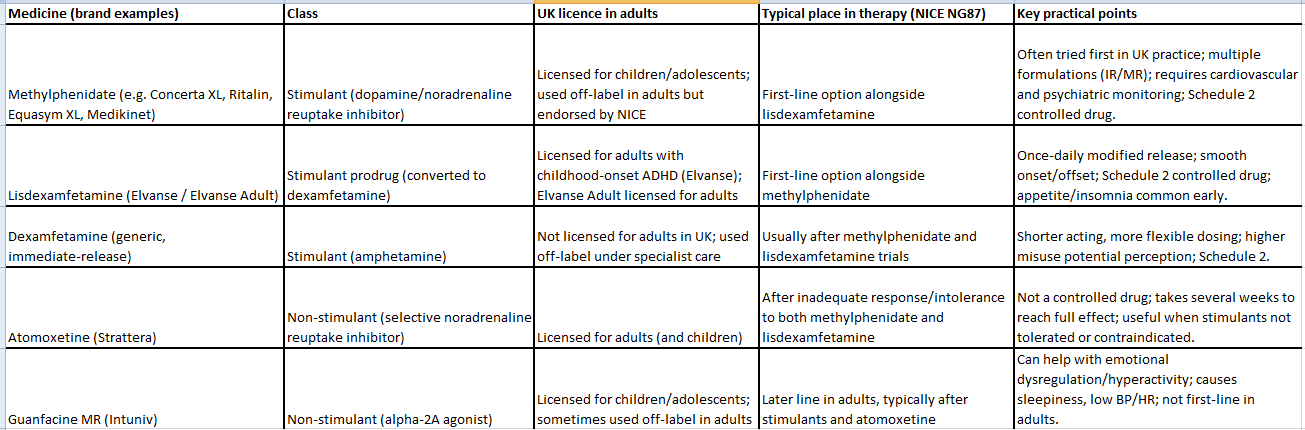
The table below summarises key differences between medicines commonly used for adult ADHD in the UK. Licensing, place in therapy, and monitoring needs differ; your specialist will tailor choices to your history, comorbidities, and preferences.
Schedule 2 status and what it means for you
Lisdexamfetamine is a Schedule 2 controlled drug under the Misuse of Drugs Regulations in the UK. This has practical consequences for prescribing, dispensing, and storage.
What changes for you as a patient
Prescription rules: Your prescription must meet controlled‑drug requirements (for example, specific wording, dose form, total quantity in words and figures). Your prescriber and pharmacist follow strict rules on how these prescriptions are written and supplied.
Supply limits: Pharmacists often supply limited quantities at a time and must record supplies in a controlled drugs register. You may notice smaller quantities per prescription compared with non‑controlled medicines.
Storage and safekeeping: You are expected to store your medication securely and not share it. Diversion (giving or selling to others) is illegal and can have serious consequences.
Driving and the law: Lisdexamfetamine is included in drug‑driving regulations. It is an offence to drive if the medicine impairs you, but there is a “statutory defence” if you are taking it as prescribed and it does not affect your driving. You must follow DVLA guidance and tell them if your ADHD or medication affects your driving.
Your specialist and pharmacist should explain these points when you start treatment.
Costs: medication, clinical care, NHS vs private vs shared care
Costs vary depending on whether you are on an NHS pathway, a private prescription, or a shared‑care arrangement. Figures below are typical ranges reported in 2025–2026; exact amounts depend on your nation, pharmacy, and dose.
NHS pathway (England)
Prescription charge: £9.90 per item in England (free in Scotland, Wales, and Northern Ireland).
Prepayment certificate (PPC): Around £114.50 per year (or ~£32 for 3 months), which can save money if you need multiple items.
Clinical care: Assessment, titration, and reviews are NHS‑funded, but waiting times can be long.
Private pathway (self‑funded)
Assessment and titration: Private adult ADHD assessments commonly cost £600–£1,500+, with titration appointments charged separately.
Private prescriptions: You pay the full medicine cost plus a private prescription fee. For lisdexamfetamine, typical monthly costs are often in the range of £80–£200+ depending on dose and pharmacy, plus dispensing fees.
Ongoing reviews: Private follow‑ups and prescription admin can add several hundred pounds per year if not transferred to shared care.
Shared care (private diagnosis, NHS prescribing)
How it works: A specialist diagnoses and stabilises you, then asks your GP to take over routine prescribing under a shared‑care agreement.
Cost impact: If your GP accepts shared care, you usually pay only the standard NHS prescription charge (£9.90 per item in England) instead of private rates.
If GP declines: You may need to remain on private prescriptions or seek another GP/ICB advice; some people use patient‑support resources or advocacy to request shared care.
What happens when you are diagnosed but have no prescriber
This situation is unfortunately common, especially with long NHS waiting lists or when GPs are hesitant to prescribe after a private diagnosis.
Typical scenarios
Diagnosed privately, GP refuses shared care: You remain responsible for private prescriptions until shared care is agreed or another NHS route is found. Some clinics offer ongoing private prescribing at a fee; others may discharge you if shared care is declined.
NHS diagnosis, but no local prescriber willing to start/maintain: Your specialist service should clarify who will initiate and continue prescribing. In some areas, this is done within the specialist clinic until a GP agrees to shared care.
Between jobs or moving areas: If you move or change GP, you may need a new shared‑care agreement. Your specialist should provide a summary letter and treatment plan to support this.
Practical steps you can take
Ask your specialist for a clear written treatment plan (diagnosis, medication, dose, monitoring schedule, and shared‑care request).
Request a shared‑care letter template or clinic letter addressed to your GP, referencing NICE NG87 and local ICB policies.
If your GP declines, ask why and whether concerns are about monitoring, experience, or local policy; sometimes additional information or a trial period helps.
Use patient advocacy (e.g. ADHD UK, local ICB complaints processes) if you believe you are being left without a safe prescribing route after diagnosis.
You should not run out of medication abruptly; if you are at risk, contact your prescriber or specialist service urgently to discuss a safe plan.
FAQs
1. Is Elvanse first‑line for adults in the UK?
NICE NG87 recommends lisdexamfetamine or methylphenidate as first‑line pharmacological treatment for adults with ADHD. In practice, many UK services still try methylphenidate first, but both are considered first‑line options in the guideline.
2. How quickly will I feel a difference?
Many people notice some change within days, but finding the right dose and stable routine often takes several weeks of titration and monitoring. Benefits tend to build as dose and timing are optimised.
3. What if I can’t sleep or I’m not hungry?
Insomnia and decreased appetite are very common early on. Strategies include taking the dose early in the morning, avoiding late caffeine, prioritising protein‑rich meals when appetite is better, and discussing dose/formulation adjustments with your prescriber if problems persist.
4. Can I drink alcohol on Elvanse?
There are limited data on interactions with alcohol, and stimulants can mask intoxication or worsen side effects like dizziness or poor judgement. Many clinicians advise avoiding or minimising alcohol, especially during titration. Discuss your situation with your prescriber.
5. Do I need blood tests or heart tests?
Before starting, your specialist should check your cardiovascular history, blood pressure, and pulse, and monitor these regularly during treatment. Further cardiac tests are arranged if your history or examination suggests underlying heart disease. Routine blood tests are not always required unless there are specific concerns.
6. What if Elvanse doesn’t work or causes too many side effects?
Your specialist may adjust the dose, change the timing, or switch you to another first‑line option (often methylphenidate) before considering non‑stimulants like atomoxetine. NICE recommends trying both stimulant families adequately before moving on.
7. Can I drive while taking Elvanse?
You must not drive if the medicine affects your ability to drive safely. Lisdexamfetamine is covered by drug‑driving laws; however, there is a statutory defence if you are taking it as prescribed and it does not impair you. You must follow DVLA guidance and declare relevant conditions if required.
8. What happens if I run out of medication?
Do not self‑adjust or borrow from others. Contact your prescriber or specialist service immediately to arrange an urgent prescription or plan. Running out can cause rebound symptoms and distress, and abrupt changes are not recommended.
Claims needing clinical verification (with sources)
Please treat the following as items a clinician or medicines information service should double‑check against the latest SmPC, BNF, and local policies before publication:
Exact wording of adult licensed indication for each Elvanse presentation (Elvanse vs Elvanse Adult) and whether any recent regulatory changes have merged or altered these licences. Sources: Elvanse SmPC (emc); Elvanse Adult product information.
Whether “Elvanse Adult” still exists as a separate marketed product in 2026 or has been fully consolidated into the single Elvanse brand across all strengths in the UK. Source: secondary commentary on consolidation.
Precise NICE NG87 wording on first‑line options for adults (whether methylphenidate and lisdexamfetamine are described as equally first‑line, or whether one is preferred in specific adult subgroups). Sources: NICE NG87 summaries and commentaries.
Exact adult side‑effect frequencies in the SmPC table (to ensure each listed reaction is correctly categorised as very common/common/uncommon for adults specifically, not children/adolescents). Source: Elvanse SmPC adverse reactions table.
Current NHS prescription charge and PPC prices in England for 2026/27 and whether any mid‑year changes have occurred. Sources: NHS/PCSE updates and secondary cost guides.
Typical private monthly cost range for lisdexamfetamine across UK pharmacies and whether £80–£200+ remains accurate for common adult doses in 2026. Sources: private cost estimators and clinic guides.
Local/shared‑care policies on GP acceptance of private ADHD diagnoses and whether any national direction now obliges GPs to accept shared care under specified conditions. Sources: shared‑care guidance and patient resources.
Driving law details for lisdexamfetamine (exact wording of the statutory defence and DVLA notification requirements for adults with ADHD on stimulants). Sources: SmPC driving section and GOV.UK/DVLA guidance.
Ready to start or transfer your ADHD treatment?
If you’re considering Elvanse for ADHD, struggling with your current medication, or looking to move your prescribing to a specialist UK service, Focus Gently offers structured assessments and specialist‑led titration pathways. For patients who already have a diagnosis and want to transfer prescribing, Focus Gently provides a dedicated ADHD prescribing transfer service.
Book your ADHD Assessment today at focusgently.com
Or, if you already have a diagnosis and want to transfer prescribing, visit focusgently.com/adhd-prescribing-transfer.