Methylphenidate vs Lisdexamfetamine UK: Which ADHD Medication Is Right for You?

Methylphenidate vs Lisdexamfetamine UK: Which ADHD Medication Is Right for You?
Choosing between methylphenidate and lisdexamfetamine is one of the most common questions adults ask after an ADHD diagnosis in the UK. Both are widely used stimulant medications, both can be effective, and both are recommended as first-line options for adults in NICE-linked guidance and NHS information.
The right choice often comes down to how your body responds, how long you need symptom control, and which side effects you can tolerate. That is why many people need a trial of one medication and, if needed, a switch to the other.
What each medicine is
Methylphenidate is a stimulant medicine used to help improve attention, reduce impulsivity, and support better day-to-day functioning in people with ADHD. In the UK, it is often one of the first medicines offered because it has a long track record and comes in several formulations.
Lisdexamfetamine is also a stimulant, but it is converted in the body into dexamfetamine and is designed to last through the day with once-daily use. NICE-linked evidence summaries describe it as a first-line adult ADHD treatment alongside methylphenidate.
How they differ
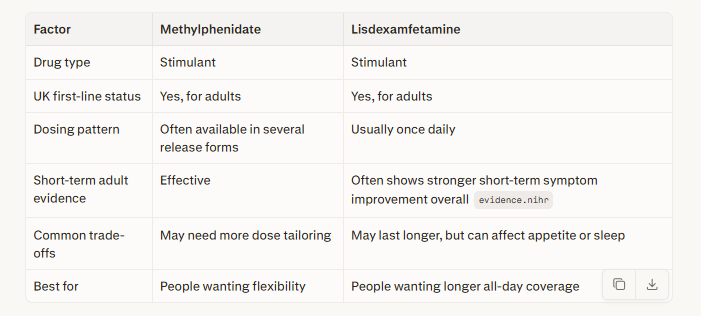
The biggest difference is not that one is “stronger” in a simple sense, but that they feel different in practice. Lisdexamfetamine is often chosen when someone wants longer coverage from one morning dose, while methylphenidate may be preferred when a person wants more flexibility across different formulations and dosing schedules.nhs+1
Evidence summaries from NIHR indicate that amphetamine-type medicines, including lisdexamfetamine, showed greater short-term symptom improvement in adults than methylphenidate in the reviewed data, while both were still considered effective options.
That does not mean lisdexamfetamine is automatically the better medicine for everyone. Individual response varies, and some people do better on methylphenidate because of side effects, duration, or personal preference.
Which works better
For adults, the evidence suggests lisdexamfetamine can produce strong short-term symptom improvement, while methylphenidate also provides meaningful benefit. The NIHR summary reports larger short-term improvements for amphetamines overall than for methylphenidate, but NICE still recommends both as first-line choices because people respond differently in real life.
In practice, “best” usually means the medication that improves focus, organisation, and emotional control with the fewest unwanted effects. A medicine that works well on paper but causes anxiety, appetite loss, or sleep problems may not be the right fit for a particular person.
Side effects to watch
Common stimulant side effects can include reduced appetite, sleep disruption, feeling jittery, and changes in anxiety or mood. The NIHR review also noted weight loss with both amphetamines and methylphenidate in adults.
NHS guidance emphasises that ADHD medicines must be started and monitored by a specialist, and that people may need to try more than one medicine to find what works best.
A practical example: one person may feel calm and focused on methylphenidate but too anxious, while another may feel steady on lisdexamfetamine with only mild appetite suppression. That kind of difference is exactly why titration matters.
UK prescribing context
In the UK, ADHD treatment is usually specialist-led at the start, and medicines must be started and monitored by an ADHD specialist. NHS guidance also notes that a GP may take over prescribing only under a shared care agreement.
Waiting times for ADHD assessment can be long, and the NHS notes that some people may use the Right to Choose pathway in England to access shorter waiting lists where available.
For adults, the NIHR summary states that NICE recommends lisdexamfetamine or methylphenidate as first-line drug treatment, and suggests switching to the other if a six-week trial does not provide enough benefit.
Who may suit each one
Methylphenidate may suit someone who wants a well-established option, prefers a medicine with multiple release formulations, or has not tolerated lisdexamfetamine well. It can be a good fit for people who want to fine-tune timing across the day.
Lisdexamfetamine may suit someone who wants once-daily coverage and strong symptom control across work, study, and home life. Because it is converted slowly in the body, it may feel smoother for some people and last longer into the day.
There is no universal winner. The best option depends on symptom pattern, lifestyle, side-effect sensitivity, and what your specialist thinks is most appropriate after assessment.
What to expect during titration
Titration is the process of adjusting dose gradually until the medicine helps enough without causing troublesome side effects. The NHS states that you may need to try more than one medicine, and ADHD specialists typically supervise this process.
During titration, it helps to track focus, sleep, appetite, mood, blood pressure if advised, and how well you are getting through daily tasks. That record makes it easier to spot whether the medicine is genuinely helping or whether the dose simply needs adjustment.
It is also useful to note when benefits wear off, whether you crash later in the day, and whether anxiety or irritability appears as the dose peaks or fades. Those details often help the specialist decide between methylphenidate and lisdexamfetamine.
Methylphenidate vs lisdexamfetamine table
FAQs
Is lisdexamfetamine stronger than methylphenidate?
Not necessarily in a simple clinical sense. NIHR evidence found stronger short-term symptom improvement for amphetamines overall, which includes lisdexamfetamine, but methylphenidate is still a first-line option and may work better for some individuals.
Can I switch from methylphenidate to lisdexamfetamine?
Yes, switching is common when the first medicine does not help enough or side effects are difficult to manage. NICE-linked guidance suggests trying the other first-line medicine if a six-week trial is not successful.
Which has fewer side effects?
There is no single answer because side effects vary by person. The NIHR summary found no clear difference in tolerability based on study dropout for side effects, which supports the idea that individual experience matters more than a one-size-fits-all rule.
Do these medicines work for ADHD in adults?
Yes. NHS guidance lists both methylphenidate and lisdexamfetamine as medicines that can help with ADHD symptoms in adults.
Do I need a specialist to start treatment?
Yes. The NHS states that ADHD medicines must be started and monitored by an ADHD specialist, with shared care arrangements sometimes allowing a GP to continue prescribing later.
If you want expert guidance on ADHD support, titration, and practical next steps, visit Focus Gently to learn more about getting the right help in a calm, supportive way.