ADHD Stimulants UK Prescription: What to Know Before Starting Treatment

ADHD Stimulants UK Prescription: What to Know Before Starting Treatment
Getting an ADHD stimulant prescription in the UK can feel confusing at first. Between assessment routes, specialist reviews, shared care, and different medication options, many people are unsure where to start and what actually happens after diagnosis.
The good news is that stimulant treatment is well established in UK ADHD care, and the process is more structured than many people expect. NHS guidance says ADHD medicines for adults should be started and monitored by a specialist, with methylphenidate and lisdexamfetamine among the main first-line options.
What ADHD stimulants do
ADHD stimulants are medicines that help increase focus, reduce impulsivity, and improve day-to-day functioning. They do this by affecting brain chemicals involved in attention and self-regulation, which can make it easier to organise tasks, follow conversations, and manage mental restlessness.
In the UK, the most commonly discussed stimulant options for adults are methylphenidate and lisdexamfetamine. NICE-linked evidence summaries describe both as first-line choices, which means prescribers often begin with one of these medicines before considering alternatives.
Who can prescribe them
In the UK, stimulant medication for ADHD is usually initiated by a specialist rather than a GP. NHS guidance says treatment must be started and monitored by an ADHD specialist, and a GP may later continue prescribing under a shared care agreement once the treatment is stable.
This matters because stimulant prescribing involves careful checks before starting, followed by dose adjustments, monitoring, and ongoing review. Specialist oversight helps reduce the chance of missed contraindications, poor dose selection, or problems with blood pressure, sleep, appetite, or mood.
Assessment before prescription
Before a stimulant is prescribed, the clinician should confirm that ADHD is the right diagnosis and check for factors that could make stimulant treatment unsafe or less suitable. Focus Gently’s prescribing-related materials highlight the importance of screening for contraindications, drug interactions, and situations that may require extra assessment such as ECG triggers.
A proper ADHD assessment normally covers current symptoms, childhood history, functional impairment, past mental health concerns, cardiovascular history, medication use, and lifestyle factors. This is not just paperwork; it helps determine whether stimulant treatment is a good fit and which medicine is most appropriate.
Common stimulant options
The two main stimulant medicines used in UK adult ADHD care are methylphenidate and lisdexamfetamine. Methylphenidate is available in different release forms, which can help tailor treatment across the day, while lisdexamfetamine is often taken once daily and can provide longer coverage for some people.nhs+1
The NIHR summary notes that amphetamine-type medicines, including lisdexamfetamine, showed stronger short-term symptom improvement in adults in the reviewed evidence, although both lisdexamfetamine and methylphenidate remain first-line options because response varies between individuals.
What titration means
Titration is the process of gradually adjusting the dose until the medicine works well with manageable side effects. This is one of the most important parts of stimulant prescribing, because the starting dose is not usually the final dose.
During titration, patients are typically monitored for symptom benefit, appetite changes, sleep issues, mood effects, and physical measures such as blood pressure and pulse when relevant. NHS guidance supports this specialist-led monitoring approach, and it is often the stage where the best long-term medication choice becomes clear.
Side effects and safety
Like all medicines, stimulants can cause side effects. Common ones include reduced appetite, sleep disruption, feeling wired or jittery, and sometimes changes in anxiety or mood.webmd+1
The NIHR evidence summary also reported weight loss with both amphetamines and methylphenidate in adults. That does not mean everyone will experience it, but it is one reason prescribers ask about eating, weight, and general wellbeing during follow-up.
Safety checks are especially important if someone has heart disease, high blood pressure, a history of substance misuse, or interacting medicines. That is why specialist review and pre-treatment screening are standard parts of responsible stimulant prescribing in the UK.
NHS versus private care
On the NHS, the pathway can be slower because assessment and titration often depend on local services and waiting lists. NHS guidance confirms that adult ADHD medicines are specialist-started, and GP continuation usually depends on a shared care agreement.
Private care can move faster, especially where clinics offer remote assessments and structured prescribing pathways. Focus Gently describes itself as a nurse-led private ADHD clinic offering assessment, diagnosis, and treatment support across the UK, with a strong emphasis on ADHD-friendly tools and clinically informed guidance.
For many adults, the decision between NHS and private care comes down to urgency, access, and budget. The important point is not just getting a prescription quickly, but making sure the medication is started safely and monitored properly.
What to expect after starting
Most people do not receive the perfect dose on day one. Instead, treatment usually begins at a sensible starting point, followed by regular review until the clinician and patient agree the medicine is helping enough.focusgently+1
Early improvements may include better task initiation, less mental noise, and improved ability to finish work or study tasks. At the same time, some people notice appetite changes, shorter sleep, or a slight increase in tension before the dose is refined.
A helpful way to judge progress is to track real-life outcomes rather than only “how focused you feel.” For example, note whether you are finishing emails, arriving on time, staying calmer in conversations, or getting less overwhelmed by daily planning.
Practical questions to ask
Before accepting a stimulant prescription, it helps to ask a few practical questions. These include how the medicine should be taken, when to expect benefit, what side effects to report, and whether the clinic uses shared care with your GP later.
You may also want to ask what happens if the first medicine does not work, whether there are alternative stimulants or non-stimulants, and what monitoring will be done after the first few weeks. NICE-linked guidance suggests switching to the other first-line medicine if an initial trial is not successful.
ADHD stimulants UK prescription table
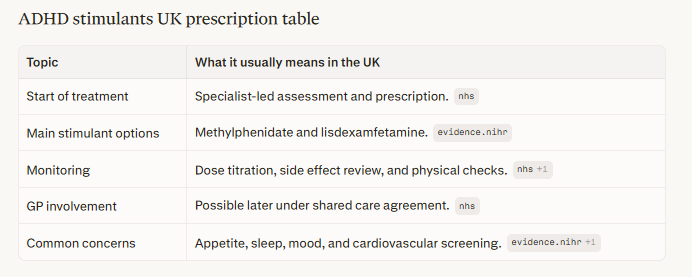
FAQs
Can a GP prescribe ADHD stimulants in the UK?
Usually not at the start. The NHS says ADHD medicines should be initiated and monitored by a specialist, and a GP may continue prescribing later under shared care once treatment is stable.
Which stimulant is most commonly prescribed?
Methylphenidate and lisdexamfetamine are the main first-line stimulant options for adults in UK guidance. Which one is chosen depends on individual response, side effects, and clinical judgement.
How long does it take to find the right dose?
It varies, but titration usually takes more than one appointment because the dose is adjusted gradually. The aim is to balance symptom improvement with tolerability rather than rushing to the highest dose.
Do I need tests before starting?
Not everyone needs the same tests, but clinicians should screen for heart-related risk, interactions, and factors that may require additional assessment. Focus Gently notes that pre-initiation screening may also identify when ECG-related review is needed.
What if the first stimulant does not work?
That is common enough that it is built into treatment planning. NICE-linked evidence summaries say adults who do not respond well to one first-line stimulant may be switched to the other.
Are stimulants the only ADHD medicines?
No. They are the most commonly used, but non-stimulant options may also be considered depending on response, side effects, or medical history.
Final guidance
An ADHD stimulant prescription in the UK is not just about getting medication; it is about getting the right diagnosis, the right screening, and the right follow-up. When those pieces are in place, stimulant treatment can be a practical and effective part of ADHD care.
The best results usually come from a structured process: assessment, careful choice of medicine, gradual titration, and honest review of what is working in everyday life. That process is what turns a prescription into real support.
If you are looking for calm, clinician-informed ADHD support in the UK, visit Focus Gently to explore assessment, treatment, and practical tools designed to make the process easier.