Adult ADHD Diagnosis UK NHS Waiting Times: What to Expect and What You Can Do

Adult ADHD Diagnosis UK NHS Waiting Times: What to Expect and What You Can Do
Waiting for an adult ADHD diagnosis through the NHS in the UK can be frustrating, stressful, and confusing. In many areas, the delay is long enough that people are left managing symptoms on their own while trying to keep up with work, family, and daily life.
The reality is that NHS ADHD services face major demand, and waiting times vary widely by region and service. Some services publish only rough estimates because the queue changes constantly, while others report waits that stretch into years.
Why waiting times are so long
Adult ADHD services are under heavy pressure, and the volume of referrals often exceeds the capacity of clinics to assess and treat people quickly. NHS services also prioritise cases differently, which means the length of your wait may not match the simple date you were referred.
The problem is not the same everywhere. Some trusts have relatively shorter waits, while others report extremely long backlogs, which creates a postcode lottery for adults seeking diagnosis.
How long waits can be
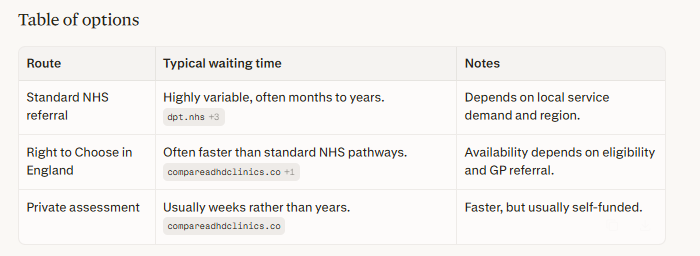
There is no single NHS waiting time for adult ADHD diagnosis in the UK. Some services report waits of many months, while others have published figures that amount to several years, depending on the region and service pressure.
Recent reporting and service data suggest that many adults are facing waits of more than a year, and in some areas the delay can be much longer. One 2025 BBC report cited an average adult ADHD assessment wait of 618 days at one NHS trust, while other reports and service pages describe waits stretching to 4, 5, or even more years in some places.
Because these figures change over time, it is safer to think of NHS waiting times as highly variable rather than fixed. The exact length depends on where you live, the service you are referred to, and how the local pathway is managed.
What the NHS process looks like
The NHS adult ADHD pathway usually begins with a referral from a GP or another appropriate clinician. After that, you enter a waiting list for assessment, and the service may contact you when an appointment becomes available.
Once assessed, the next steps may include diagnosis, treatment planning, and possibly medication titration or referral into another service. NHS guidance explains that ADHD in adults can be managed in several ways, including lifestyle changes, workplace adjustments, and medicine.
In practice, the process often feels slow because each step depends on specialist availability. That means the wait is not just for one appointment, but often for a whole chain of care.
Right to choose and other routes
For adults in England, the NHS Right to Choose route can sometimes provide a faster way to access an ADHD assessment through a commissioned provider. Some services and comparison guides describe this as an NHS-funded alternative that may reduce the wait compared with a standard local referral.
This is not available in the same way everywhere in the UK, and eligibility depends on where you live and how your GP handles the referral. Even so, it is one of the most important options to know about if you are trying to avoid a long delay.
Private assessment is another route. It usually costs money, but it can be much faster than waiting on a standard NHS list, and it may suit people who need answers sooner.
What to do while waiting
Waiting does not mean you have to do nothing. You can prepare by writing down your symptoms, when they started, how they affect daily life, and what support you have tried already. That can help if you eventually need to complete a full diagnostic assessment.
It is also useful to gather old school reports, childhood notes, or examples of persistent difficulties with organisation, attention, or impulsivity. Adult ADHD diagnosis often depends on looking at the pattern over time, not just the symptoms you have today.
If you are struggling at work or study, consider asking for reasonable adjustments even before diagnosis. The NHS notes that ADHD can affect daily functioning, and practical changes may help while you wait for formal assessment.
How to cope with the delay
Long waits can be draining, especially when you already feel that ADHD is affecting everything. Many people describe the waiting period as a mix of hope, frustration, and self-doubt.
A helpful approach is to focus on stabilising the parts of life you can control. Simple systems such as reminders, visible to-do lists, routine building, and sleep protection can reduce the day-to-day pressure while you wait for specialist care.
If symptoms are severe, worsening, or linked with anxiety or depression, speak to your GP again rather than silently enduring the wait. Even if the ADHD pathway is delayed, your mental health concerns still deserve attention.
NHS versus private waiting
The biggest difference between NHS and private care is usually time. NHS waits for adult ADHD assessment can be very long in some regions, whereas private services may offer assessment in weeks rather than months or years.
That speed comes at a cost, though, and private assessment is not the right answer for everyone. For some people, the choice comes down to whether they need faster clarity now or can manage the NHS queue while using self-help strategies and support.
A lot depends on your current level of difficulty. If your symptoms are affecting your job, studies, relationships, finances, or safety, a faster route may be worth considering.
What a diagnosis can unlock
A formal adult ADHD diagnosis can make it easier to access treatment, workplace adjustments, and a clearer explanation of lifelong patterns that may have been misunderstood. For many adults, the biggest relief is finally having a framework that makes sense of their experience.
Diagnosis may also open the door to medication review and ongoing specialist support. The NHS notes that treatment can include medicine and other management strategies, depending on the person’s needs.
Even before diagnosis, understanding the possibility of ADHD can change how you organise your life. Many adults start to use external systems more intentionally once they recognise that memory and attention issues are not a moral failing.
Table of options
FAQs
How long is the NHS wait for adult ADHD diagnosis in the UK?
There is no fixed national number. Published service data and reporting show waits ranging from months to several years depending on the trust and region.
Why does the NHS take so long?
Demand is high, specialist capacity is limited, and services prioritise cases differently. That means waiting times can fluctuate and may be much longer than people expect.
Can I get seen sooner?
In England, the Right to Choose route may offer a faster NHS-funded option for some adults. Private assessment is another faster route if you are able to pay.
Do I need a diagnosis to get support?
Not always. You may still be able to ask for practical support, coping strategies, or workplace adjustments while waiting for assessment.
What should I prepare while waiting?
Keep a symptom diary, note childhood signs, collect old records if you have them, and write down the ways ADHD affects work, study, and relationships. This can make your eventual assessment easier and more accurate.
Is private assessment worth considering?
For people who are struggling significantly, a private route may be worth it because it can reduce the time spent waiting for answers. The right choice depends on your budget, urgency, and how much the delay is affecting your life.
Final thoughts
Adult ADHD diagnosis through the NHS in the UK often involves a long wait, and the exact delay depends heavily on where you live. While you wait, it helps to stay organised, track your symptoms, and keep using any support that reduces daily strain.
If the wait is becoming too hard to manage, exploring faster assessment options may be the most practical next step.
If you want a calmer and faster path to ADHD assessment and support, visit Focus Gently to explore private options and learn more about getting the right help sooner.